
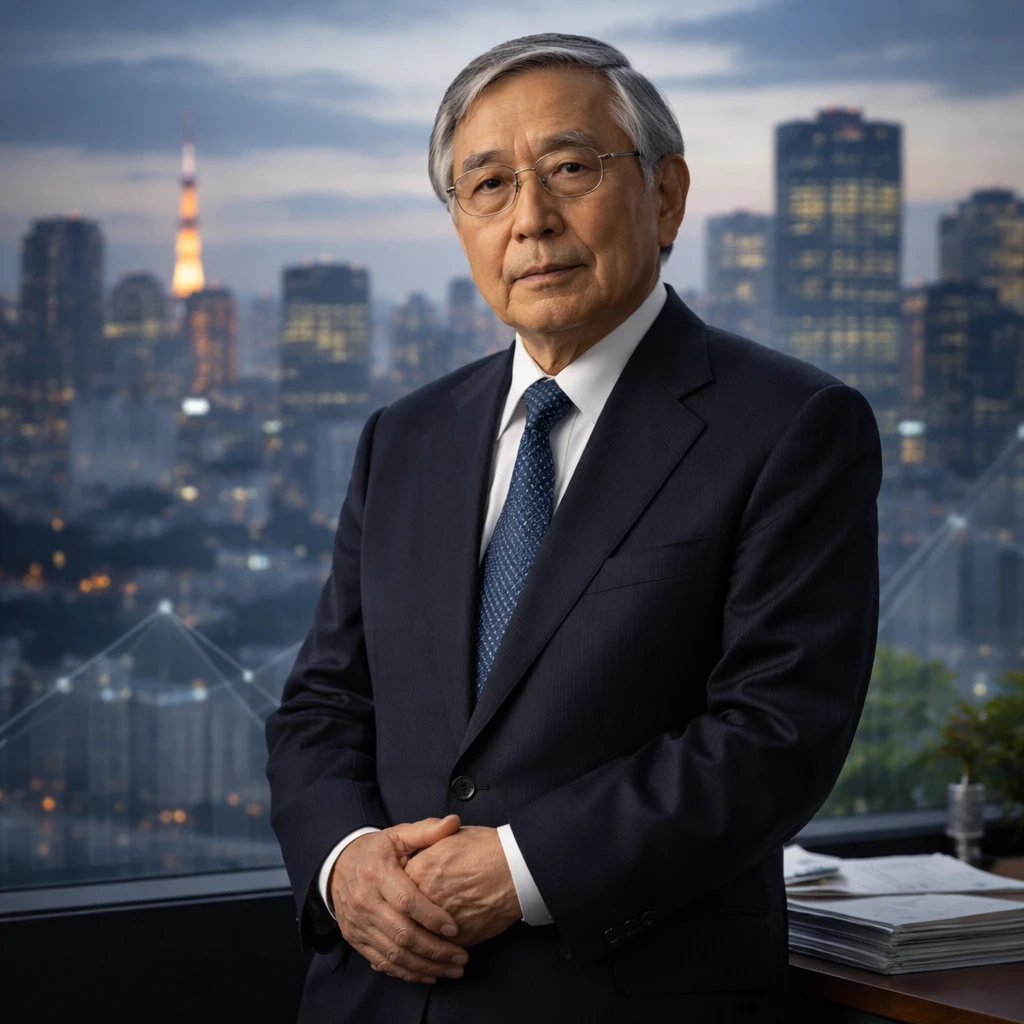
Former Bank of Japan Governor Haruhiko Kuroda said on Wednesday that Japan should continue to lift interest rates and impose tighter fiscal discipline because, in his view, the economy is already in strong condition.
Kuroda cautioned that Prime Minister Sanae Takaichi’s large spending plan carries the potential to spur an inflationary upswing if implemented without offsetting measures. He framed his remarks within the context of the current growth and wage environment, saying the combination of solid growth and steady wage gains gives the BOJ room to proceed with further tightening of monetary policy.
Addressing the pace of policy moves, Kuroda said the Bank of Japan can probably increase interest rates about twice a year in 2026 and again in 2027. He recommended a gradual approach to lifting rates, aiming toward levels that he described as neutral for the economy.
"The BOJ must gradually raise interest rates towards levels deemed neutral to the economy. Fiscal policy must be tightened, too," Kuroda said.
He also questioned the appropriateness of using additional fiscal stimulus at this stage, directly raising doubts about proposals to expand spending while cutting taxes.
"I wonder whether increasing spending and cutting taxes would be appropriate."
Kuroda’s comments recalled his earlier role in directing Japan’s aggressive monetary stimulus beginning in 2013, a program launched as part of former Prime Minister Shinzo Abe’s Abenomics reflation strategy. He was a central proponent of the radical easing measures introduced at that time.
His current recommendations emphasize both monetary and fiscal levers: a measured path of interest rate normalization by the BOJ alongside tighter fiscal policy from the government. Kuroda framed these prescriptions as responses to the economy’s improved performance and to the risk that large fiscal expansion could reignite inflation pressures.
Context limitations: The comments reflect Kuroda’s assessment of the economy and policy choices. They do not provide new numerical forecasts beyond the cited frequency of rate increases, and they do not include details of specific fiscal measures cited by the government.