
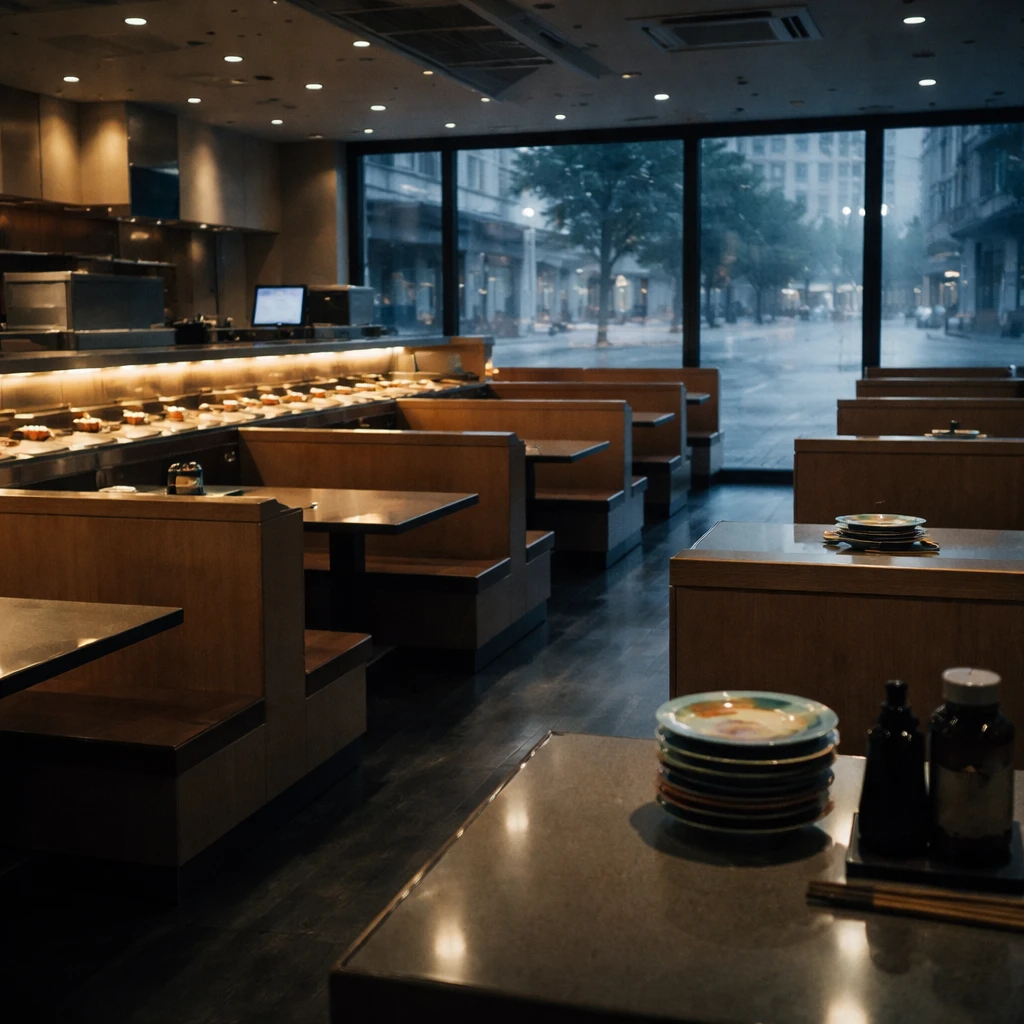
Kura Sushi USA experienced a sharp pre-market selloff, with shares down 11.4% after the company released its fiscal third-quarter 2026 results the evening before. While the chain reported quarterly earnings of $0.03 per share, which topped estimates, the top line failed to meet consensus as revenue came in at approximately $85.9 million.
Investors reacted especially negatively to management's revised full-year sales guidance. The company tightened its FY2026 sales outlook to a range of $330.5 million to $331.5 million. Management attributed the narrower range to development delays, and the midpoint of that range sits about $3 million below the prior analyst consensus of roughly $334 million.
Traffic trends and cost pressures added to the concern. Comparable restaurant sales declined by 0.4%, a result driven largely by a 5.1% drop in guest traffic that was only partially offset by price and mix improvements of 4.7%. On the margin side, cost of goods sold increased to 30.2% of sales from 28.3% a year earlier, with management pointing to an approximately 200-basis-point impact from tariffs on imported ingredients.
Following the report, several research firms adjusted their outlooks. TD Cowen maintained a Hold rating but reduced its price target to $51 from $58. Lake Street kept a Buy rating while lowering its target to $72 from $83. Craig-Hallum also remained at Buy but cut its price target to $80 from $95. The combination of a revenue miss, a negative traffic print, trimmed annual guidance and analyst target reductions contributed to the pronounced share-price drop in pre-market trading.
The selloff unfolded amid weakness across broader markets. In the prior session the Nasdaq Composite fell 1.16% to 25,818.69 and the S&P 500 slid 0.45% to 7,503.85, while the Dow Jones Industrial Average pulled back from record territory, losing about 130 points, or 0.25%. That risk-off tone left little buffer for a small-cap restaurant chain facing a disappointing earnings reaction.
Market positioning highlights how sentiment has shifted for the company over the past year. With a 52-week high of $95.98, Kura Sushi's then pre-market price of $46.85 places the shares more than 50% below that peak, underscoring the market's reassessment of the company's near-term growth trajectory.
Clear summary
- Kura Sushi posted $0.03 in quarterly earnings and approximately $85.9 million in revenue, missing consensus on sales.
- Management narrowed FY2026 sales guidance to $330.5 million - $331.5 million, with the midpoint roughly $3 million below prior analyst consensus of around $334 million, citing development delays.
- Comparable sales fell 0.4% amid a 5.1% decline in guest traffic; cost of goods sold rose to 30.2% of sales from 28.3%, driven by an estimated 200-basis-point tariff impact.
Key points
- Revenue miss and a narrowed, lower full-year sales range prompted the most immediate negative market reaction. Sectors affected include restaurant operators and consumer discretionary stocks, particularly small-cap chains.
- Traffic deterioration of -5.1% weighed on comparable-sales performance, partly balanced by +4.7% from price and mix changes, highlighting tensions between volume and pricing strategies in casual-dining concepts.
- Rising cost of goods sold, attributed to tariffs, compressed margins and intensified scrutiny from analysts, resulting in multiple price-target reductions across research firms.
Risks and uncertainties
- Continued weakness in guest traffic could further pressure comparable-sales metrics and future revenue results, affecting restaurant operators and related consumer-facing sectors.
- Ongoing tariff-related increases in ingredient costs may keep cost of goods sold elevated, squeezing margins for companies that rely on imported food inputs.
- Development delays cited by management could slow unit growth and push full-year sales below prior expectations, creating execution risk for growth-dependent restaurant chains.
The sequence of a sales shortfall, an unfavorable traffic trend, a tightened and lower sales forecast, together with analyst price-target cuts, explains the pronounced pre-market decline for Kura Sushi USA. For now, investors and analysts will likely focus on whether traffic recovers and whether tariff pressures abate as determinants of the chain's near-term performance.