
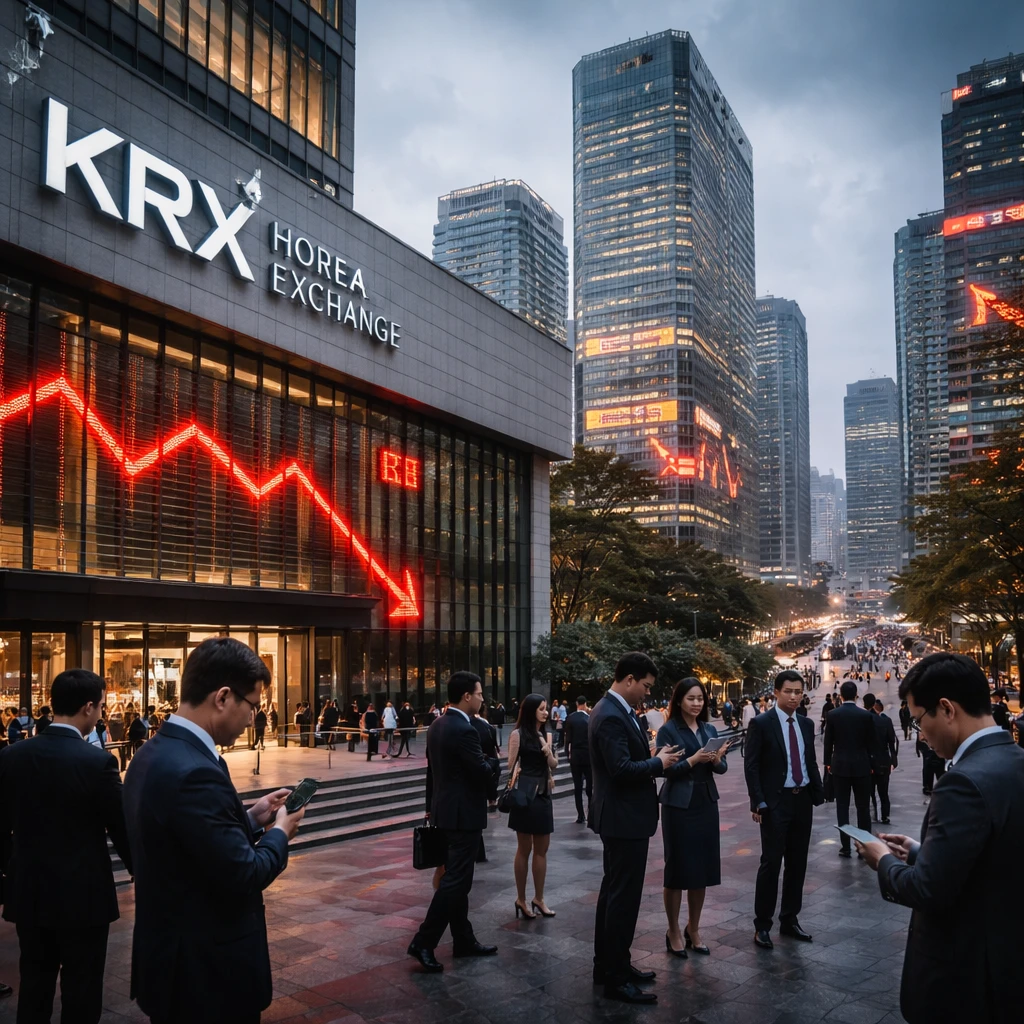
South Korea’s benchmark KOSPI index suffered a steep decline on Wednesday, dropping 8.1% to 5,322.93 points and prompting a temporary suspension of trading after a sell-side circuit breaker kicked in. The halt lasted 20 minutes and capped a rapid descent that followed a 7.2% fall on Tuesday, which erased gains made since record highs set last week.
Market participants attributed the selling primarily to profit-taking as investors moved to lock in recent gains amid a surge in risk aversion following the outbreak of the U.S.-Iran war over the weekend. Concerns that the conflict could feed into higher energy prices, and ultimately into inflation, also weighed on sentiment and contributed to the pullback.
Technology and industrial stocks, sectors that had been the primary engines of the KOSPI rally in February, were among the worst affected. Semiconductor names and capital-goods related firms faced the heaviest selling pressure as investors pared exposure.
Individual large-cap moves were notable. Samsung Electronics Co Ltd (KS:005930) slid 6.5%, while SK Hynix Inc (KS:000660) fell 4.7%. Automaker Hyundai Motor (KS:005380) plunged nearly 10%. Each of those stocks retreated from recent record highs reached in the prior trading period.
Samsung’s share drop was amplified by a report that mass production at the company’s planned chip plant in Taylor, Texas, had been pushed back to 2027 from 2026. That development added to investor concern about near-term timing for capacity expansion at the firm.
Market flows showed both domestic and foreign investors selling South Korean equities, with limited institutional buying failing to provide meaningful price support. Analysts and market observers noted that local stocks were vulnerable to a pullback after a strong run-up earlier in the year; the KOSPI had risen 26% in January and February on optimism tied to artificial intelligence developments.
Context and market dynamics
The two-session sell-off reflects a confluence of factors described by traders: pronounced risk-off positioning driven by geopolitical tensions and concerns about energy-related inflation, combined with profit-taking after a rapid rally. The market response included an automatic trading suspension when losses breached the exchange’s sell-side circuit breaker threshold.