
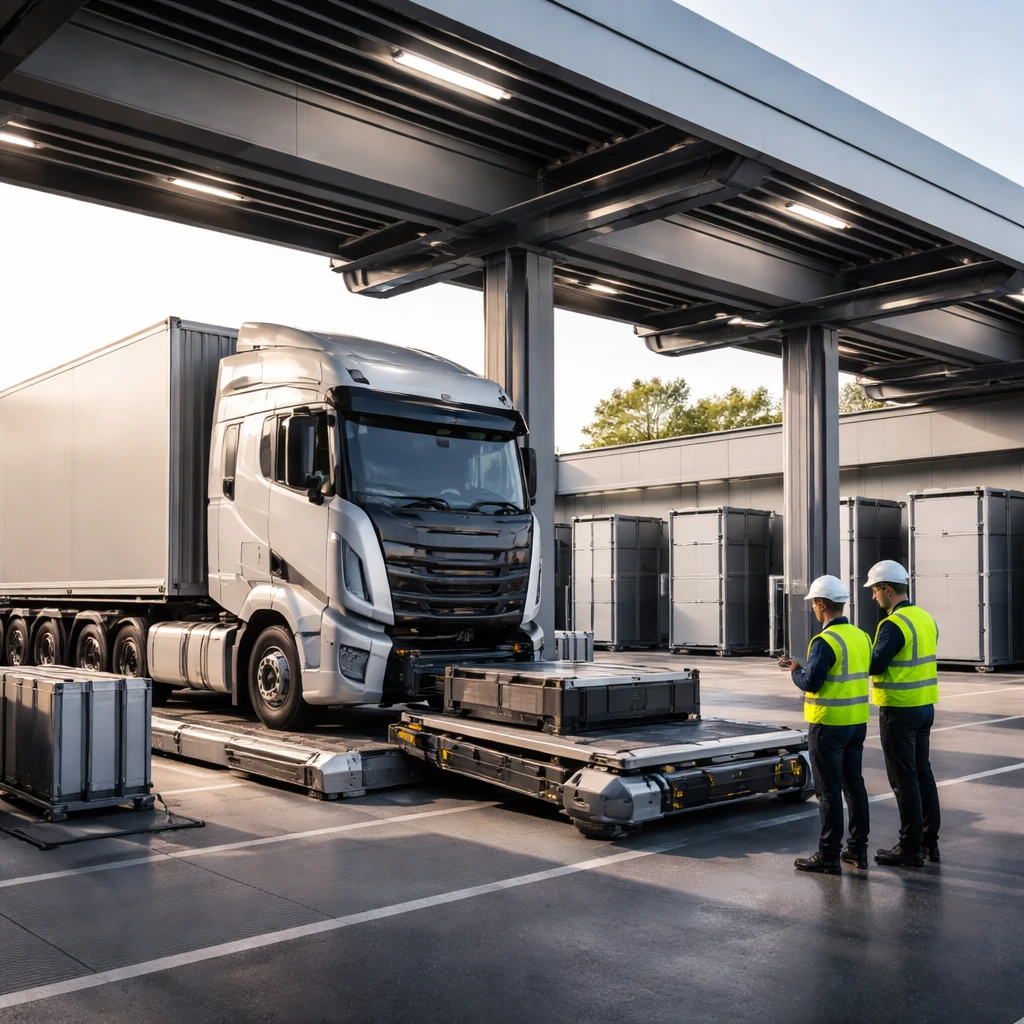
Kandi Technologies Group Inc. stock climbed 5.1% in premarket trading Thursday after the electric vehicle company disclosed a strategic collaboration with a unit of battery manufacturer Contemporary Amperex Technology Co., Ltd. (CATL).
The arrangement runs for three years and pairs Kandi’s wholly owned subsidiary, China Battery Exchange, with Times Qiji Green Energy Technology, a CATL unit. The agreement targets mass-production initiatives for battery swap stations designed for heavy trucks.
Under the terms of the deal, China Battery Exchange will act as a strategic supplier to Qiji Energy. Its responsibilities include guiding solution layout, selecting equipment and manufacturing the mechanical and control systems that form the core of the battery swap stations.
The partnership positions Kandi to participate in CATL’s so-called Ten Thousand Station Plan, a program that the companies say aims to bring roughly 900 battery swap stations online by 2026. The collaboration is presented as a joining of CATL’s battery technology and network capabilities with China Battery Exchange’s manufacturing expertise for swap equipment.
Feng Chen, chief executive officer of Kandi Technologies, characterized the pact as "another important milestone in the development of our battery swapping business." The company, which has been an early entrant into battery swapping in China, regards the technology as central to its long-term strategic direction.
Company statements indicate the cooperation is expected to help move battery swap infrastructure toward greater standardization and scalability. Kandi also sees the deal as expanding its growth prospects within the new energy value chain by leveraging the commercial deployment plans of a large battery supplier.
Takeaways
- The announcement triggered a premarket stock increase of 5.1% for Kandi Technologies.
- The three-year agreement makes China Battery Exchange a strategic supplier to Times Qiji Green Energy Technology for heavy-truck battery swap stations.
- The cooperation aligns with CATL’s Ten Thousand Station Plan, which targets about 900 swap stations by 2026.
The details provided in company communications focus on the operational scope of the partnership - solution design, equipment selection and the manufacture of mechanical and control systems - rather than on pricing, financial commitments or other contractual terms.
Market observers and stakeholders interested in electric vehicle infrastructure, battery manufacturing and industrial equipment production will likely watch the rollout and standardization efforts tied to this cooperation.