
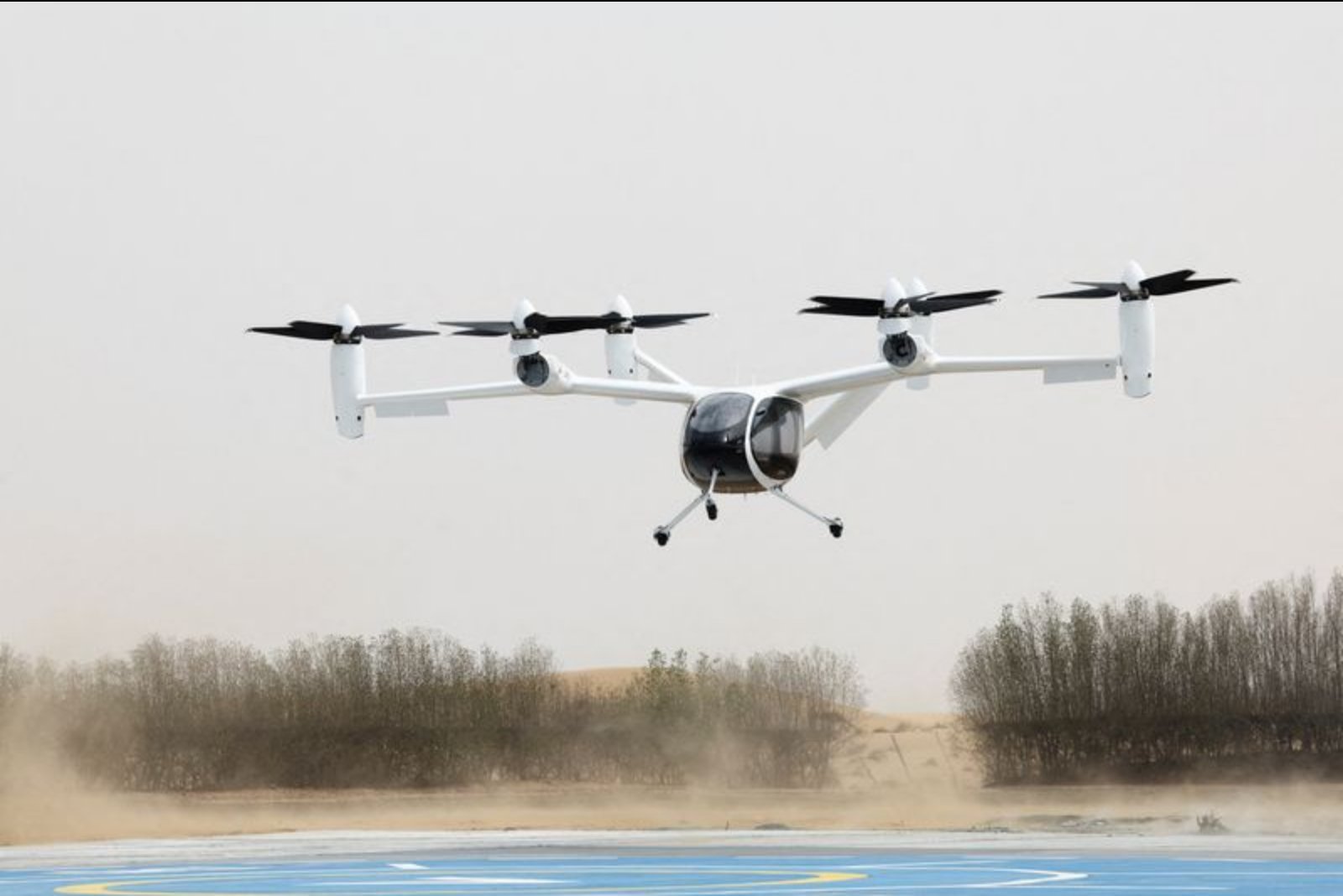
Joby Aviation has started flying the first of its production-model electric air taxis as the company advances into formal certification testing with federal regulators, the firm said on Wednesday. Pilots at Joby have carried out initial flights at the company's Marina, California facility, marking the start of a program aimed at securing type inspection authorization (TIA) - a key step on the path to full certification for commercial use.
Those early flights are intended to precede evaluations by pilots from the U.S. Federal Aviation Administration, which Joby said are scheduled to take place later this year. The company emphasized that it has worked with regulators for several years to validate the designs, plans and components used to construct this production aircraft, and that its test pilots have collectively logged more than 50,000 miles (80,500 km) in earlier developmental aircraft.
Joby describes the air taxi as a six-rotor electric aircraft capable of vertical takeoff and landing like a helicopter while transitioning to level flight like a conventional airplane. The cabin is configured to carry a pilot and four passengers. The company announced plans to start flying commercially later this year in Dubai, where it said two of four planned landing sites are already under construction.
In the United States, Joby expects to begin limited operations this year as part of a White House-backed initiative to fast-track the integration of electric air taxis and other small aircraft into the national airspace. The company is participating in five of the eight pilot programs that the Federal Aviation Administration announced on Monday as part of that initiative.
Looking further ahead, Joby has stated a manufacturing ambition to produce four aircraft per month in 2027, with production capacity planned at facilities in California and Dayton, Ohio. Those production targets sit alongside the certification and operational milestones the company is pursuing.
Separately, an AI-driven investment screener called ProPicks AI evaluates JOBY among thousands of companies using more than 100 financial metrics. The tool uses machine learning to identify stock ideas by assessing fundamentals, momentum and valuation, and it reports that JOBY is reviewed monthly in that context alongside other opportunities in the market.