
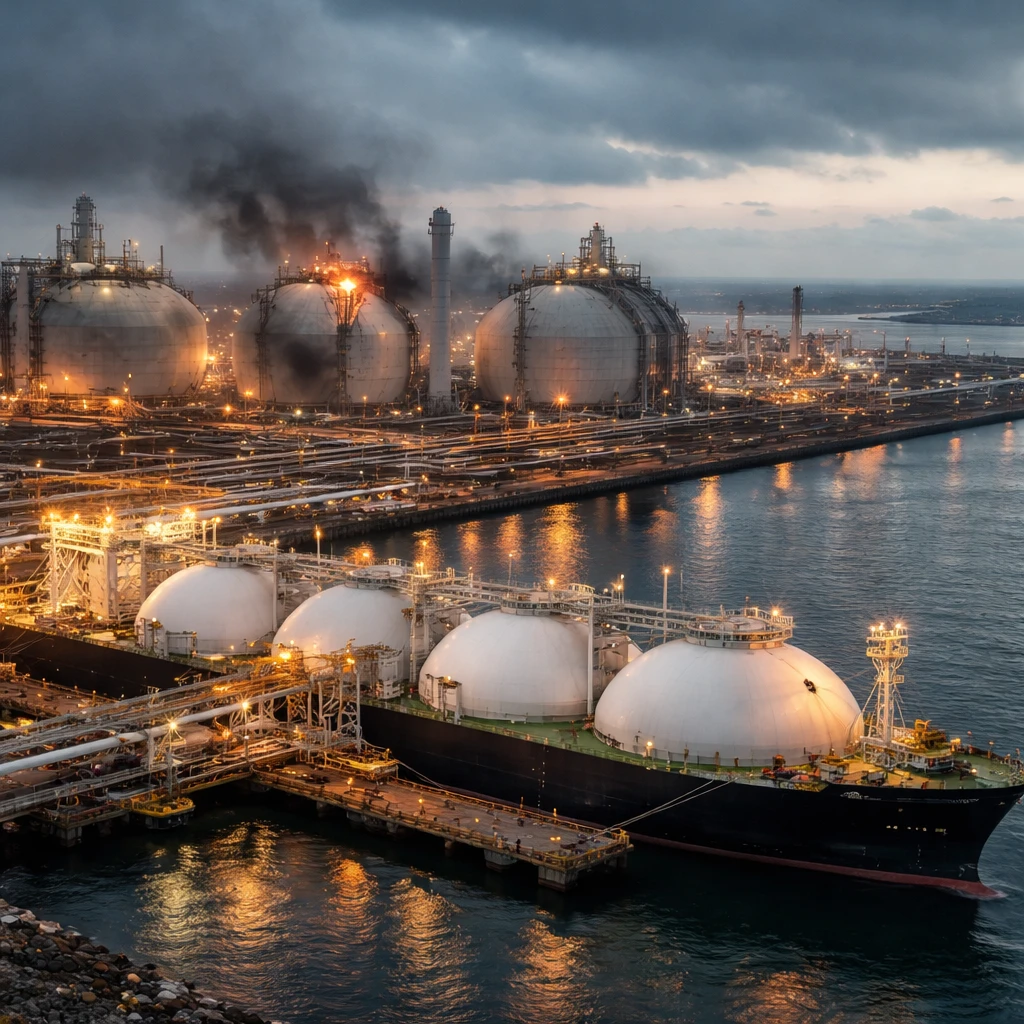
Japan's biggest power generator is preparing for a shift in global LNG sourcing should the current conflict involving Iran continue for an extended period. In an interview, JERA's Senior Managing Executive Officer Ryosuke Tsugaru said the longer disruptions persist, the more likely buyers will seek supply outside the Middle East - notably from the United States and Canada.
Tsugaru highlighted the scale of the potential gap, noting that "With 90 million metric tons from the Middle East absent from the global LNG market, the longer this persists, the greater the impact." His remarks followed reports that Iranian missiles struck Ras Laffan, Qatar's main LNG processing complex, causing what Qatar described as "extensive damage." JERA declined to comment specifically on that attack on Thursday.
Those developments add to existing disruptions. Earlier in the month, Qatar halted production at its 77 million ton-per-annum LNG plant and declared force majeure on shipments. The plant sits across the Persian Gulf from Iran, which has targeted U.S. interests and energy infrastructure as the conflict has spread.
For JERA the stakes are tangible. The company handles roughly 35 million tons of LNG each year, with about 27 million tons consumed domestically in Japan. Around 5% of JERA's shipments to Japan move through the Strait of Hormuz - a chokepoint running alongside Iran that carries roughly 20% of the world's fossil fuel supply. Tsugaru warned that continued disruption could push spot prices higher and increase market volatility while underlining regional risk to supply chains.
JERA has taken steps to diversify. In February, the company signed a 27-year supply agreement with QatarEnergy for 3 mtpa from the North Field South expansion, set to deliver from a project phase scheduled for 2028. Tsugaru said that if the war persists and construction on that expansion stalls, deliveries under that contract could be pushed beyond the 2028 timetable.
At the same time, JERA has secured access to North American volumes. Last year the company agreed to purchase 5.5 mtpa of U.S. LNG from four projects beginning around 2030, and it acquired U.S. natural gas assets for $1.5 billion. Tsugaru said JERA has secured the LNG needed for the early 2030s and can hedge about 60% of the expected U.S. volume - which JERA projects will reach 10 million tons in the next decade - against price swings.
Despite those purchases, Tsugaru said JERA does not intend to become a U.S. gas producer and is not seeking further upstream acquisitions at present. The company also sources supply from LNG Canada - the Shell-led venture - and is considering whether to increase volumes from an LNG Canada expansion project.
On immediate procurement, Tsugaru described JERA's exposure to the Middle East as not significant, but said the company is considering additional spot purchases to address specific cargo shortfalls. He noted that JERA has not received any emergency procurement requests from domestic utilities. If the crisis endures, he said JERA will monitor demand trends and purchase spot cargo as needed to ensure a stable supply, while maintaining its existing contract with QatarEnergy.
Context for markets and supply chains
Tsugaru framed the situation as one in which prolonged regional conflict could reshape LNG sourcing patterns and investment decisions. The combination of halted production, infrastructure damage, and transit risks through the Strait of Hormuz could both tighten immediate supply and incentivize buyers to accelerate sourcing from non-Middle Eastern projects.