
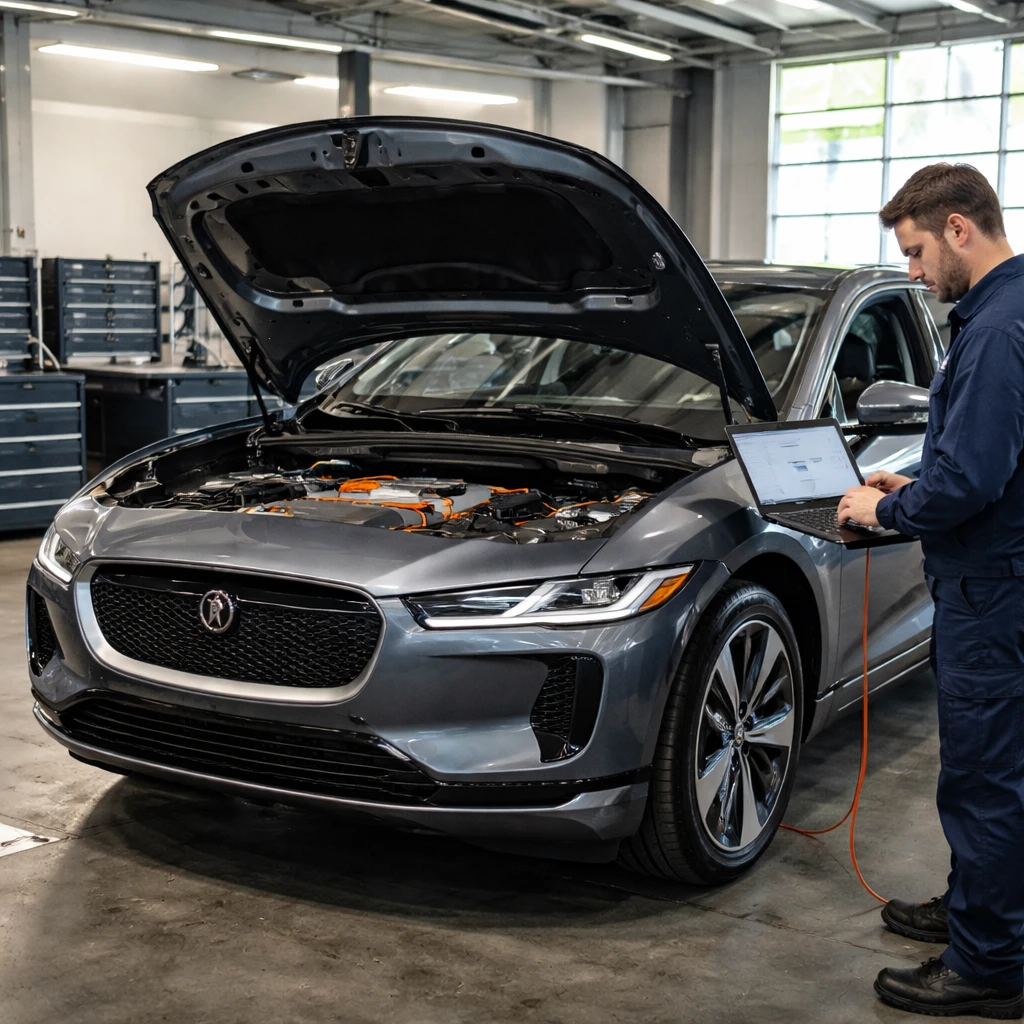
Jaguar Land Rover has initiated a recall of 2,278 I-PACE SUVs in the United States due to a potential fire hazard tied to the vehicles' high-voltage battery, the U.S. National Highway Traffic Safety Administration (NHTSA) said.
The safety agency indicated that the affected high-voltage battery may overheat, a condition that elevates the risk of a vehicle fire. As an interim measure, the company will apply a software change to restrict the battery's maximum state of charge to 90%.
The temporary mitigation will be deployed either by dealers during service visits or delivered remotely via an over-the-air (OTA) update, the NHTSA statement said. The agency also noted that engineers are actively working to design and validate a permanent repair for the underlying issue.
The recall covers I-PACE models in the United States; however, the announcement did not specify which model years are included.
Summary
Regulators have ordered a recall of 2,278 Jaguar Land Rover I-PACE SUVs in the U.S. after concerns that the high-voltage battery could overheat and raise the risk of fire. For now, a software update will cap the battery charge at 90%, applied either by dealers or through an over-the-air update. Engineers continue to pursue a permanent technical solution. The recall notice did not list specific model years.
Key points
- 2,278 I-PACE SUVs in the United States are subject to a recall due to possible high-voltage battery overheating and resultant fire risk.
- A temporary software update will limit the battery state of charge to 90% and can be installed by dealers or via OTA updates.
- Engineers are developing a permanent repair; the recall announcement did not identify affected model years.
Risks and uncertainties
- Timing and details of the permanent fix remain uncertain while engineers work on a solution - this affects the automotive and electric-vehicle maintenance sectors.
- Owners must receive the interim software update either at a dealer or through an OTA delivery; logistics and uptake could vary across the U.S.
- The announcement does not specify model years, leaving ambiguity for owners and service networks about which vehicles require the update.
Further communications from the manufacturer or the regulator would be needed to clarify which specific I-PACE model years are included and the timetable for a final repair.