
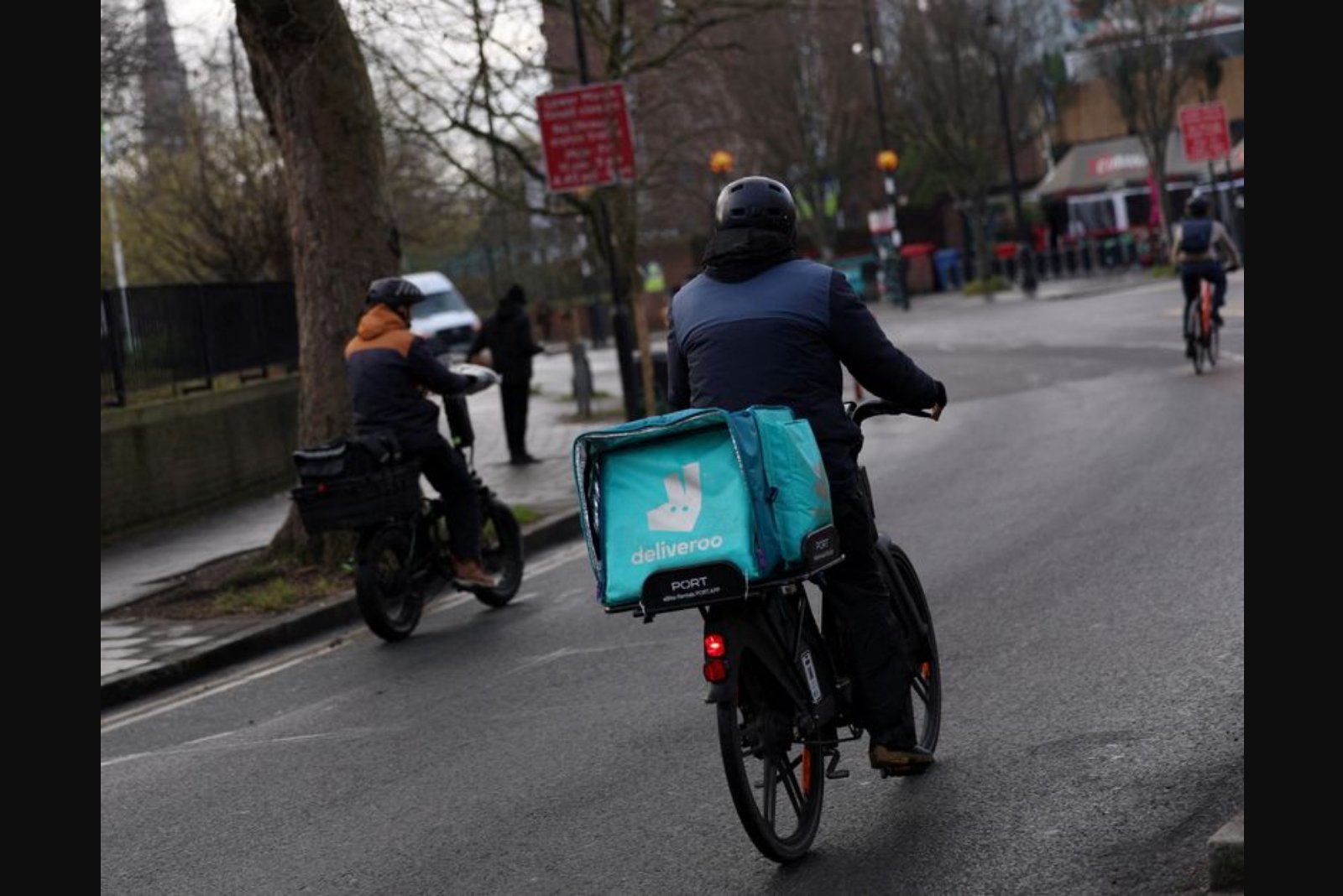
Milan prosecutors have ordered judicial supervision of Deliveroo's Italian arm and have placed the company's Italian chief executive under investigation on allegations of exploiting workers, according to judicial documents reviewed by Reuters.
The company did not provide an immediate comment through a spokesman. Deliveroo Italy is owned by U.S. meal delivery operator DoorDash, which completed an acquisition of the firm last year for approximately 2.9 billion pounds ($3.92 billion).
This enforcement action follows similar measures taken two weeks earlier against the Italian operation of Spanish delivery company Glovo. In the Deliveroo Italy case, prosecutors have appointed a judicial administrator to oversee the business with an explicit mandate to regularise the situation of its workforce and to monitor adherence to labour laws and conditions.
Prosecutors set out their concerns in a 60-page document. They reported that Deliveroo Italy had roughly 3,000 couriers in the Milan area and around 20,000 riders across the country. Although the cycle couriers were formally classified as self-employed, prosecutors said the riders functioned effectively as employees because their working patterns and conditions were determined by an information technology platform.
Detailed findings in the decree served by a police labour unit described compensation for riders as averaging between 3 euros and 4 euros gross per delivery, with costs for transport and equipment borne by the riders themselves. The national statistics bureau ISTAT's poverty threshold for 2024 was cited: some 730 euros a month for a single worker and 1,218 euros for a couple living together.
Prosecutors noted that, in certain instances, pay for Deliveroo riders was "up to about 90% below the poverty threshold and collectively bargained contracts." The decree included signed statements from 54 workers, nearly all immigrants from Pakistan and Nigeria. Every one of those workers reported working between 10 and 17 hours per day, seven days a week, and earning only enough in many cases to afford a shared room, meet basic food needs and remit small amounts to families abroad.
"The checks carried out point to a situation of genuine labour exploitation, perpetrated for years to the detriment of a very large number of workers, who receive pay that is disproportionate to the quantity and quality of the work performed," the prosecutors wrote. They added that the illegal situation must be ended swiftly because it affects a substantial number of workers who are living on earnings below the poverty line.
Authorities described the operation as part of a broader crackdown in Italy over the past three years targeting labour exploitation across a range of business sectors. The documents also included a currency conversion, noting that $1 equals 0.8487 euros.
Contextual summary
Prosecutors' findings highlight alleged systemic issues in the treatment of food delivery riders in Italy: classification as self-employed despite algorithm-driven management, very low per-delivery pay, and extended working hours reportedly experienced by primarily immigrant workers. The judicial supervision is intended both to ensure compliance with labour norms and to correct employment arrangements where prosecutors believe exploitation has occurred.