
Israel announced that an overnight attack killed Iran's intelligence minister, Esmail Khatib. Tehran has not issued a response to the assertion, which, if confirmed, would be the latest high-level Iranian official killed this week.
Iran retaliated with fresh strikes on Israel, stating the attacks were in response to the killings of Ali Larijani and Gholamreza Soleimani, both described as key figures in Iran's security apparatus. Israeli emergency services reported two fatalities in Ramat Gan, a city just outside Tel Aviv.
Military activity across the region continued to intensify. Israel proceeded with a ground invasion in southern Lebanon on Wednesday, framing the move as part of operations against Iran-backed Hezbollah militants. Central Beirut was reported struck during the same timeframe.
Separately, the U.S. military conducted strikes using 5,000-pound bombs on facilities along Iran's coast near the Strait of Hormuz. According to U.S. Central Command, the targets housed Coastal Defense Cruise Missiles, or CDCMs, weapons capable of skimming the water's surface to evade detection and striking ships with steel-penetrating warheads.
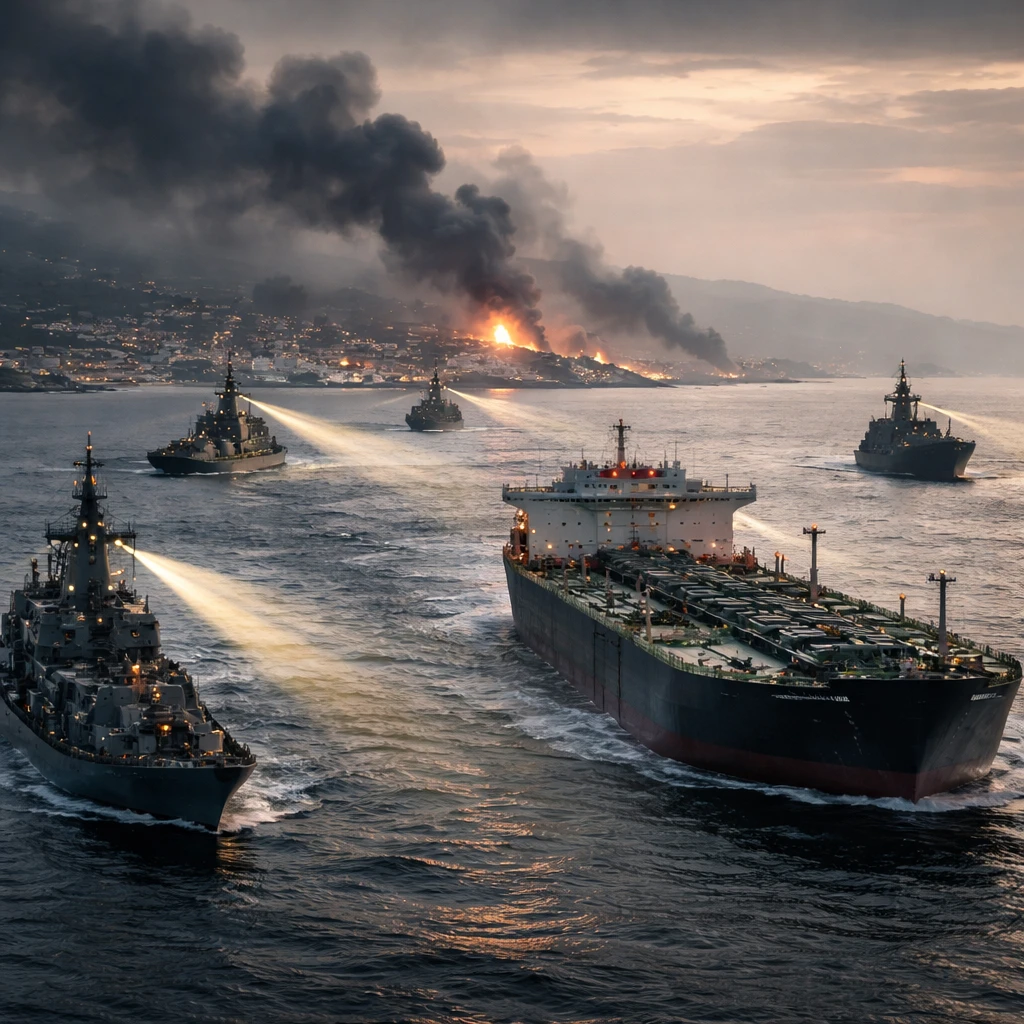
Concerns that such cruise missiles could be launched against vessels have effectively halted most sailings through the Strait of Hormuz, a chokepoint that moves roughly a fifth of global oil shipments. The bottleneck and military actions have driven the global crude benchmark above $100 a barrel. At the same time gasoline prices at U.S. pumps have risen to their highest levels since 2023, intensifying fears that inflationary pressure could influence upcoming Federal Reserve decisions on interest rates.
President Donald Trump said the United States no longer needs international assistance to reopen shipping through the strait, arguing that U.S. strikes have significantly degraded Iran's naval and military capabilities. Earlier in the week, he sought help from allies including NATO, Australia, Japan, and South Korea to support U.S. efforts to restore transit, a request that was widely rebuffed.
The conflict, now described as three weeks in duration, has triggered dissent within U.S. circles: a top security official resigned this week, illustrating internal disagreement over the campaign. Trump has also indicated a willingness to deploy ground troops into Iran if necessary. Analysts at Vital Knowledge countered that, aside from deploying ground forces, there is no military option for reopening the strait.
The sequence of strikes, reprisals, and the near-shutdown of a major shipping lane are already affecting markets and the energy supply chain. The elevated crude price and rising gasoline costs in the United States highlight near-term risks to inflation trends and monetary policy considerations.
This is a developing story; further updates may follow.