
Overview
Iran’s Islamic Revolutionary Guards Corps (IRGC) declared on Tuesday that it would stop the export of oil from the region if military strikes by the United States and Israel continue, saying its forces will decide when the conflict ends. President Donald Trump sharply warned that the United States would respond with far greater force should Iran move to shut down tanker traffic through the Strait of Hormuz, a chokepoint that carries roughly one-fifth of the world’s oil supply.
Tehran’s stance and a direct warning
State media quoted an IRGC spokesperson stating that they would permit no oil to leave the region if the United States and Israel persist with attacks. The spokesperson added, according to the state report, that the IRGC itself would determine the cessation of hostilities - a statement that underscores Tehran’s intention not to cede control over the timing or terms of a pause in fighting.
In response, President Trump warned at a news conference that the United States had already inflicted substantial damage on Iran’s military and that any attempt to halt shipments through the Strait of Hormuz would draw a dramatically escalated U.S. response. "We will hit them so hard that it will not be possible for them or anybody else helping them to ever recover that section of the world," he said. He later repeated the warning in a Truth Social post, saying any action that stops oil flow within the strait would be met with force "TWENTY TIMES HARDER than they have been hit thus far."
Casualties and the scale of domestic damage
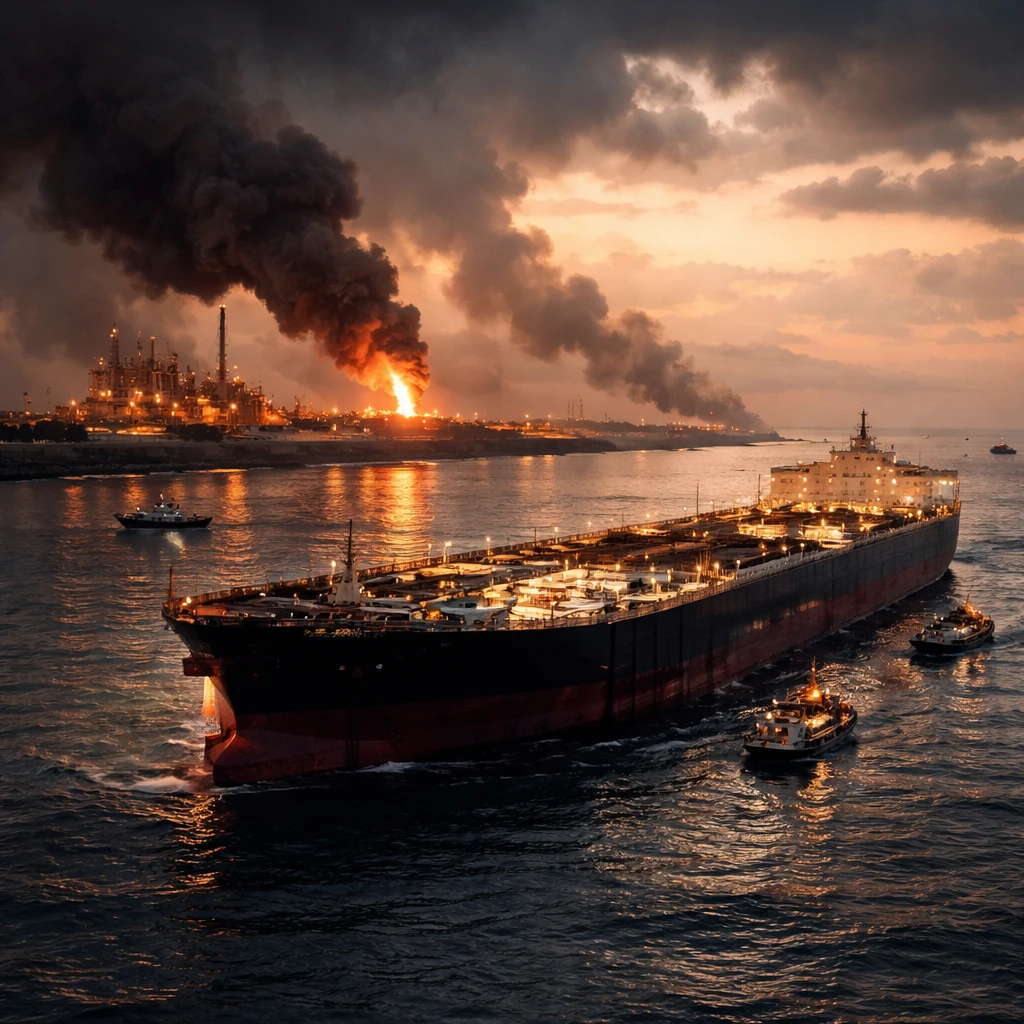
Iran’s U.N. ambassador cited at least 1,332 Iranian civilian deaths and thousands more wounded since the U.S. and Israel carried out a barrage of air and missile strikes across Iran at the end of February. Domestically, an oil refinery was struck and set ablaze, creating thick black smoke across Tehran. The World Health Organization chief warned that the resulting fires risked contaminating food, water and air supplies.
Strait of Hormuz and shipping disruption
The conflict has effectively shut down traffic through the Strait of Hormuz. Tankers have been unable to transit for more than a week and some oil producers have halted pumping as onshore storage tanks reached capacity. Given that the strait handles about one-fifth of global oil flows, the disruption has immediate and visible implications for crude markets and for countries sensitive to pump prices.
Market reaction and policy options
Markets swung sharply on the news. Brent crude futures initially surged to their highest levels since 2022, rising as much as 29% on Monday, before falling back more than 10% on Tuesday. Global equity indices likewise dropped then recovered as investors weighed both the risks of prolonged disruption and statements indicating a potential earlier resolution.
President Trump said he expected the conflict to end well before the four-week timeframe he had previously mentioned, though he did not specify what would constitute victory. After consulting with Russian President Vladimir Putin, Trump noted the United States would waive some oil-related sanctions to relieve shortages, a move that sources said could include a further easing of sanctions on Russian oil. Other measures reportedly under consideration include releasing crude from strategic reserves or adjusting U.S. export policy.
Regional military developments
Israel reported carrying out additional strikes in central Iran and hitting targets in Beirut, where Israel has widened its campaign after cross-border fire from Hezbollah. Turkey reported that NATO air defences shot down a ballistic missile that entered its airspace after being fired from Iran - the second such incident since the war began - though Iran did not immediately comment on that report.
Humanitarian and diplomatic fallout
The conflict’s human impact extended beyond Iran’s borders. In Australia, five players from Iran’s women’s soccer team were granted humanitarian visas after seeking asylum, citing fear of persecution. Australia also said it would deploy surveillance aircraft to the Middle East and supply missiles to the United Arab Emirates to bolster their defenses against Iranian attacks.
Implications for energy and the election cycle
Oil and gasoline prices have a distinct political resonance in the United States, where rising pump prices are a major voter concern ahead of the upcoming midterm elections in November. A Reuters/Ipsos poll cited that 67% of Americans expected gas prices to rise over the coming months and that only 29% approved of the war - data that underscore the domestic political sensitivity of energy market shocks.
Conclusion
The confrontation between Iran, the United States and Israel has produced a high degree of market and diplomatic volatility. Tehran’s vow to prevent oil exports if strikes persist, combined with strong U.S. rhetoric about escalatory retaliation and potential sanction adjustments, has pushed commodity and equity markets into wide intraday swings while producing humanitarian and environmental concerns at home in Iran.
Key points
- Iran’s Revolutionary Guards said they would block oil exports from the Middle East if U.S. and Israeli attacks continue, asserting they will determine when the war ends.
- President Trump warned of a far heavier U.S. military response should Iran obstruct shipments through the Strait of Hormuz, which carries about one-fifth of the world’s oil.
- Markets reacted violently: Brent crude spiked to multi-year highs then fell sharply the next day; global stock markets declined and then rebounded. The conflict has also led to operational halts for tankers and some oil producers as storage reached capacity.
Risks and uncertainties
- Further disruption to tanker traffic through the Strait of Hormuz could deepen supply shortages and amplify volatility in oil and gasoline prices, affecting energy markets and consumer costs.
- Escalation of military strikes across Iran, including attacks on domestic energy infrastructure, raises environmental and public health risks, per warnings about contamination from refinery fires.
- Moves to adjust sanctions policy, such as waiving oil-related restrictions for some countries, carry uncertainty about market responses and geopolitical consequences, particularly where Russian oil sanctions are concerned.