
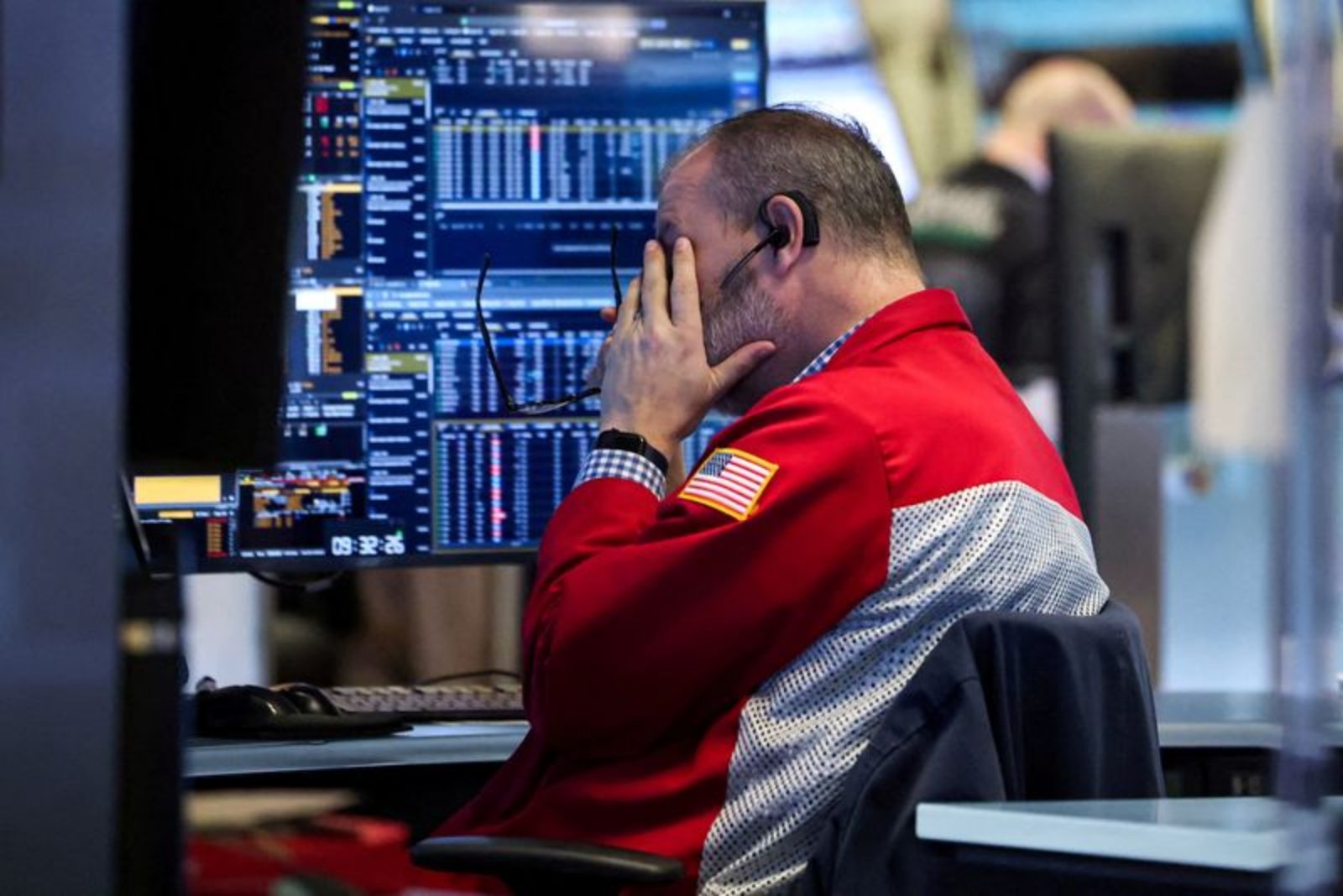
Global financial markets moved decisively toward liquidity on March 3 as an intensification of the Middle East conflict pushed investors to raise cash and liquidate positions across multiple asset classes simultaneously. The escalation - including Israeli strikes on Lebanon and Iranian attacks on energy infrastructure in Gulf countries and tankers in the Strait of Hormuz, a waterway that carries roughly a fifth of the world\'s energy - altered the usual safe-haven dynamics and amplified market-wide volatility.
What had been market optimism only a day earlier, based on expectations of a rapid resolution to the confrontation, turned abruptly into risk-off behavior. The shift drove coordinated selling in equities, sovereign and corporate bonds, and even gold, a metal traditionally used as a crisis hedge. At the same time, Brent crude rose nearly 7% and the U.S. dollar strengthened sharply against major currencies.
Price and flow moves
On the equity front, Wall Street experienced meaningful losses as major indexes declined by more than 2% intraday, with the S&P 500 falling to its weakest level in over two months. In fixed income, the repricing of short-term risk saw the two-year U.S. Treasury yield reach 3.599%, its highest level since late January. Gold, which had climbed to four-week highs on Monday, retreated by about 4% as investors converted positions to cash.
Market flow data underscored the rush for liquidity. LSEG Lipper recorded $47.9 billion in inflows to global money market funds, the largest daily intake since February 17, as investors sought short-term, cash-like instruments. At the same time, U.S.-focused equity funds saw $9.6 billion in redemptions, and global equity funds recorded outflows of $9.1 billion on Monday, their largest in over two months.
Why selling broadened across assets
Market participants and strategists pointed to several drivers behind the broad-based de-risking. One factor was entrenched positioning prior to the weekend attacks on Iran - large, concentrated bets left some portfolios exposed when volatility returned. Another was a reassessment of inflationary pressures from higher oil prices, which can reduce the appeal of long-duration bonds. These forces, combined with the uncertainty stemming from the geopolitical developments, produced what traders described as a near-simultaneous correlation shock where cross-asset volatility moved toward one.
"What is happening is a classic response to an event that has a lot of uncertainty," said Michael Arone, chief investment strategist at State Street Investment Management in Boston. He added that the decline in gold illustrated the indiscriminate nature of the selling, noting: "Oil, and the dollar, are the only two things that people want to own right now."
"History tells us that, in periods of stress, the correlation of cross-asset volatility tends towards one," said George Adcock, head of trading and the deputy portfolio manager of Kohinoor Strategy at 36 South Capital Advisors. He described a reflexive unwind of entrenched narratives, extreme positioning and subdued volatility from January that has led to a significant VAR and correlation shock across portfolios.
In practice, a value-at-risk, or VAR, shock occurs when selling becomes contagious across market sectors, breaking down previously negative correlations that had provided diversification and portfolio protection. The result can be forced liquidation across assets as risk limits are hit simultaneously.
Liquidity management and immediate reactions
Money market inflows reflected a preference for short maturities rather than longer-duration sovereign debt. "There\'s an interesting flight to quality happening, with the dollar rallying, but it\'s not going to Treasuries or other dollar assets," said David Kelly, chief global strategist at JP Morgan Asset Management. "That\'s indicative of growing demand for short-term cash."
State Street\'s head of gold strategy, Aakash Doshi, noted how gold positions were being used in some cases to raise liquidity. He said billions had flowed into listed gold funds earlier in the year and that recent outflows could be part profit-taking and part a cash-raising exercise to meet margin calls or close out long positions. "In the case of gold, you\'re seeing some profit taking, and you\'re seeing just some liquidity, a cash raise, using gold as a liquid alternative hedge, in order to potentially offset margin calls, to offset stopped-out long positions and so forth," he said. "The focus has to be on the immediacy of when there\'s a real geopolitical shock or when there\'s very massive market uncertainty; your cash is king still."
Outlook and limits to the dollar rally
While the dollar has strengthened in response to the shock, some analysts cautioned that the rally may not persist. JPMorgan\'s Kelly observed that the longer-term path of the currency could be influenced by how the conflict affects the U.S. fiscal position and the economy. "Wars start out in shock and awe and end up in quagmire, which tends to be negative for the dollar," he said, noting that a sustained deterioration in the fiscal or economic outlook could undercut dollar strength.
For now, investors appear focused on immediate liquidity and risk reduction, driven by uncertainty over how the situation in the Middle East will evolve and the near-term market implications for energy, inflation and portfolio exposures.
Impacted sectors
- Energy - rising oil prices and direct attacks on energy infrastructure and tankers have immediate implications for oil markets and energy security.
- Fixed income - higher expected inflation from oil price moves and volatility drove yields higher and prompted selling in bonds.
- Equities - broad-based risk-off flows led to sizable outflows and index declines.