
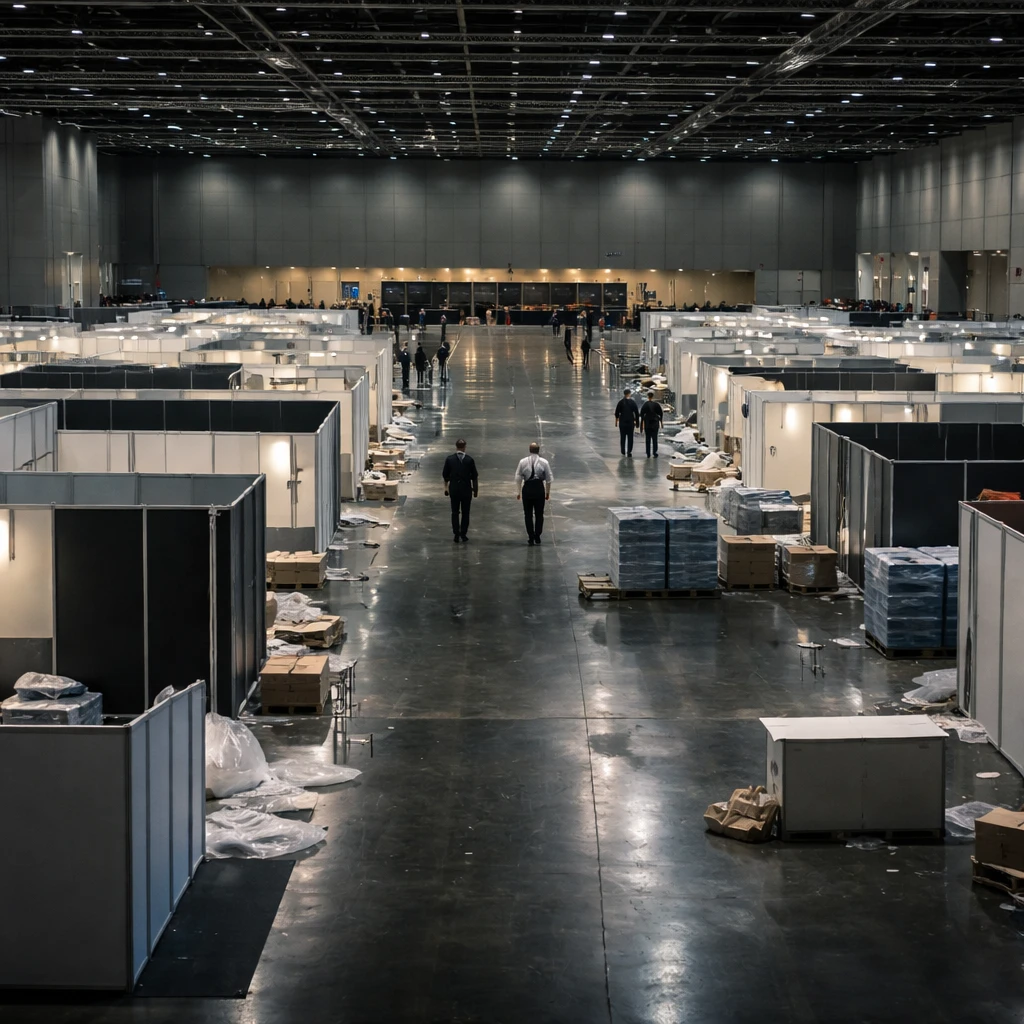
Informa PLC saw its stock fall 6.04% on Monday amid heightened geopolitical tensions in the Middle East, as weekend events affecting several countries including Saudi Arabia and the UAE prompted concern over the company’s regional exposure.
The firm, which is the world’s largest organiser of live business-to-business events, counts the Middle East as a high-growth market for its in-person exhibitions and conferences. The company has reported strong double-digit percentage forward underlying revenue run-rates for live events in the region.
Analysts at Morgan Stanley estimate that the IMEA region - which encompasses India, the Middle East and Africa - was expected to account for about 21% of pro forma live B2B events revenue in 2025. On a pro forma group basis that figure translates to a mid-teens percentage of total group revenue for that year.
Morgan Stanley further breaks down exposure, noting that the countries directly affected over the weekend likely represent roughly 75-80% of IMEA revenue. By that calculation, group revenue attributable to those impacted markets would be in the range of 11-13% of the whole company.
After accounting for joint venture non-controlling interest payaways, Morgan Stanley says adjusted EBIT and adjusted net income exposure tied to the affected countries could be nearer to the mid to mid-high single digit percentages of group results.
For fiscal 2026 the company has a mix of revenue streams, with approximately 76% derived from live B2B events, around 9% from TechTarget and roughly 16% from Taylor & Francis, its academic publishing division.
Morgan Stanley analysts commented that if tensions do not spread further, the impact on Informa could be limited. However, they warned that a protracted conflict would risk meaningful disruption. The analysts added: "We would as a baseline note that Informa runs relatively business-critical B2B events (not B2C)."
The firm highlighted calendar and scheduling implications for major shows, noting that flagship events such as the Dubai Airshow will not return until late 2027, while Gulfood 2026 concluded at the end of January.
Investors reacted to these concentration and scheduling risks, sending the shares lower as the market priced in near-term uncertainty around revenue and profit exposure tied to the affected IMEA markets.
Additional context included in prior reporting: A sector-focused evaluation tool noted that it assesses INF alongside thousands of other companies each month using over 100 financial metrics to identify risk-reward characteristics. The tool’s methodology compares fundamentals, momentum and valuation when selecting ideas.