
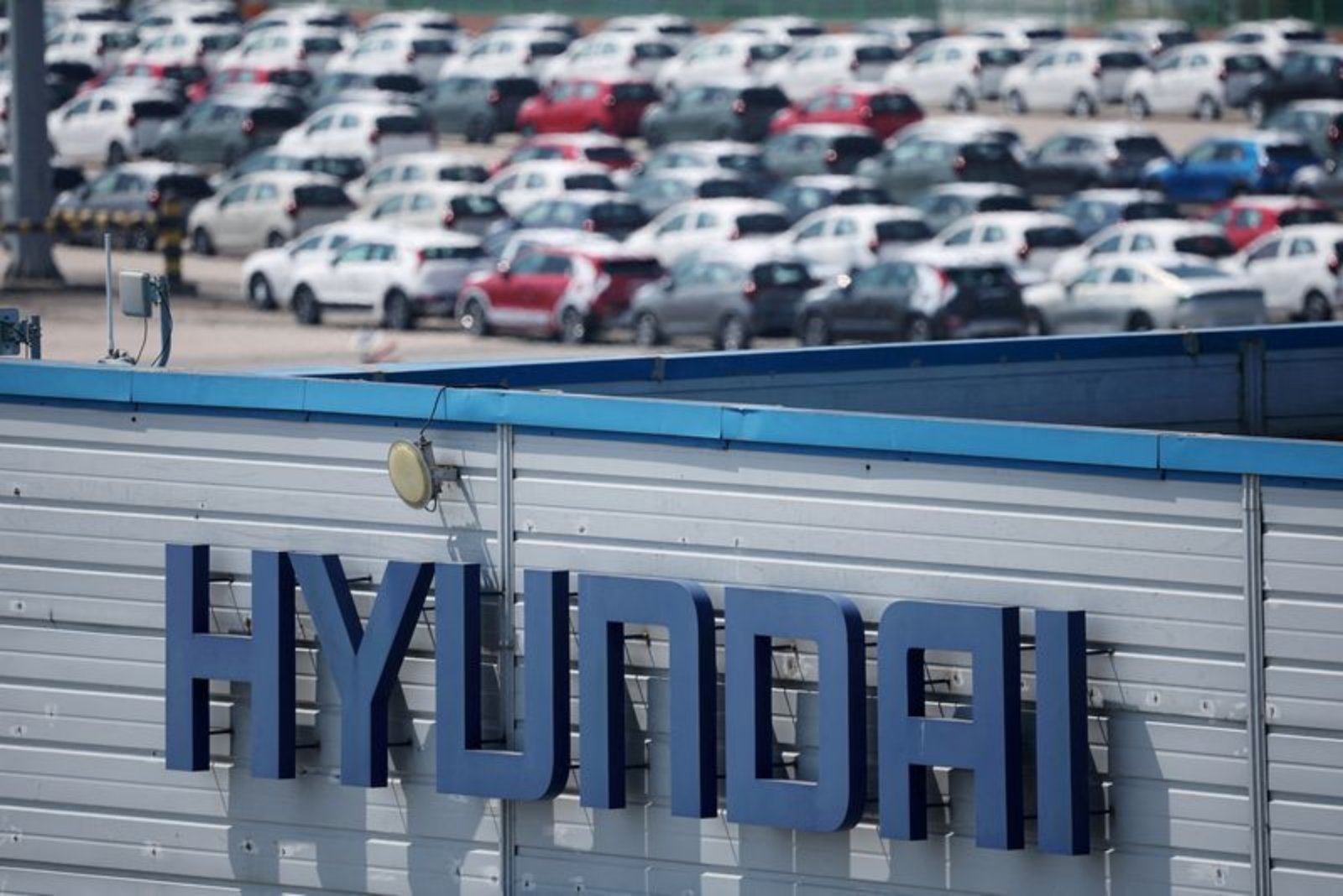
Hyundai Motor President Sung Kim pressed South Korean legislators on Tuesday to move quickly to approve a $350 billion U.S. investment package, arguing that failure to do so could invite renewed tariff pressure from the Trump administration despite a recent legal setback for the president.
Kim spoke during a meeting with opposition lawmakers and representatives from business associations convened to discuss the investment package that is part of a trade accord negotiated last year. That agreement would reduce U.S. tariffs from 25% to 15% if enabling legislation is passed in South Korea.
The U.S. Supreme Court recently struck down the administration's universal tariffs, a decision that prompted immediate responses in Washington. U.S. President Donald Trump has threatened to raise tariffs on goods from countries he says are not honoring trade commitments, and after the court ruling the administration moved quickly to introduce a new 15% universal import duty and ordered fresh investigations that have revived concerns over higher levies on autos, semiconductors and other sectors.
Against this backdrop, Kim warned that with the reciprocal tariff mechanism now nullified there is a risk of increased pressure to implement tariffs targeted at specific sectors. "I think that with the reciprocal tariffs now nullified, there may be increased pressure to raise sector-specific tariffs," he told lawmakers.
Kim emphasized the potential consequences for Korean companies if tariffs were to return to 25%. "Should the 25% tariffs be materialised, the competitiveness of Korean companies will inevitably weaken, at a time when the entire industry is undergoing upheaval, including the ongoing transition to electric vehicles and the acceleration of competition for autonomous driving," he said.
Seoul's government has said it will adhere to the trade deal reached last year, but before the Supreme Court decision South Korea had been under pressure to enact legislation that would allow the U.S. investments to proceed. That urgency followed earlier threats from President Trump to raise tariffs on autos, pharmaceuticals and other goods to 25% from 15%, expressing frustration with South Korea's pace in legislating the pact.
Kim noted that the auto sector has already been hit by the tariffs that took effect last year. South Korean automakers, including Hyundai and its affiliate Kia, have lobbied to ensure they face a level playing field in the U.S. market relative to Japanese and European rivals.
According to Kim, Hyundai and Kia absorbed a combined financial loss of 7.2 trillion won last year as a result of U.S. tariffs - a figure that converts to $4.98 billion using the exchange rate noted in the meeting. He warned that this burden could grow if duties were restored to the higher 25% level.
Kim described the situation facing the auto industry as a "major crisis" prompted by U.S. tariffs put in place last year, and suggested that sectoral duties, for example in steel and autos, are likely to persist. Lawmaker Park Soo-young told reporters after the meeting that Kim had said the Supreme Court ruling might even accelerate President Trump's push for tariffs.
Context and implications
- The investment package under discussion is linked to a trade deal that would see U.S. tariffs fall from 25% to 15% if South Korea passes enabling legislation.
- Legal developments in the United States have altered the administration's toolkit on tariffs, prompting the introduction of a new universal duty and additional sector investigations.
- Hyundai and Kia reported a combined 7.2 trillion won hit from last year’s U.S. tariffs, a figure the company warns could increase if higher tariffs return.
Given the industry shifts toward electrification and autonomous driving, Hyundai's appeal for rapid legislative action underscores concerns about preserving competitiveness in the face of tariff volatility.