
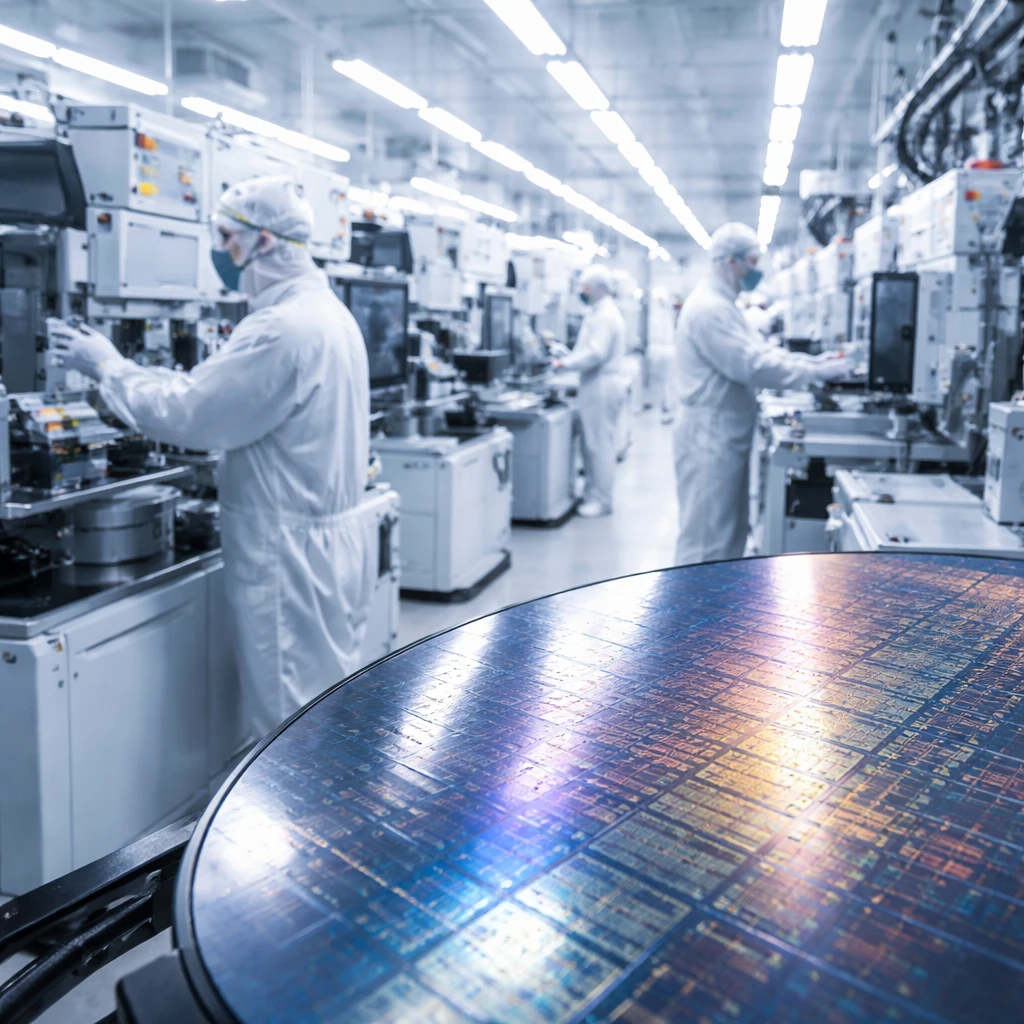
Shares of Hua Hong Semiconductor moved higher after a report said its parent group has made progress on advanced manufacturing processes that could be used for artificial intelligence chips.
According to the report, China’s Hua Hong Group has developed manufacturing technologies capable of producing 7-nanometre (nm) chips, and Huali Microelectronics, the group’s contract chipmaking arm, is preparing to implement the process at a plant in Shanghai. The report cited four people familiar with the matter.
If the technology is commercialized, the development would position Hua Hong as the second Chinese chipmaker able to produce chips using 7 nm technology, following Semiconductor Manufacturing International Corp (HK:0981), the report said.
Market reaction was immediate: the Hong Kong-listed Hua Hong shares rose 5.3% to HK$92.65, while the Shanghai-listed shares increased 2.1% to 121.65 yuan.
The reported progress arrives amid Beijing’s broader push to strengthen domestic semiconductor capabilities and reduce dependence on foreign suppliers. The story also notes that Washington had eased some export restrictions that allowed Nvidia (NASDAQ:NVDA) to resume sales of certain AI chips to China.
The report further states that Huawei Technologies has worked with the chipmaker on the 7 nm technology. Test production is already underway at the Shanghai facility, and initial capacity is expected to reach a few thousand wafers per month by year-end, according to the people cited. Chinese GPU designer Biren Technology (HK:6082) is reportedly using the line for chip prototype testing.
Observations in the report focus on manufacturing-readiness and early test volumes rather than a fully scaled commercial rollout. The information cited does not specify further timelines beyond the initial capacity expectations or additional customers beyond those mentioned.
Context and implications
The material describes progress at the process-development level and early test production. Should those steps be followed by full commercial ramp, the result would alter the domestic supply landscape for advanced-node chips, subject to confirmation of scale-up, yield and customer adoption. The reporting does not provide additional technical details, yield metrics or confirmed commercial contracts beyond the prototype testing noted.