
Higher crude prices tied to the Iran war have pushed jet fuel costs upward, prompting many airlines to lock in prices or currencies to shield themselves from volatility. Brent crude moved above $80 per barrel on Tuesday amid concerns about supply disruption. Because jet fuel is typically priced in U.S. dollars, some carriers also hedge their currency exposure in addition to fuel volumes.
The following is a company-by-company account of hedging positions as reported by the airlines themselves. The descriptions preserve the percentages, timeframes and average prices disclosed by each carrier.
- AIR FRANCE-KLM: In February the Franco-Dutch group said it had revised its fuel hedging policy to raise total exposure for one year of consumption to 87% from a previous 68%. The company extended the hedging horizon from six quarters to eight and increased the hedging percentages within that longer window.
- AIR NEW ZEALAND: The flag carrier stated in February that it had hedged 83% of fuel requirements for the second half of its financial year and 46% for the first half of fiscal years through 2027. The airline said most of those hedges are tied to Brent crude, and that it expects some opportunistic Singapore Jet swaps in the second half of the current year.
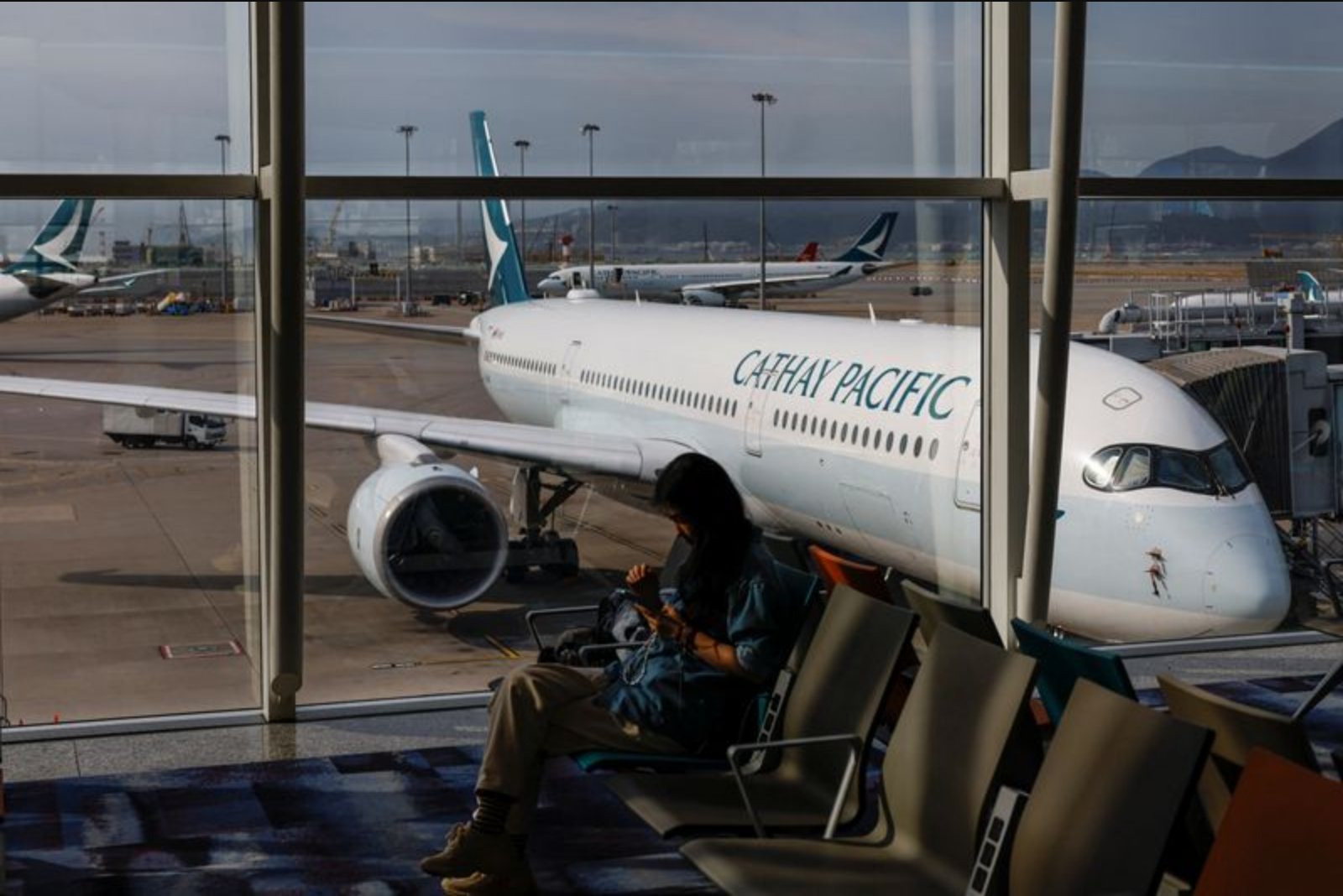
- CATHAY PACIFIC: Hong Kong’s carrier reported last year that it had fuel hedges in place into the second quarter of 2027, and that roughly 30% of costs were covered until the second quarter of 2026.
- CHINA EASTERN AIRLINES: The state-owned carrier said it had made careful assessments of derivatives market conditions and did not execute any jet fuel hedging transactions in the first half of 2025. As of June 30, 2025, China Eastern reported having no outstanding jet fuel hedging contracts.
- EASYJET: The British low-cost carrier disclosed in January that it had hedged 84% of its fuel needs for the first half of 2026, 62% for the second half of 2026, and 43% for the first half of 2027. The company provided average hedged costs per metric tonne of $715 for the first half of 2026, $688 for the second half, and $671 for the first half of 2027. On currency, EasyJet said it had purchased 80% of the dollars it expects to need in the first half of the year at an average of $1.30 per pound, 62% for the second half at $1.24 per pound, and 40% for the first half of 2027 at $1.32 per pound.
- FINNAIR: In December the Finnish carrier extended its hedging horizon from 18 months to 24 months. It reported covering 219 tonnes of fuel for the first quarter at an average price of $718 per tonne, and a total of 834 tonnes through the second quarter of 2027 at an average of $697 per tonne. Finnair indicated it aims for a hedging ratio of about 70% to 95% for the first three months of a hedging period, with progressively lower target ranges for each subsequent quarter.
- IAG (owner of British Airways and Iberia): In February the group said fuel and currency hedging levels were about 9% lower in 2025 compared with the prior year. Its policy uses a three-year rolling basis and allows hedging of up to 75% of expected near-term requirements, with up to 80% for low-cost airlines within the group.
- ICELANDAIR: The Icelandic carrier outlined a flexible hedging approach in February, planning to hedge between 20% and 50% of estimated fuel consumption six months forward, 0% to 40% for months 7-12, and 0% to 20% for months 13-18. Icelandair also said a 10% increase in fuel prices would have a $11.6 million impact on its equity.
- LUFTHANSA: The German group reported last year that its fuel hedging horizon extends up to 24 months. At the end of 2024 it had hedged roughly 76% of its forecast fuel requirement for 2025 and about 28% of its forecast requirement for 2026.
- NORWEGIAN AIR: In February the carrier said it had hedged around 45% of estimated jet fuel consumption for 2026 and about 25% for 2027.
- QANTAS: The Australian airline said in February it had 81% of fuel hedged for the second half of its financial year ending on June 30, 2026.
- RYANAIR: Ryanair’s CEO Michael O’Leary stated in January that the company was 84% hedged at $77 per barrel for the current quarter and had hedged 80% of jet fuel requirements at about $67 per barrel.
- SAS: The largest Scandinavian airline said last year it temporarily adjusted its fuel hedging policy because of uncertain market conditions and that it had 0% of fuel consumption hedged for the following 12 months. The company’s stated policy targets hedging between 40% and 80% of anticipated volumes for the coming 12 months and allows hedging up to 50% for the following six months.
- SINGAPORE AIRLINES: The carrier said in November it was hedging fuel for horizons up to five years. It reported coverage of 49% of fuel in the quarter to December, 47% in the quarter to March, dropping to 24% in the second half of the full-year to 2027, and 7% in the years after that. Singapore Airlines disclosed it was paying between $66 and $69 per barrel of Brent hedged, and between $79 and $87 per barrel for MOPS hedges.
- VIRGIN AUSTRALIA: In February Virgin Australia said it had hedged 85% of fuel and 94% of foreign exchange needs for the second half of its financial year.
- WIZZ AIR: The Hungarian budget carrier stated in January that it had hedged 83% of its jet-fuel needs for the year to March 2026 at prices between $681 and $749 per metric tonne. It also reported coverage of 55% for the full year to 2027 and 7% for the full year to 2028, at price ranges of $650-$716 and $628-$694 per metric tonne, respectively.
Across these disclosures there are a few clear patterns. Many carriers hedge a significant portion of near-term fuel needs - often aiming for high coverage within the first 12-24 months - while hedging further out into multiple years with lower percentages. Several airlines have extended their hedging horizons in recent updates. Where specified, companies also provided the average price levels at which they locked in fuel or the exchange rates at which they bought dollars.
Hedging strategies vary from conservative, short-term coverage to multi-year programs. Some carriers actively buy options and swaps tied to Brent or regional benchmarks such as MOPS or Singapore jet swaps; others disclosed no outstanding fuel derivatives at certain reporting dates. Currency hedges are common for carriers that incur costs in U.S. dollars but have revenues in other currencies.
Finally, for investors wondering about the market view on specific airline stocks, some automated research products reference these hedging positions when evaluating risk and potential upside. For example, an AI-based screener noted it evaluates the EasyJet ticker (EZJ) along with thousands of other companies using more than 100 financial metrics, and it cited past winners that included Super Micro Computer (+185%) and AppLovin (+157%). The tool poses whether EZJ is currently included in any of its strategies or whether other opportunities in the same sector present better risk-reward profiles.
This summary is intended to capture each carrier’s stated hedging posture and the price points they disclosed, without projecting future market moves or recommending investment actions.