
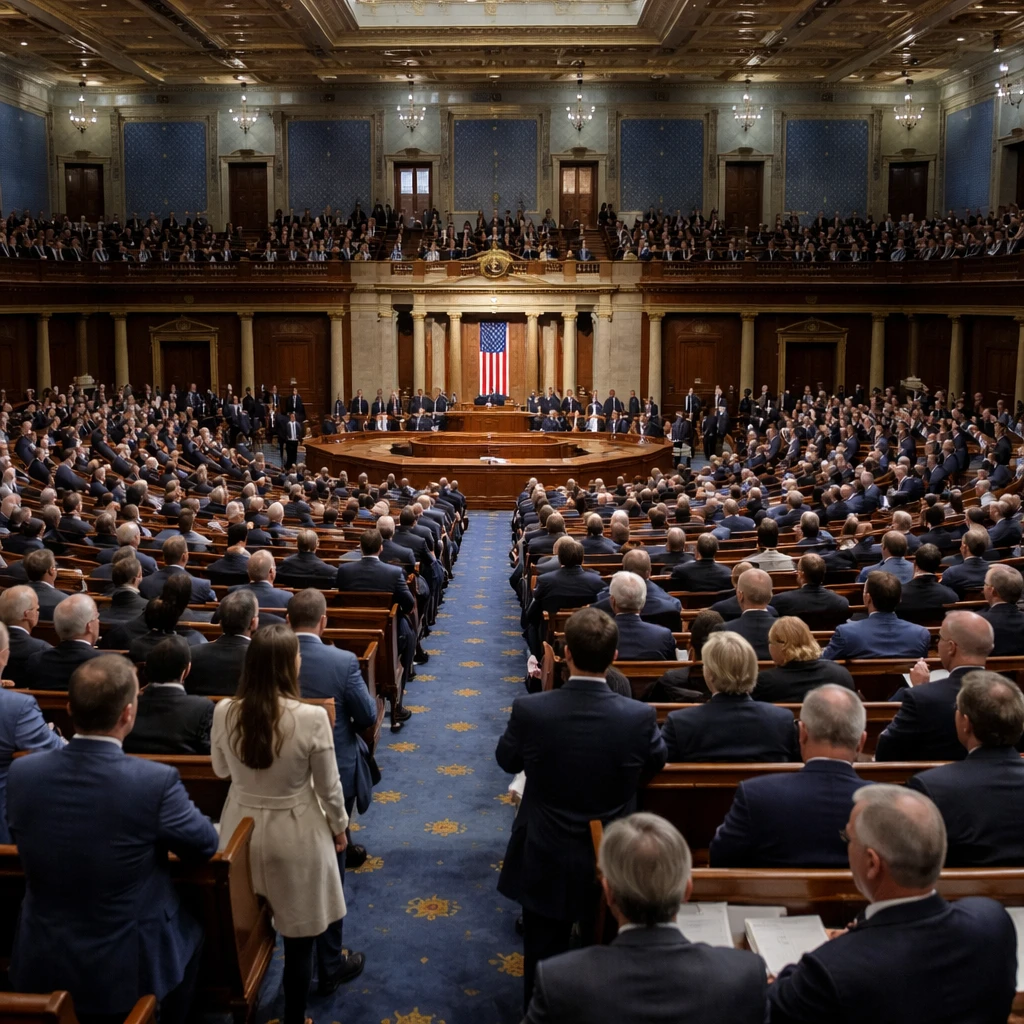
A motion by House Republican leaders to prevent legislative challenges to President Donald Trump’s tariffs was rejected on Tuesday, losing by a tight 217-214 margin. The proposal would have prohibited Congress from bringing tariff-related challenges until July 31.
The restriction was packaged into a procedural measure designed to open debate on three unrelated bills. In the final tally, three Republican members crossed party lines to oppose the motion, joining all 214 House Democrats in voting against the rule.
The outcome underscores the narrow arithmetic in the Republican conference. House Speaker Mike Johnson presides over a 218-214 Republican majority, leaving almost no margin for defections on measures that Democrats oppose. Under that configuration, Johnson cannot lose more than one Republican vote on any partisan question without risking defeat.
Following the vote, Democrats indicated they could move quickly to press their challenge to the tariffs. Lawmakers may force a House vote as early as Wednesday to terminate the national security emergency declaration used by the President to impose punitive trade measures on Canada and other close trading partners. Democratic members have also drafted resolutions aimed at repealing tariffs imposed on Mexico and additional countries.
House Republican leaders had kept rules in place that barred tariff challenges since March of last year, and those restrictions were extended through January. That framework expired after encountering resistance inside the Republican conference. Some Republican members raised concerns about the financial toll the tariffs could impose on American families and on U.S. companies that rely on cross-border trade.
The vote occurred after a signal from the Supreme Court indicating a longer timeline for its consideration of the legality of the President’s tariff actions. Justice Ketanji Brown Jackson suggested that the nation’s highest court would take additional time before ruling on that question.
What comes next
- Democrats may seek immediate floor action to rescind or block the tariffs using the procedural avenues now available.
- The narrow Republican majority means party leaders must maintain near-unanimous support to pass measures opposed by Democrats.
This vote leaves the House with a clear path for further legislative attempts to challenge the tariffs, while also highlighting internal divisions within the GOP over the economic effects of the trade measures.