
Honda disclosed a sweeping restructuring of its electric vehicle operations on Thursday that includes a writedown valued at an estimated 2.5 trillion yen ($15.7 billion) and the cancellation of three battery-powered models slated for production in the United States. The move accompanies an announcement that the automaker will record its first annual loss since becoming a publicly listed company nearly 70 years ago.
The charge primarily reflects investments made as Honda accelerated research, development and capacity for EVs aimed at higher sales volumes. Battery-electric vehicles made up roughly 2.5% of the company’s global sales last year - about 84,000 units out of total worldwide shipments of 3.4 million - a scale that underscores how limited EV volumes remained relative to the automaker’s broader business.
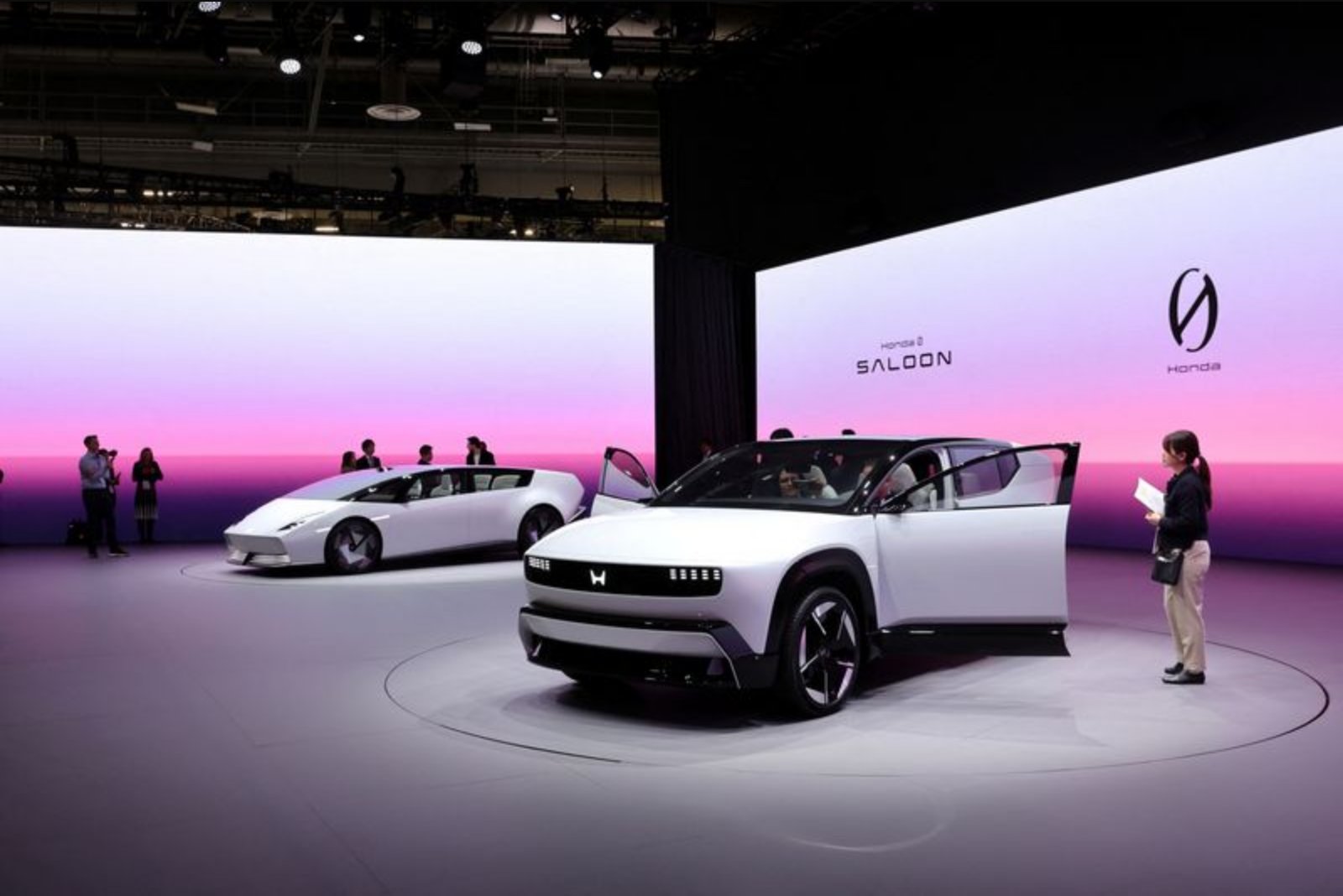
Planned U.S. introductions under the "Honda 0 Series" concept have been shelved. Honda had shown two concept cars at CES in January 2024 and expected to start rolling out the first production vehicles this year in North America. The company said it will cancel the three models that were due to be built in the U.S.: the Saloon sedan, the Honda 0 SUV and the Acura RSX.
The restructuring will also include writedowns related to some operations in China. Management cited the company’s difficulty in keeping pace with newer Chinese rivals that benefit from shorter development cycles and strengths in software-driven features, including advanced driver-assistance systems (ADAS).
Financial and supplier impact
Alongside the accounting charge, Honda said it expects cash outflows of up to 1.7 trillion yen, largely linked to costs for compensating suppliers that had been committed to projects now cancelled. The scale of the write-off and the expected cash impact led market analysts to describe the decision as a painful and belated retreat from previously aggressive EV spending.
Christopher Richter, an autos analyst at CLSA, said the writedown reflects the large investments Honda made into R&D and capacity while positioning for higher EV volumes. "They took too long contemplating this," he said. "They were cancelling these projects virtually on the eve of releasing them."
Seiji Sugiura, a senior analyst at Tokai Tokyo Intelligence Laboratory, said he and other market watchers were taken aback by the sheer magnitude of the charge. "This decision was taken at an extremely delicate stage, just before mass production, after substantial budgets had already been committed - suggesting that it was a very tough call," he wrote in a client note.
Strategic pivot and regional focus
With U.S. battery projects curtailed, Honda said it will place greater emphasis on hybrid vehicles in the American market while seeking to bolster its product range and cost competitiveness in India, where it sees room for expansion. The company’s statement framed the move as a reallocation of resources toward formats and markets where it believes it can achieve stronger returns.
China performance highlights wider technological gap
Honda’s difficulties in China point to a deeper strategic concern. The company sold only 17,000 battery-electric vehicles in China last year, representing 2.5% of its roughly 677,000-vehicle sales in that market and about one-fifth of its global EV volume. Management admitted that in a highly competitive Chinese environment it had been unable to deliver products offering better value for money than those from newer EV manufacturers.
"In such a difficult competitive environment, Honda was unable to deliver products that offer value for money better than that of newer EV manufacturers, resulting in a decline in competitiveness," the company said.
Vincent Sun, a senior analyst at Morningstar, said there is uncertainty around Honda’s longer-term capacity to bridge the technological gap. "The move raises my concern on Honda’s technological competitiveness in the long run," he said.
Joint venture with Sony under review
Honda also noted potential implications for its EV joint venture with Sony Group, Sony Honda Mobility, which is developing the Afeela sedan. On Thursday, the company said the direction of that joint venture was under discussion, and that no final decisions had been made.
Honda included the exchange rate it used for assessing the writedown: $1 = 159.4800 yen.
The writedown and strategic retreat from certain EV plans mark a major course correction for a manufacturer that invested heavily to scale electric models. Management’s stated intention to reallocate toward hybrids in the U.S. and to strengthen competitiveness in India reflects an effort to align product strategy with market conditions and cost realities, even as the company faces questions about its ability to match the speed and software capabilities of newer EV players in China.