
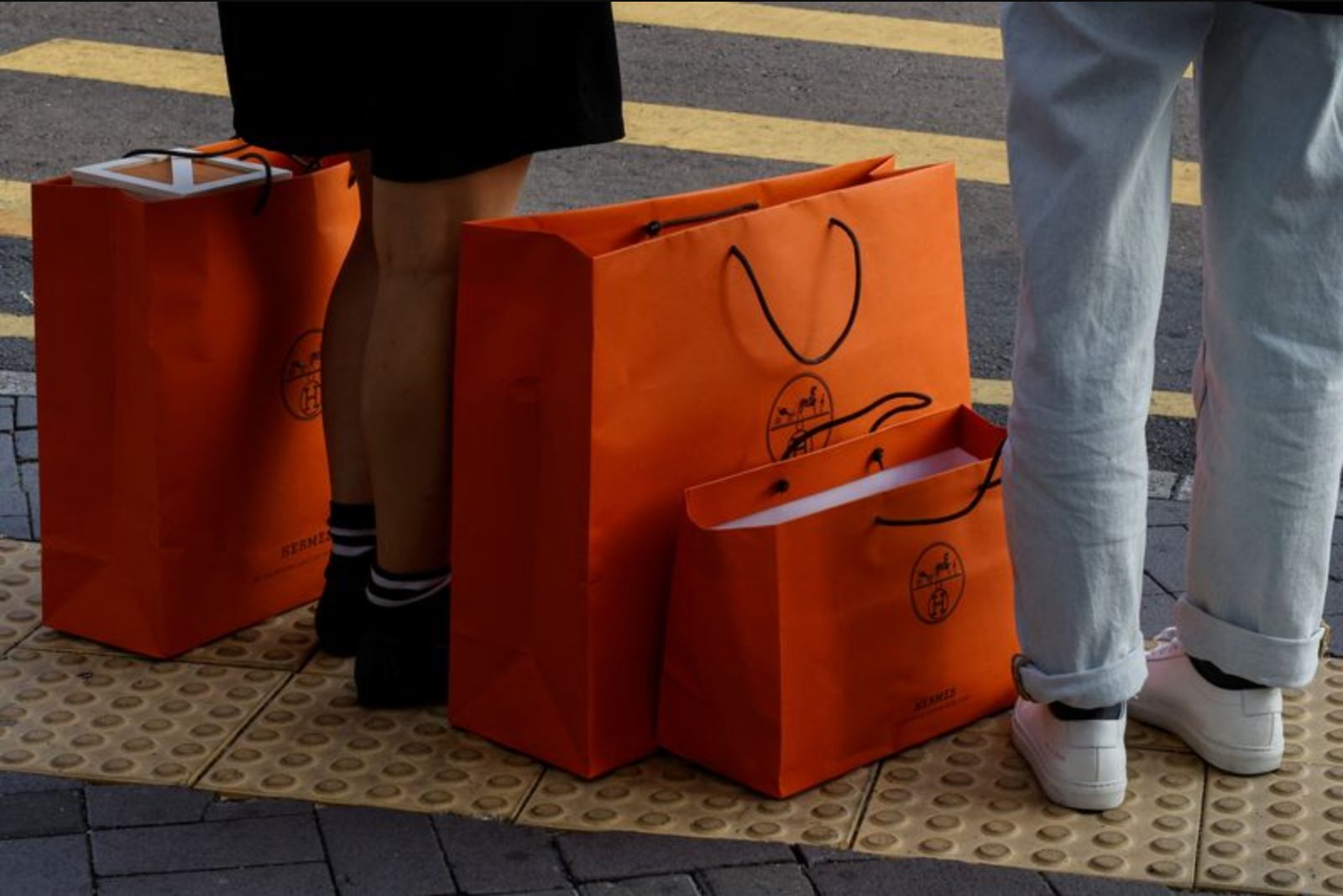
Hermes posted fourth-quarter revenue growth that came in ahead of consensus, driven primarily by stronger-than-expected trading in the United States and Japan. The results underscore the company's resilience in a luxury market that has produced mixed outcomes for several rivals.
Chief Executive Officer Axel Dumas said the company is entering 2026 with "confidence," and confirmed a slower pace of price increases for the year. Management expects price rises of roughly 5-6% in 2026, down from a 6-7% pace in 2025, attributing the moderation chiefly to currency movements.
Following the publication of the quarterly figures, Hermes shares rose and were trading about 3% higher at 1515 GMT.
Drivers of the quarter
Sales of Hermes' signature product categories - including Birkin and Kelly bags, silk scarves and perfume - expanded by 9.8% in the fourth quarter on a currency-adjusted basis. That rate topped an analyst consensus of 8.4% growth compiled by Visible Alpha.
Regional performance varied, with the Americas - largely reflecting the United States - recording a 12.1% increase in sales, above expectations of around 9%. Asia excluding Japan, a region where China is the major influence, rose 8%.
The company's leather division, which contributes the bulk of Hermes' profits, posted organic revenue growth of 14.6%.
Profitability, capital returns and valuation
For the full year Hermes delivered an operating profit of 6.57 billion euros and reported a profit margin of 41%, marginally ahead of a 40% margin estimate. The company said it will distribute a dividend of 18 euros per share.
Hermes remains a high-valuation outlier in luxury: trading at 45 times forward earnings according to LSEG data, almost double the forward multiple of larger peers such as LVMH and Richemont. Some analysts caution this premium could leave the stock vulnerable to pressure despite the company's recent outperformance.
Market context and competitor behaviour
Analysts noted that Hermes' ability to implement price increases on its ultra-luxury assortment has been a material contributor to its performance and investor appeal. Chiara Battistini, a luxury equity analyst at J.P. Morgan, said the price rises the company has been able to enact on its high-end items are a key factor for the business and for investor interest.
By contrast, many peers have slowed or halted price hikes in response to weakening sales. Executives at other groups have acknowledged that the price increases implemented after the pandemic - described by Kering's CEO as a "price hike 'bonanza'" - were among the contributors to recent revenue declines at those companies.
China and broader demand signals
Dumas said in a call with analysts that he is seeing positive signs in China, a market that has experienced a marked slowdown in recent years linked to the country's property downturn. He said: "I do not see the situation deteriorating." He added: "There are positive moves, in particular the way they (China) are managing the property crisis."
The company also highlighted a sizable order backlog and a client base skewed toward ultra-wealthy consumers, factors that have helped it withstand a broader luxury slowdown better than some rivals.
Corporate scale and workforce
Hermes, which remains family-controlled, employs roughly 25,000 people worldwide. By market capitalisation it is France's second-largest listed company, behind LVMH, whose annual sales are reported to be more than four times those of Hermes.
Promotional note included in original release
Embedded in the original release was a promotional section referencing ProPicks AI and the ticker CFR, which questioned whether CFR should be bought now and described the tool's approach to evaluating stocks. The promotional text listed past winners and invited readers to explore ProPicks AI strategies. That content appeared alongside the corporate results in the original material shared for this report.