
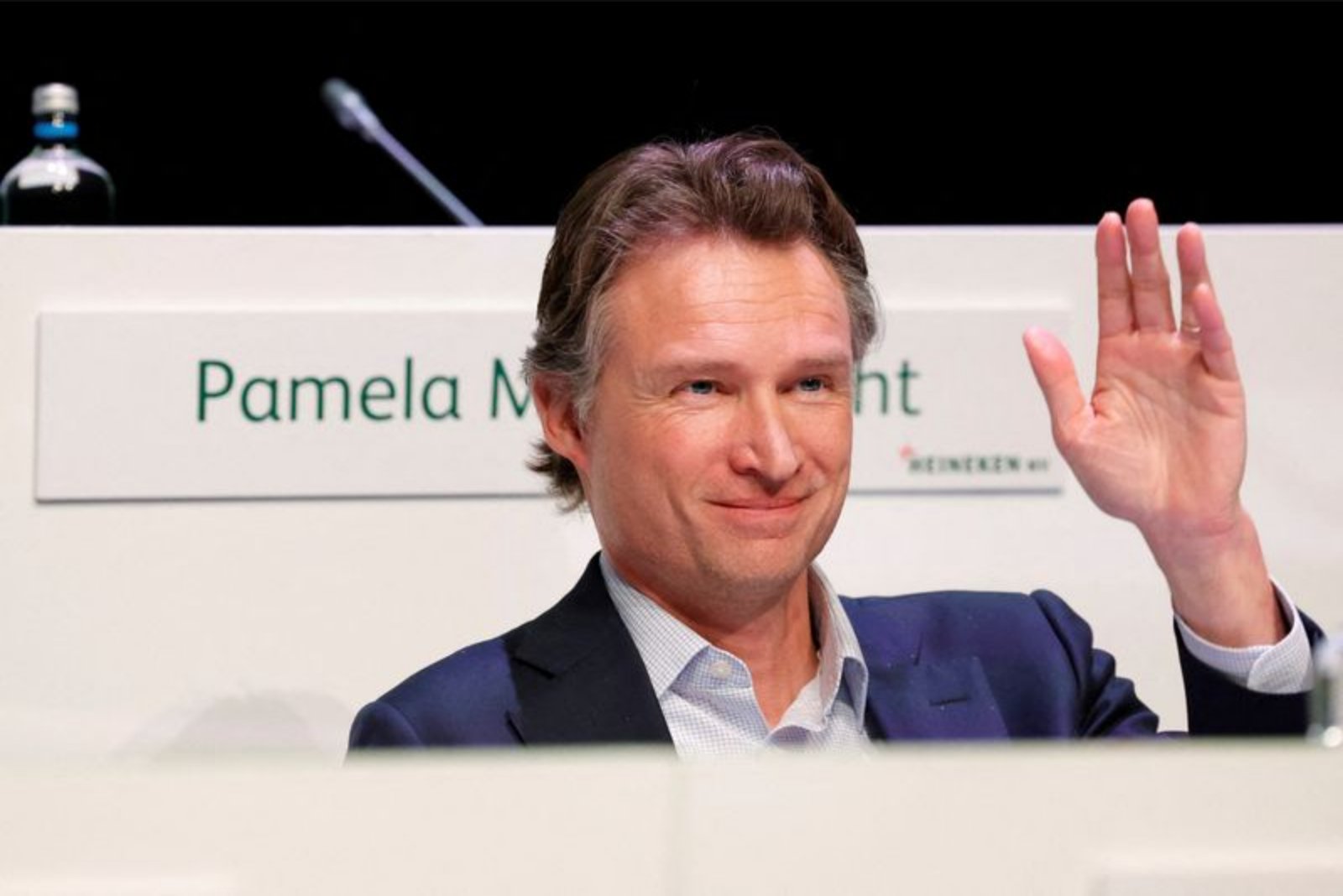
Heineken’s next chief executive, due to take the reins in June, will be tasked with delivering on a strategy unveiled in October that promised higher beer sales using a slimmer resource base. The company said on Wednesday it plans to reduce its global headcount by up to 6,000 jobs over the coming two years and lowered its profit growth expectations for 2026 compared with forecasts a year earlier.
Those moves come as the world’s second-largest brewer, behind Anheuser-Busch InBev, contends with sluggish demand for beer and mounting pressure from investors. The brewer of Heineken, Amstel and Tiger is still searching for a new chief after the departure of its current CEO was announced in January; he will leave after six years in charge amid falling beer sales and investor dissatisfaction.
Volume recovery remains elusive
Reviving sales volumes is likely to be the most immediate and visible challenge for the incoming CEO. The recovery that investors hope for - mid-single-digit volume growth - looks some way off, with analyst expectations in the market pointing to volumes remaining well below that level until 2027. A range of headwinds cited by market observers - from adverse weather to political unrest - have disrupted the path back to steady growth.
Options to accelerate volume growth are limited while consumer spending remains constrained. Some competitors are seeking to broaden their revenue sources. For example, Carlsberg has pursued the acquisition of soft drinks maker Britvic as a way to offset slow beer sales and to diversify into non-alcoholic categories. Brewers are also increasingly allocating resources to non-alcoholic beer, a segment that has been growing rapidly and could help offset weaker alcoholic beer trajectories.
Investor returns and cost discipline
Investors point to Heineken’s weaker total shareholder returns relative to some peers, where companies such as AB InBev have deployed multi-billion-dollar share buyback programmes. Heineken has pledged annual savings of 500 million euros, and shareholders want to see those efficiencies translate into stronger profit delivery. The new CEO will need to balance cost cuts with selective investments to ensure the company can capitalize when demand improves.
Cost efficiency is a noted area of underperformance versus AB InBev, according to investors, and management will face scrutiny on where and how savings are implemented so that short-term reductions do not impair the brewer’s ability to benefit from a market rebound.
Production footprint decisions
Some analysts and investors argue that Heineken operates too many breweries, especially in mature regions such as Europe where future growth is limited. Concerns exist that changing drinking habits could lead to further declines in volumes. The next CEO will have to decide whether to close facilities or, as the outgoing leader did, defend the existing production footprint. Any site closures would be a sensitive strategic and operational choice.
Restoring valuation and investor confidence
Heineken’s market valuation has suffered more than those of many peers since 2021 as expectations for future earnings have moderated. Rebuilding the company’s valuation will require convincing investors that sales and profits can recover, even as the business navigates political and economic turbulence, generational shifts in drinking habits and emerging threats such as the growing popularity of weight-loss drugs. Restoring optimism will depend on a credible, executable plan that shows both top-line recovery and tangible margin improvements.
For the incoming chief executive, the test will be to show how stronger sales can be achieved with fewer resources while ensuring cost savings do not compromise long-term growth prospects.
Conversion note: $1 = 0.8571 euros.