
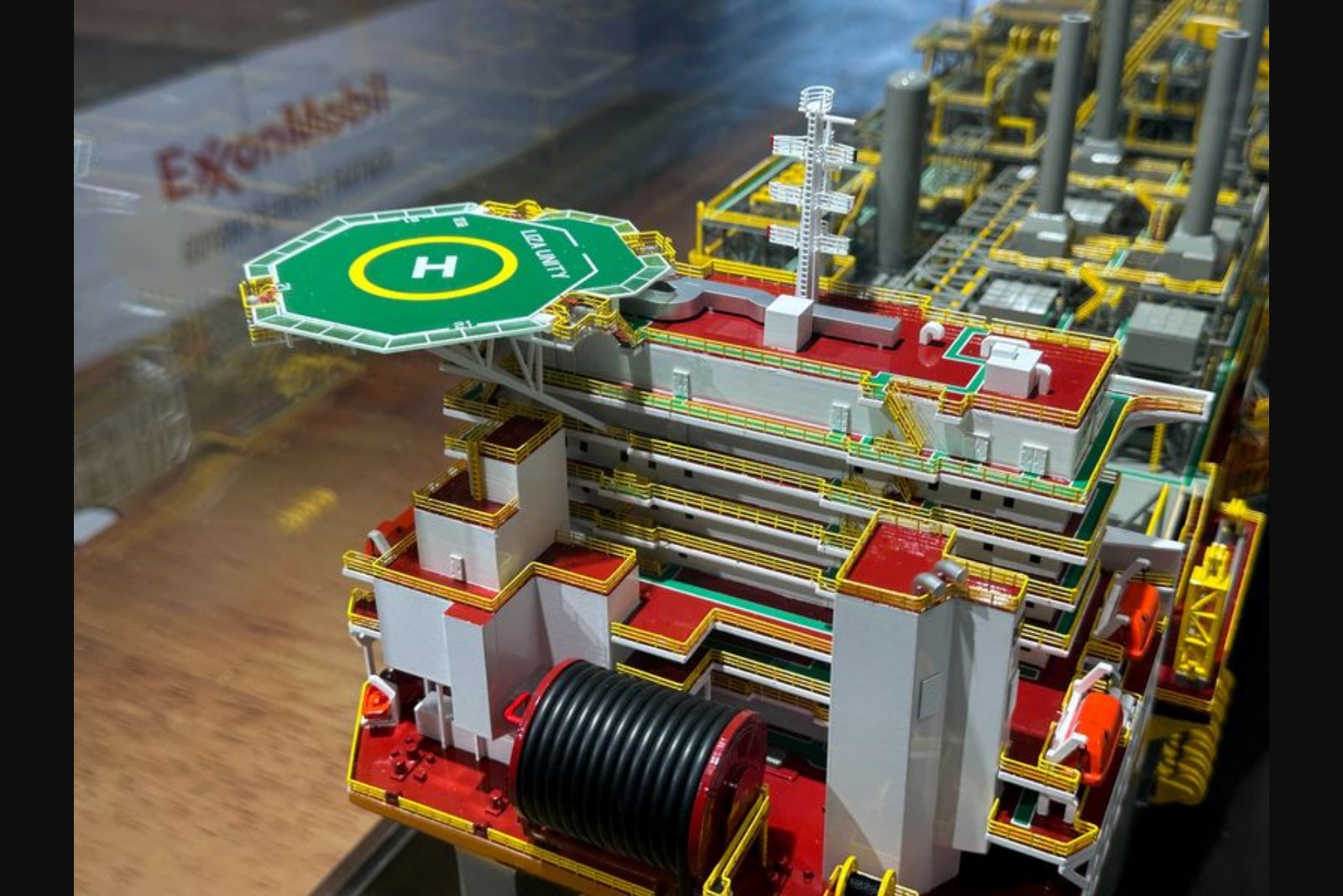
Georgetown - Guyana, already among the fastest-growing economies globally because of its hydrocarbons boom, faces a fresh opportunity to expand its oil sector as activity in neighboring Venezuela shifts. The prospect of looser regional tensions has drawn attention ahead of the four-day Guyana Energy Conference starting Tuesday in Georgetown, where industry leaders and government officials will focus on training local oil and gas personnel, stimulating new investment and developing downstream capacity.
Interest in Guyana’s hydrocarbon potential has been pronounced for years, but recent developments in Venezuela have intensified scrutiny across the region. U.S. forces removed Venezuelan President Nicolas Maduro last month, and U.S. President Donald Trump has subsequently advocated for $100 billion in investment to restart Venezuela’s oil industry. Observers say this sequence of events could alter the operational environment offshore Guyana.
One tangible consequence could be movement on a long-running border dispute that previously led the Guyanese government and an Exxon Mobil-led consortium to suspend exploration across roughly 30% of the prolific Stabroek Block. Henry Ziemer, an associate fellow at the Center for Strategic and International Studies, said the current risk of political confrontation between Guyana and Venezuela appears low. "It removes the biggest barrier for foreign investment," he said. "If there’s any country that reaps the greatest benefit from Maduro’s removal, I would say it’s probably Guyana."
Executives from the operator of the Stabroek Block have also signaled that recent events could improve operating conditions. Exxon CEO Darren Woods commented last month that the U.S. capture and removal of Maduro may lead to a friendlier environment for operations. "Perhaps we’ll see an opportunity with less naval patrols that’ll make it a little more friendly environment," he said. Exxon operates the Stabroek Block with Chevron and China’s CNOOC as minority partners.
Legal and diplomatic processes remain in play. The United Nations' International Court of Justice is handling the border case between Guyana and Venezuela, and a final ruling could be years away. Still, any form of détente could help lift a force majeure that had previously been imposed on the portion of the Stabroek Block located in disputed waters and could pave the way for renewed exploration activity.
The consortium operating Guyana’s assets increased production capacity to more than 900,000 barrels per day last year. A new project planned for development this year is expected to raise capacity further - to as much as 1.15 million barrels per day. Since Exxon’s initial discovery in 2015, Guyana has rapidly established itself as a key South American oil producer, expanding as Venezuela’s oil sector has stagnated.
Conference attendees can expect Exxon executives to present operational updates from Guyana, including details on a significant gas development intended to support onshore power generation. Chevron CEO Mike Wirth is slated to make the company’s first official appearance at the conference on Tuesday after Chevron acquired a 30% interest in the Stabroek Block, following a protracted legal dispute with Exxon.
Chevron has publicly suggested that the resource base in Guyana could exceed the current estimate of 11 billion barrels of oil equivalent and has expressed eagerness to assist with additional exploration. When asked about Chevron’s remarks in a November interview, Exxon’s Woods told Reuters that Exxon has a fiduciary duty to update its resource estimate only when it has sufficient information. "We don’t have any announcements at this point to update that resource base, despite the work we’ve been doing," he said.
The conference will therefore serve as a forum for both technical and strategic discussion - from workforce training and downstream development to how changing geopolitical dynamics could influence investment and exploration decisions. While legal uncertainty remains because of the ongoing ICJ proceedings, industry participants are watching whether a reduced likelihood of confrontation with Venezuela might unlock areas previously off-limits and encourage further capital deployment into Guyana’s oil and gas sector.
Conference details and focus
- Four-day Guyana Energy Conference begins Tuesday in Georgetown.
- Discussions will include workforce training, investment opportunities and downstream sector development.
- Exxon and Chevron executives are expected to update attendees on operations and plans in Guyana.
Operational and resource context
- The operating consortium raised Guyana production capacity to more than 900,000 barrels per day last year; a new project this year could raise capacity to up to 1.15 million bpd.
- Current resource estimates sit at about 11 billion barrels of oil equivalent; some partners have suggested the resource could be larger pending further exploration.