
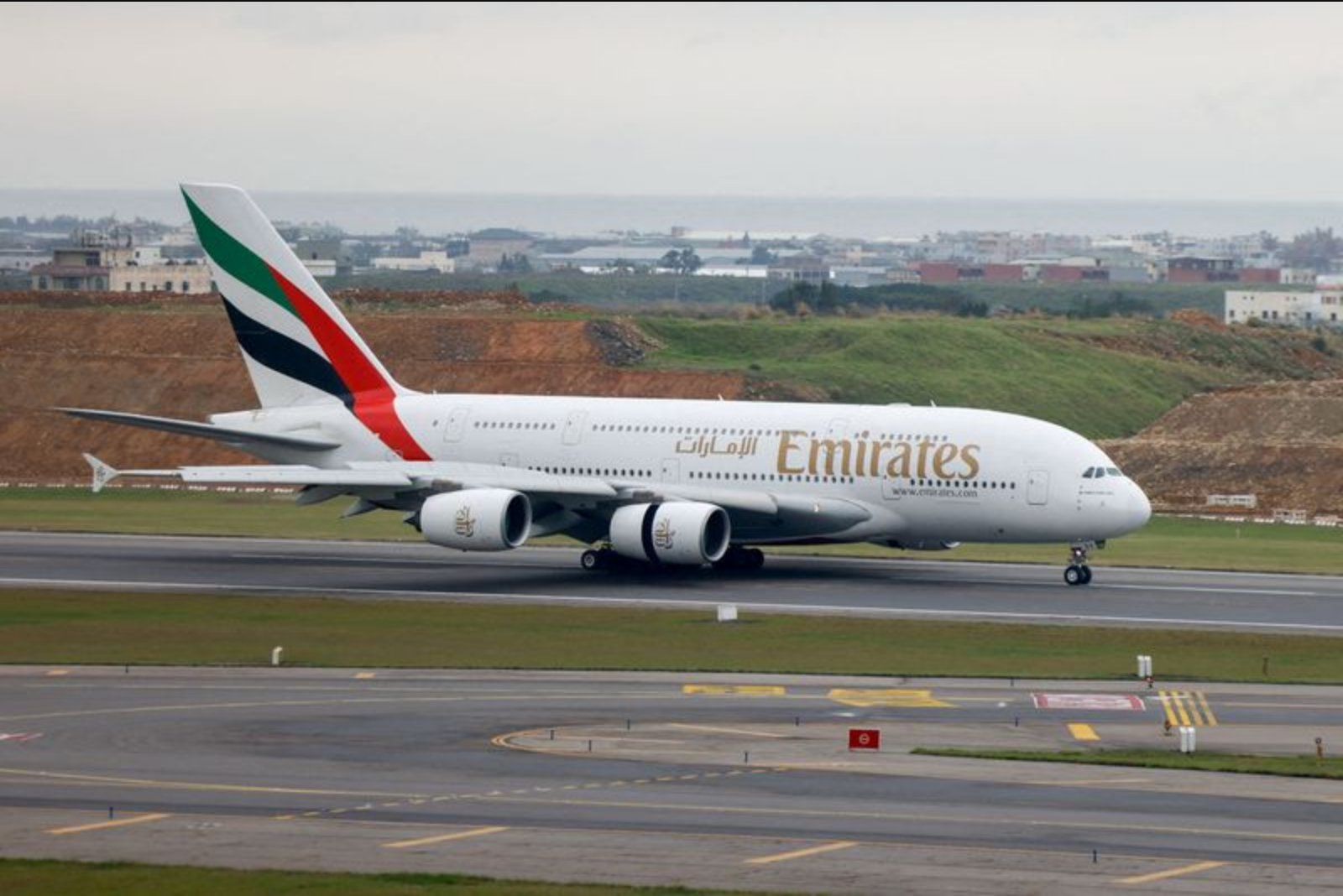
Major United Arab Emirates carriers moved to restart limited commercial services on Friday, but intense concerns about missile fire and drone activity in the region have left operations fragile and travel plans precarious.
Etihad announced it would operate a curtailed flight programme through March 19, serving Abu Dhabi and 25 destinations that include London, Paris, Frankfurt, Delhi, New York and Toronto. Emirates said late on Thursday it would run a reduced schedule to 82 destinations, among them London, Sydney, Singapore and New York, and made clear that customers transiting in Dubai would only be accepted if their onward connection was being operated.
Authorities and carriers have been scrambling to move tens of thousands of people out of the region while most Middle Eastern airspace remains closed because of missile and drone risks tied to the U.S.-Israel war against Iran. To facilitate departures, governments have arranged charter services and secured seats on the limited commercial flights that are operating.
A French government-chartered Air France flight tasked with bringing French nationals out of the United Arab Emirates had to turn back on Thursday after missile fire was reported in the area, French Transport Minister Philippe Tabarot said. "This situation reflects the instability in the region and the complexity of repatriation operations," he said.
Traffic volumes at Dubai airport, which is normally among the world’s busiest hubs, remained a fraction of normal levels despite an internal uptick. As of Thursday, operations had almost doubled from Wednesday but were still only about 25% of the hub's regular traffic, according to flight-tracking service Flightradar24.
Qatar’s Doha hub remains closed, although the country has been arranging a small number of relief flights from neighbouring Oman and Saudi Arabia. Separately, Saudi budget carrier flynas said it would operate a limited number of flights between Saudi Arabia and Dubai beginning on Friday.
The restricted schedules at Middle Eastern hubs are hitting passengers on Europe-to-Asia-Pacific routes particularly hard. Cirium data show that, under normal conditions, Emirates, Qatar Airways and Etihad collectively carry about one-third of passengers from Europe to Asia and more than half of all travellers from Europe to Australia, New Zealand and nearby Pacific islands.
Cirium also reported that between February 28 - the day the conflict began - and March 5 there were more than 44,000 flights scheduled in and out of the Middle East, and that more than 25,000 of those flights have been cancelled so far.
Market effects have been evident in both fuel and equity prices. Higher crude-linked prices have driven jet fuel costs sharply upward, with Singapore jet fuel hitting a record of $225 a barrel this week before easing to roughly $195 a barrel on Thursday after some profit-taking. That level remained almost double last week’s price.
Airline equities reacted to the disruption: shares of Qantas Airways fell more than 3% on Friday, Air New Zealand slid nearly 7%, Cathay Pacific dropped over 2%, and Singapore Airlines declined by more than 1%. Hong Kong-listed shares of major Chinese carriers Air China, China Eastern Airlines and China Southern Airlines were down between 2% and 4%.
Passengers fleeing the region described chaotic and costly journeys to secure seats on limited services. One traveller, Ed Short, who arrived at London’s Heathrow on a British Airways flight after travelling from Oman, said the effort to get home had been "absolute chaos." He added: "We paid 1,500 pounds ($2,005.05) to get across to Muscat (Oman) to get on the plane." He also noted the group had "spent about 20,000 pounds booking Emirates flight instead. So we’re hoping we get those back." ($1 = 0.7481 pounds)
With the conflict showing little sign of abating, the broader impacts on aviation and air cargo appear poised to persist. Airlines, freight operators and travellers continue to contend with constrained schedules, elevated fuel costs and the logistical complexity of evacuations and repatriation efforts.
Context for markets and travel
The curtailment of regular services from Gulf hubs has a concentrated effect: carriers that normally provide a large share of intercontinental connectivity between Europe and Asia-Pacific are now operating well below capacity. This disruption compresses available seats on key routes and forces governments and airlines to rely on charters and relief flights to move large numbers of people.
Higher jet fuel prices amplify operational pressures by raising costs for airlines and cargo carriers, while the cancellation of a significant share of scheduled flights has immediate implications for passenger revenues and freight flows.
Practical implications for travellers
- Expect limited schedule availability and restrictions on transit through major Gulf hubs unless connections are confirmed as operating.
- Prepare for potentially higher ticketing and rerouting costs as passengers seek alternative routes and charter services.
- Be aware that repatriation operations can be complex and are vulnerable to sudden changes if missile or drone activity is reported.