
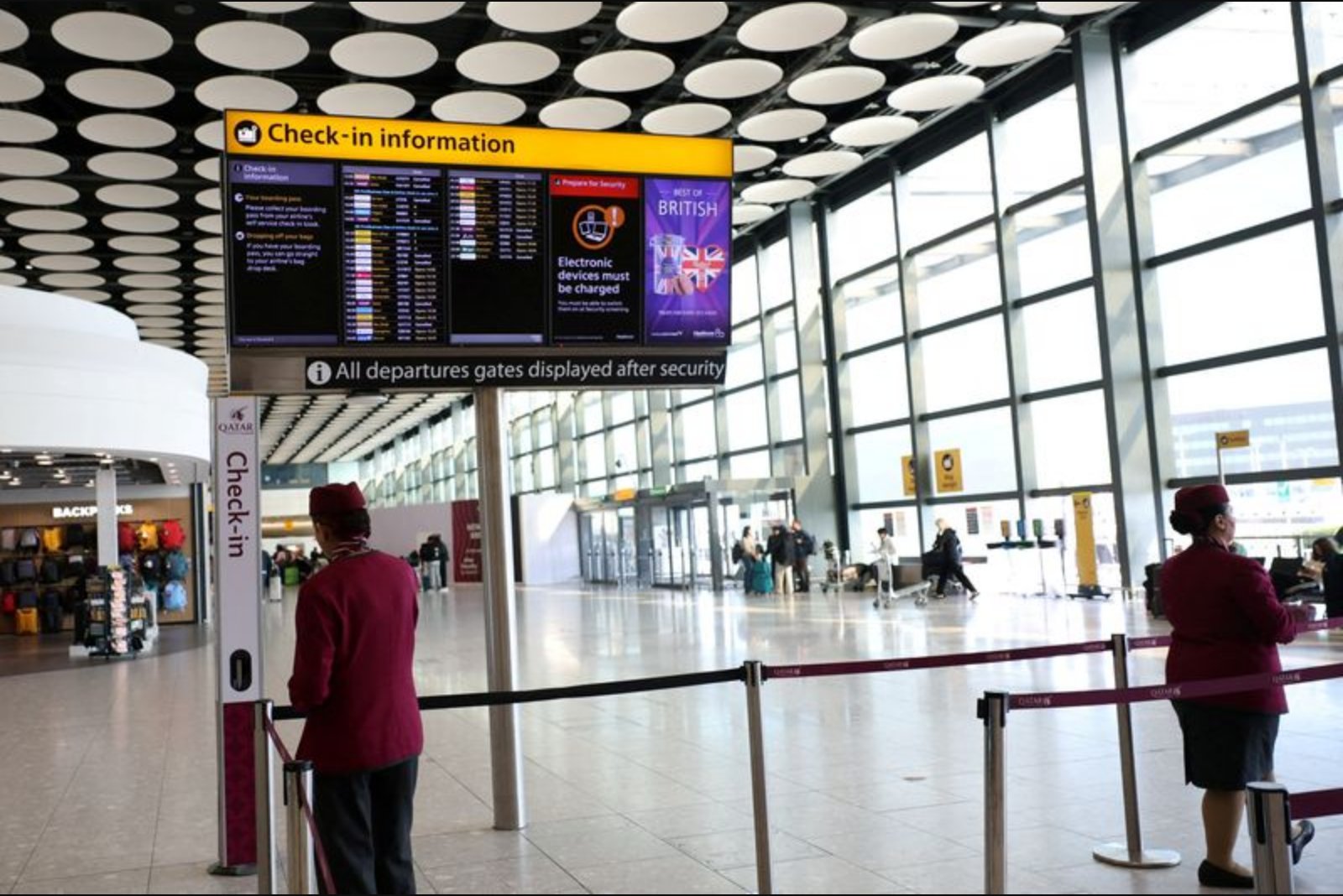
Commercial aviation across swathes of the Middle East has been disrupted after U.S. and Israeli strikes on Iran, leaving thousands of foreign nationals unable to travel and pushing governments to consider or begin repatriation measures.
With much of the region's airspace still closed, officials say options for getting people home are constrained. Several governments have outlined contingency plans or interim measures, often prioritising vulnerable citizens while urging others to use available commercial routes when safe and possible.
Overview
Authorities and diplomatic missions from a range of countries have described efforts to account for their nationals, to facilitate land exits where air travel is not available, and to prepare charters or other special services where feasible. Approaches vary from advising citizens to await the resumption of scheduled flights to arranging embassy-led transport corridors and targeted charter operations.
Country-by-country measures (alphabetical)
-
Australia - Foreign Minister Penny Wong said the government is in talks with airlines to assist Australians stranded in the Middle East but cautioned that evacuations would be difficult while much of the region's airspace remains closed. Wong said about 115,000 Australians are in the region and described the most viable option as returning people when commercial airlines resume services. She declined to confirm whether Australia would mount its own repatriation flights, noting that "airspace is not open. So whether or not it is an Australian flight or a commercial flight, the flights are not able to occur."
-
France - A French government official said roughly 400,000 French nationals are across about a dozen affected countries; this total includes residents, dual nationals and travellers. The official noted that more than 25,000 travellers had registered on the Foreign Ministry's "Ariane" system. France reported deploying consular teams at Israel's borders with Egypt and Jordan to enable land exits so people can fly onward, and establishing a similar mechanism in the UAE at borders with Oman and Saudi Arabia, where airspace has remained open. The government said it is preparing charter flights and prioritising vulnerable people, with embassies and consulates drawing up lists.
-
Germany - Berlin said the tourism industry is responsible for bringing home most of the roughly 30,000 Germans currently stranded in the region and that military repatriation would be considered only as a last resort. The government is planning two chartered Lufthansa flights, one from Riyadh and another from Muscat, intended primarily for particularly vulnerable citizens such as children, pregnant women and people with disabilities. Foreign Minister Johann Wadephul said crisis teams had been dispatched to assess options for border crossings, amid uncertainty over how passengers would reach the charter flights. Tour operator TUI said it is working to return thousands of cruise passengers, with initial groups heading home on Gulf carriers including Emirates, Etihad and Qatar Airways.
-
Greece - Prime Minister Kyriakos Mitsotakis said Athens has established a plan to repatriate thousands of Greek nationals stranded in the Middle East but acknowledged that return remains difficult while regional airspace closures persist.
-
Italy - An initial Italian charter carrying 127 citizens who were in Oman or who had been moved there from Dubai arrived at Rome's Fiumicino airport late on Monday, March 2, according to a Reuters video report. Passengers credited the Italian embassy with assisting their return. One passenger said the flight cost about 1,500 euros ($1,741.20).
-
Philippines - President Ferdinand Marcos Jr. urged Filipinos in Israel and other affected Middle Eastern countries to move to safety and said the government would arrange repatriation flights once conditions allow. Marcos said more than 2.4 million Filipinos live and work in the Middle East, including 31,000 in Israel and 800 in Iran, and that more than 1,000 migrant workers have requested repatriation.
-
Spain - Foreign Minister Jose Manuel Albares said Spain has begun evacuating its citizens. Over 175 Spaniards were due to arrive on Tuesday evening on a flight from Abu Dhabi, and further flights are expected from the United Arab Emirates via Istanbul. Spain said it is reinforcing its embassies in the UAE, Saudi Arabia, Oman and Bahrain to provide support and facilitate additional repatriations.
-
Slovenia - The office of Prime Minister Robert Golob said Slovenia organised four buses on Tuesday, escorted by police, to transport Slovenian citizens and families with children from Dubai to Muscat airport in Oman. The government said the first Slovenian flight will depart Tuesday evening with arrival expected Wednesday morning, and two further flights are scheduled for Wednesday late afternoon and evening.
-
Switzerland - The Swiss foreign ministry said on Monday there were at least 4,400 Swiss citizens travelling in the region and that it would not be organising evacuations for them. The ministry also reported about 35,000 Swiss citizens resident in the region, most of whom are in Israel followed by the UAE, and said a helpline set up by the ministry had received roughly 2,000 inquiries since Saturday.
-
United Arab Emirates - The UAE civil aviation authority said it will begin operating "special flights" from the country's airports to help some of the tens of thousands of passengers stranded in the region to leave, state news agency WAM reported.
-
United Kingdom - The UK has initiated the initial stages of a repatriation effort, with the first flights carrying stranded British nationals having landed in the UK on Monday evening. Prime Minister Keir Starmer said the government is "working on all options" to support citizens, noting an estimated 300,000 British nationals are in the region and urging them to follow local authority guidance and Home Office travel advice. Foreign Secretary Yvette Cooper confirmed that 102,000 Britons have registered their presence with the Foreign Office.
-
United States - The U.S. Department of State on Monday called on Americans to immediately exit more than a dozen countries in the Middle East but has not announced repatriation flights. Mora Namdar, the State Department's assistant secretary for consular affairs, advised U.S. citizens to leave via available commercial transportation "due to safety risks." Secretary of State Marco Rubio urged U.S. citizens to register with the Smart Traveler Enrollment Program and to monitor security updates from the State Department.
Operational themes and practical constraints
Across the responses, several recurring elements are evident. Governments are prioritising vulnerable people for charters and consular assistance; many are trying to enable land exits where air routes are unavailable; and a number of states are leaning on commercial carriers, tour operators and foreign airports to move citizens where possible. The closure of significant stretches of regional airspace remains the central constraint, repeatedly cited by officials as a limiting factor for organised evacuations.
Exchange rate reference
For reference provided by reporting details in some arrivals and costs: $1 = 0.8615 euros.