
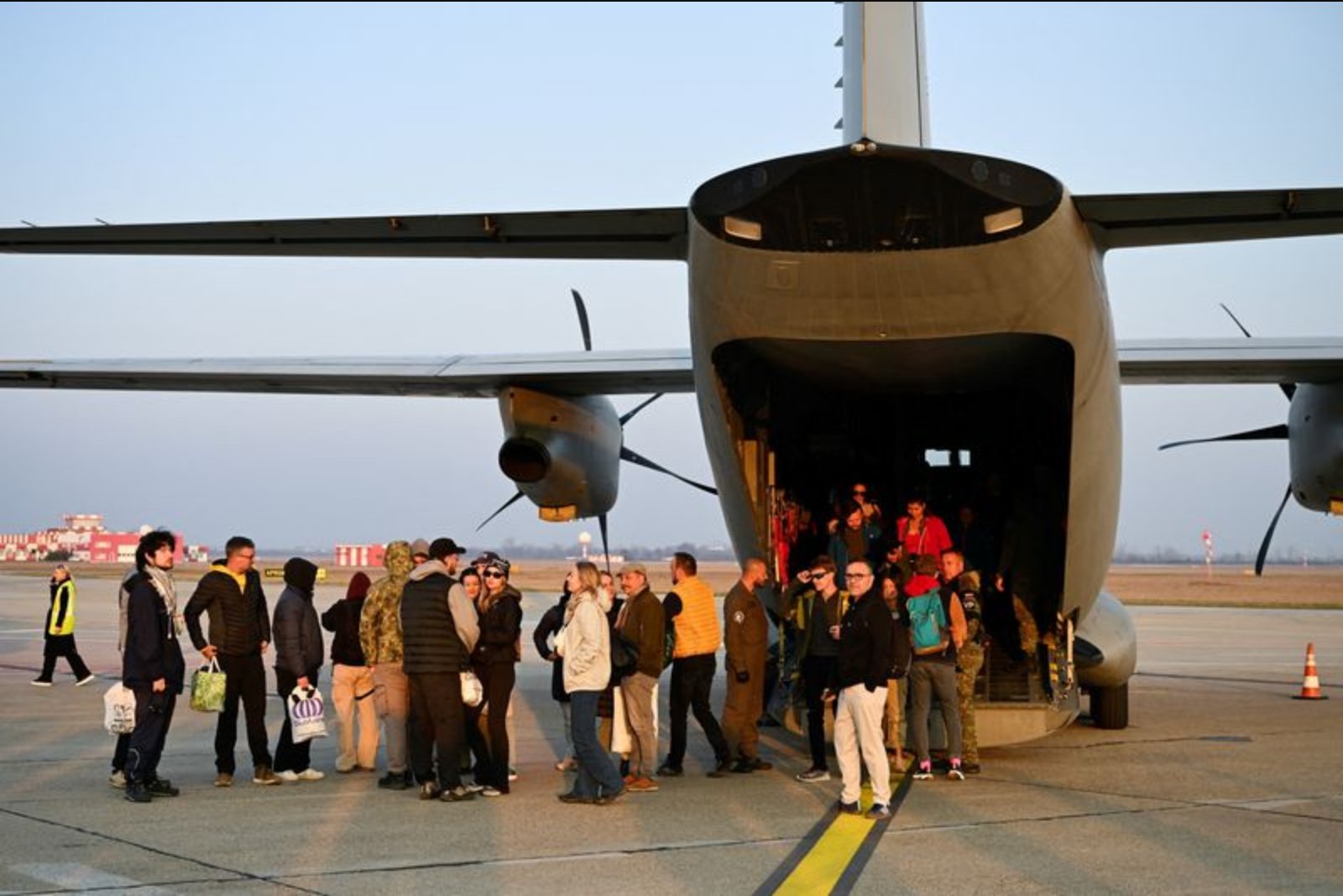
March 4 - Widespread disruption to commercial flights in parts of the Middle East, following an escalation in strikes, has left foreign nationals stranded and prompted multiple governments to announce repatriation plans. Responses vary by country - some are arranging charters or co-ordinated commercial flights, others are facilitating land exits to neighbouring states, and a handful have said they cannot currently mount evacuations while airspace restrictions remain.
Overview
Governments have deployed a mix of solutions to move citizens out of affected countries. Those measures include chartering carrier aircraft, coordinating with commercial airlines to add rotations, organising escorted bus transfers to airports in neighbouring states and setting up consular teams at border crossings to speed onward travel. Several nations have also set per-passenger pricing for flights they are operating or subsidising.
Country-by-country repatriation actions
Austria - Austria's foreign ministry said it had assisted 117 vulnerable citizens to depart the United Arab Emirates and Israel via neighbouring states and was planning a first charter flight from Muscat on Wednesday for 170 people. The ministry warned that departures by land would be undertaken at travellers' own risk.
Bulgaria - Three flights organised by GullivAir, Bulgaria Air and the State Aviation Operator will return Bulgarian citizens from Dubai, Abu Dhabi and Oman on Wednesday and Thursday. The operations include a 326-seat GullivAir service from Dubai, a Bulgaria Air Boeing 737 rotation via Oman and a 90-seat government aircraft from Abu Dhabi.
Czech Republic - Prague has so far arranged three flights from Oman, Jordan and Egypt to evacuate 175 people stranded in the region, according to government officials and the CTK news agency, and indicated additional flights are planned.
Estonia - Estonia's foreign ministry said it had organised a 180-seat flight from Muscat for Thursday, available to Estonian citizens in Oman and the United Arab Emirates, with tickets priced at 400 euros per passenger.
Finland - Finland will operate a single repatriation flight for roughly 3,000 Finnish citizens reported to be in the United Arab Emirates. The flight is scheduled to depart from Muscat, Oman, this weekend. The ministry said tickets would cost 2,300 euros per passenger, beyond any expenses travellers incur getting to Muscat.
France - The French foreign minister announced that several repatriation flights for French nationals - who number around 400,000 in the region - were planned for Wednesday. France said it had deployed consular teams at Israel's borders with Egypt and Jordan to help people exit by land and catch onward flights, and had implemented a similar mechanism in the UAE at borders with Oman and Saudi Arabia where airspace has remained open.
Germany - Berlin is arranging two chartered Lufthansa flights, one from Riyadh and another from Muscat, aimed at transporting particularly vulnerable citizens including children, pregnant women and people with disabilities. Emirates Airline operated flights to Dusseldorf and Munich on Wednesday, with another flight to Frankfurt scheduled. Lufthansa is flying a plane to Muscat at midday local time to bring stranded tourists to Germany; that aircraft is expected to arrive in Frankfurt on Thursday morning.
Greece - An Aegean Airlines flight carrying Greek nationals from Oman, organised at the request of the foreign ministry, was due to land in Athens on Wednesday afternoon. Prime Minister Kyriakos Mitsotakis said Greece has a plan to repatriate thousands of nationals stranded in the Middle East.
Hungary - Hungary's foreign minister said repatriation flights from Amman and Sharm el-Sheikh would operate on Wednesday and Thursday, each aircraft carrying up to 90 people.
Italy - The Italian foreign ministry reported that approximately 2,500 Italians have returned from Abu Dhabi, Riyadh and Muscat on commercial flights assisted by the ministry. It added that further ministry-supported departures from Abu Dhabi, Dubai, Muscat, Riyadh, Malé and Colombo will follow in the coming days.
Netherlands - The Dutch government said it would organise several repatriation flights with tour operators and airlines over the coming days. A first KLM flight for this purpose brought about 85 Dutch citizens from Oman to Amsterdam on Wednesday morning.
Poland - Prime Minister Donald Tusk announced that a plane dispatched to pick up Polish citizens requiring medical assistance was expected to land in Oman on the same day.
Romania - Romania's foreign ministry said that carrier FlyDubai scheduled two flights to Bucharest on Wednesday and Thursday. The ministry has received more than 3,000 repatriation requests and has about 16,000 nationals registered in the region.
Serbia - An Air Serbia flight from Sharm el-Sheikh landed in Belgrade early on Wednesday, carrying 67 passengers evacuated from Israel.
Slovakia - Two evacuation flights out of Jordan organised by Slovakia arrived on Tuesday, carrying a total of 127 people, mostly Slovak nationals. More flights are planned.
Slovenia - Slovenia organised four buses on Tuesday, escorted by police, to move Slovenian citizens and families with children from Dubai to Muscat airport in Oman. The prime minister's office said the first flight for Slovenia was organised on Tuesday evening, with two more flights scheduled for Wednesday late afternoon and evening.
Spain - Spain said it had begun evacuating citizens from the Middle East. More than 175 Spaniards arrived on Tuesday evening on a flight from Abu Dhabi, and further flights were expected from the UAE via Istanbul. Spain said it was reinforcing its embassies in the UAE, Saudi Arabia, Oman and Bahrain to provide support and facilitate additional repatriations.
Thailand - Thailand plans to evacuate nationals from Iran by land to Turkey on March 7 and 10. The Thai government said other nationals stranded in Iraq, Qatar, Bahrain, the UAE and Jordan are returning or will return once airspace reopens.
United Arab Emirates - The UAE's civil aviation authority said it would begin operating "special flights" across the country's airports to help some of the tens of thousands of passengers stranded in the region depart, the state news agency WAM reported.
United Kingdom - The British Foreign Office said chartered flights would depart Oman on Wednesday evening and Thursday morning, prioritising vulnerable UK nationals who want to leave the region. Around 130,000 British citizens had registered their presence in the area.
Countries limiting or not organising evacuations
Some governments have said they cannot currently mount evacuations due to airspace closures or other constraints. Australia said it cannot evacuate citizens while regional airspace remains closed and, with roughly 115,000 Australians in the Middle East, the government is concentrating on resuming commercial flight options once services normalise. Switzerland said it would not organise evacuations for the 4,400 travellers and 35,000 residents it has in the region.
Advice to travellers
The U.S. State Department urged American citizens to leave more than a dozen Middle Eastern countries immediately using available commercial options.
Logistics and cost considerations
Several governments specified ticket prices and eligibility criteria for repatriation flights. Estonia set a per-passenger fee of 400 euros for the Muscat service. Finland's one planned flight carries a much higher per-ticket figure at 2,300 euros, exclusive of any travel costs to Muscat. Other nations are prioritising vulnerable groups - for example, Germany's charter plans are focused on children, pregnant women and persons with disabilities. Some states have leaned on commercial carriers to operate services where airspace remains open, while others have established ground corridors and consular assistance to move people to airports in neighbouring countries.
Implications for regional transport networks
These repatriation efforts highlight the strains that sudden airspace closures place on passenger mobility and the wider logistics network. Governments are balancing the need to move citizens quickly with limited aircraft availability, constrained routes and in some cases the necessity of overland transfers. The mix of government-chartered planes, commercial rotations and escorted bus transfers illustrates a layered response to a fast-moving and complex operational environment.
Currency note
($1 = 0.8615 euros)