
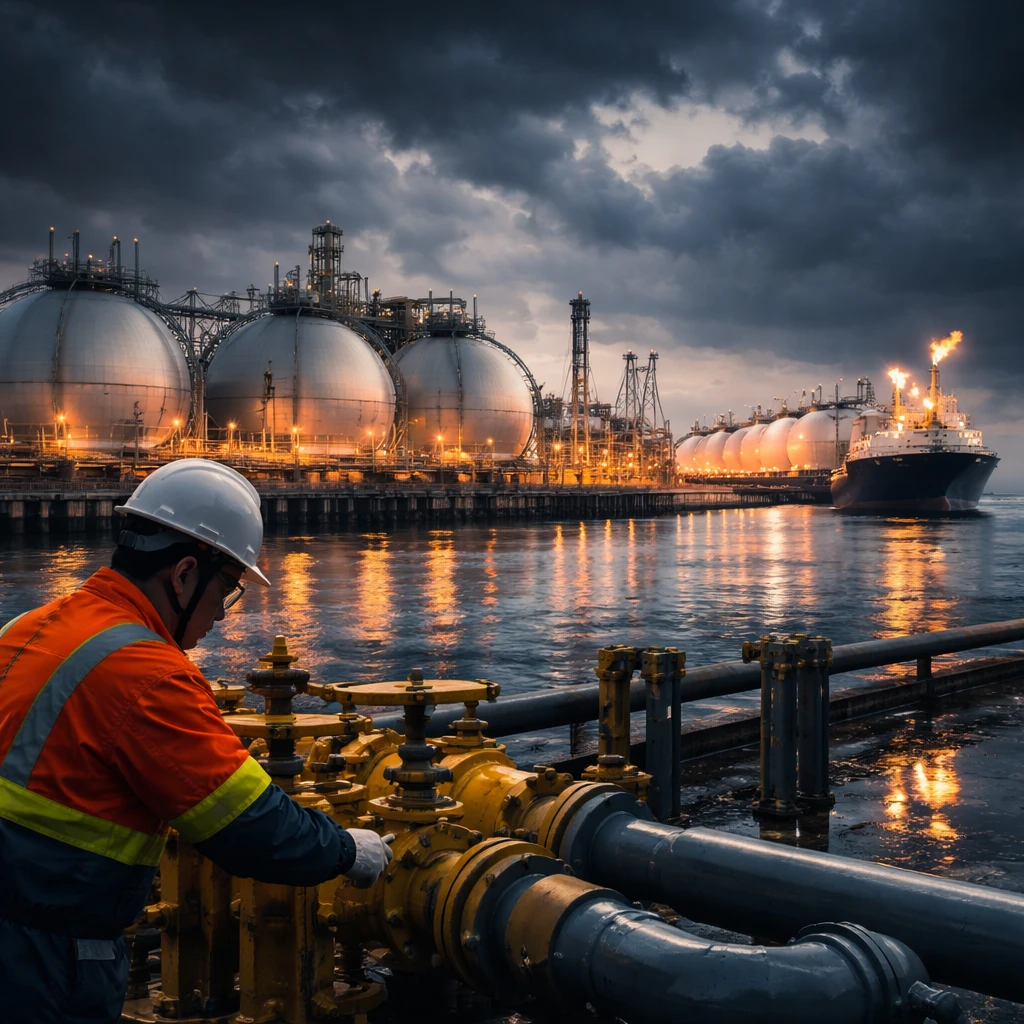
Goldman Sachs has revised its outlook for hydrocarbons and gas markets after assessing disruptions in Qatar and broader outages that have removed material LNG capacity from the market. The bank says damage at Ras Laffan - which represents roughly 17% of Qatar's LNG export capacity - together with other offline supply, has tightened global balances and sent European gas prices above c60 per MWh.
In response to the tighter supply environment, Goldman increased its commodity price assumptions. The bank now projects Brent crude at $92.7 per barrel in 2026 and $80.2 per barrel in 2027. At the same time, it elevated its assumptions for European gas prices substantially above consensus, citing the potential for prolonged supply constraints following disruptions linked to the Strait of Hormuz.
Goldman highlighted the effects of the current market dislocations on different segments of the energy complex. It said approximately 19% of global LNG supply is currently offline, a scale of disruption that is pushing prices higher in both Europe and Asia. The bank noted that Asian LNG benchmarks have risen more quickly, attracting cargoes away from the Atlantic basin and further tightening availability for Europe.
On corporate winners from the price moves, Goldman pointed to several large-cap oil and gas names with particular business models or production profiles that could capture upside if elevated prices persist:
- BP - Goldman singled out BP as a leading beneficiary at the large-cap level, citing the company's strong LNG trading franchise and relatively high exposure to spot markets. The bank also noted BP has no direct exposure to Qatar-linked assets, meaning it could gain from price volatility without carrying operational risk tied to the Qatar disruptions.
- Ve5r Energi - In the upstream arena, Goldman identified Ve5r Energi as the company most leveraged to higher European gas prices, based on its high share of unhedged production that is exposed to spot market pricing.
- Equinor ASA and Harbour Energy plc - Goldman added that these producers would also benefit from a tighter gas market, though to a lesser extent than Ve5r Energi.
The bank underlined that periods of heightened volatility historically have driven strong earnings from LNG trading desks. As an example, Goldman referenced the surge in integrated gas earnings during the 2022 energy crisis and suggested there is room for a similar, albeit more moderate, boost in earnings if the current elevated price environment endures.
The note frames the current situation as a supply-side shock with direct implications for spot-exposed trading businesses and producers with unhedged output. Goldmana0s assessment points to a near-term reallocation of cargoes toward higher-priced Asian benchmarks and an elevated premium for cargoes where sellers are not tied into long-term contracted positions.
Goldmana0s updated view and the ongoing offline capacity underline the sensitivity of European gas markets to unexpected production outages and shipping disruptions. The banka0s analysis highlights specific corporate exposures rather than projecting a broader macroeconomic impact beyond the commodities and energy-company earnings dynamics it described.