
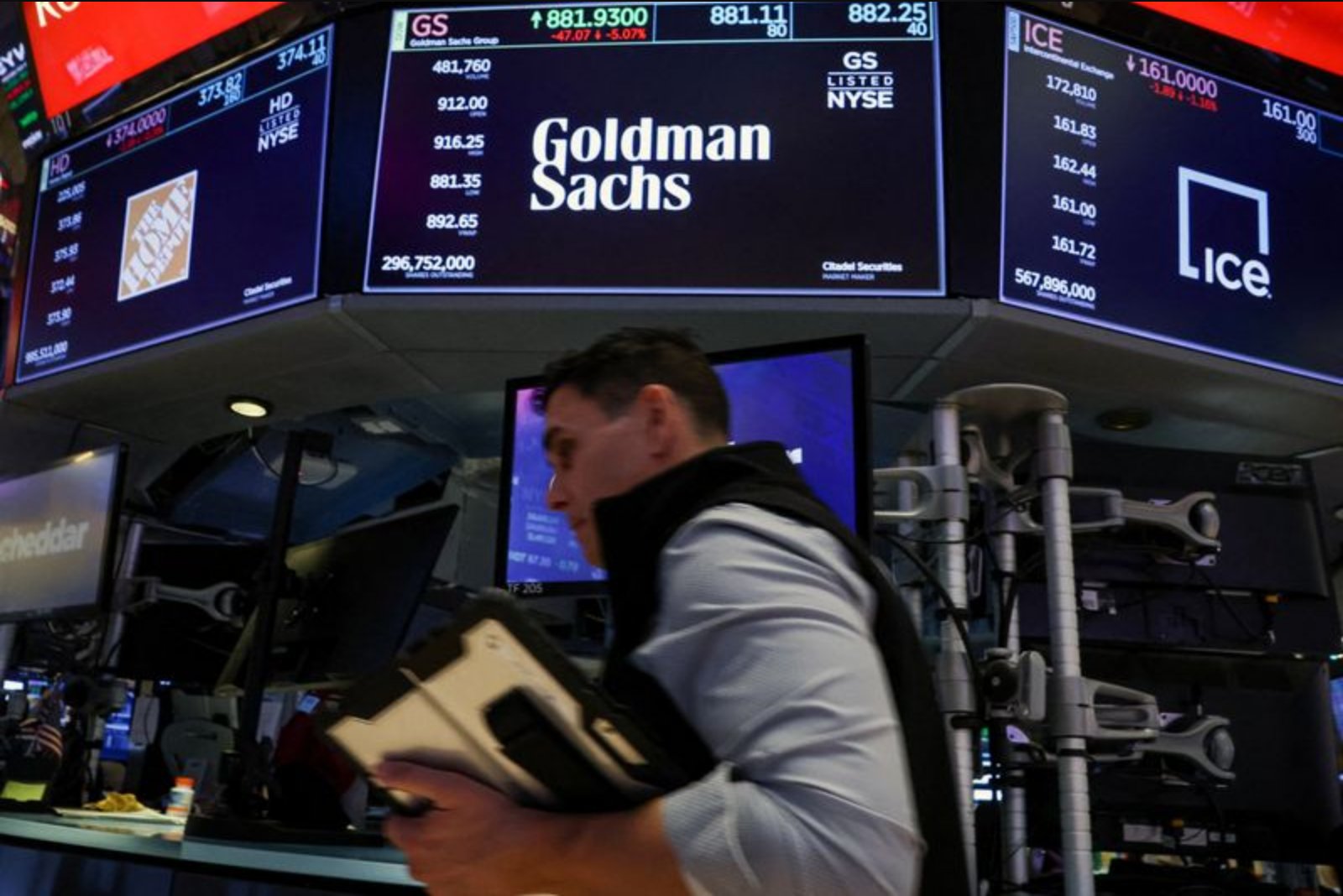
Goldman Sachs on Wednesday flagged a heightened risk of a near-term correction in global equities, pointing to a cluster of concerns that include geopolitics, uncertainty about the business impact of artificial intelligence, and stretched market valuations. At the same time, the Wall Street bank signaled it sees only limited potential for a sustained and deep bear market.
Peter Oppenheimer, Goldman's chief global equities strategist, wrote in a note that while correction risks are high given current valuation levels, the bank views such pullbacks as buying opportunities and judges the chance of a more prolonged bear-market decline as relatively low.
Goldman reiterated the commonly used thresholds that distinguish a correction from a bear market: a correction is confirmed when an index closes 10% or more below its most recent record high finish, while a bear market is confirmed when the index closes at least 20% below that peak.
The bank pointed to a set of market pressures that have unsettled investors since the start of the year. Concerns about AI - both its disruptive potential to business models and the scale of investment by major technology companies - have weighed on sentiment. More recently, military action involving the U.S. and Israel against Iran has raised fears of an oil-price shock, the potential for higher inflation and greater economic uncertainty. Those developments, combined with high equity valuations, have pushed some investors away from risk assets toward safer holdings.
Market moves have reflected that risk-off behavior: the MSCI All Country World Index, a broad gauge of global equities performance, dropped for a fifth consecutive session on Wednesday and was trading about 4% below its record high. The S&P 500 benchmark is down roughly 0.4% so far this year.
Goldman emphasized that robust earnings growth, particularly in the United States and in emerging markets, along with the prospect of continued strong economic growth, are factors that reduce the likelihood of a deeper, more protracted bear market. The firm continues to recommend broad diversification across geographies, factors and sectors as a way to improve risk-adjusted returns.
Investors, according to Goldman, should be prepared for corrections but may view them as potential entry points rather than signals of an extended downturn. The bank's guidance combines caution about near-term volatility with an outlook that keeps the deeper downside risk contained given current earnings and growth dynamics.
Context and definitions
- Correction: index closes 10% or more below most recent record high finish.
- Bear market: index closes at least 20% below most recent record high finish.