
Overview
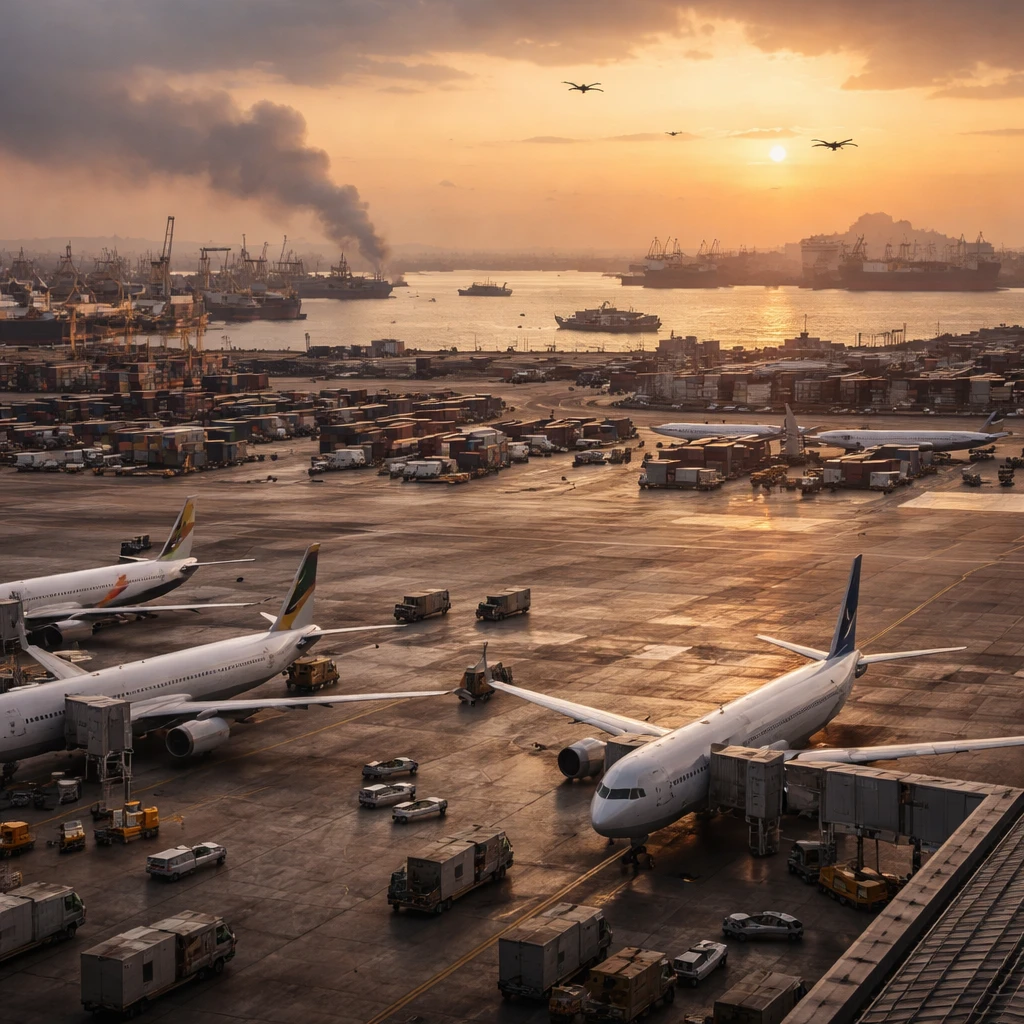
The armed confrontation between U.S.-Israeli forces and Iran has begun to upend global business networks, producing knock-on effects across transportation, commodities and supply chains that underpin industries as diverse as aviation, semiconductors, pharmaceuticals and luxury retail. What began as a regional military campaign has quickly become an economic shock that is constraining movement of people and goods, inflating fuel and commodity costs and forcing firms to seek alternate routes and operating models.
Travel and air cargo - immediate and severe disruption
Air travel has borne the brunt of the initial shock. Tens of thousands of flights have been cancelled, diverted or rescheduled as airlines contend with widespread Middle Eastern airspace closures amid threats from missiles and drones. Qatar’s airspace is among the areas closed to commercial traffic, and the closure of other parts of the region has pushed aviation into a crisis approaching the scale of the pandemic-era disruption.
Dubai International Airport (DXB), the world’s busiest international passenger hub, has seen operations severely impaired, while other regional hubs that serve as key transfer points for long-haul travel are also strained. The knock-on effect has left many travellers stranded; some have been forced to resort to private jets or lengthy overland journeys across desert terrain to reach alternate airports, such as in Riyadh, Saudi Arabia, in order to catch flights home.
Time-sensitive air freight has been similarly fractured. Shipments that depend on quick transit - from fresh fruit and vegetables to critical airplane components - are facing delays as cargo capacity is squeezed and freight rates climb. The disruption of a major oil export corridor has pushed jet fuel prices sharply higher, prompting airlines to raise fares and worry about an erosion of travel demand as costs rise.
Airlines - rising costs and network reconfiguration
Air carriers have issued stark warnings about the financial impact of soaring jet fuel prices. Jet fuel, typically the second-largest cost item after labour for carriers, has surged since the conflict began, imposing hundreds of millions of dollars in additional expense on the industry according to airline assessments.
Even carriers that employ hedging strategies to mitigate spikes in fuel costs are announcing fare increases, introducing fuel surcharges and cutting capacity on some routes as refining margins widen. The rapidly changing risk environment has forced cancellations, delays and flight diversions on a scale that is reverberating across global airline networks.
The conflict has also raised safety concerns for flight crews, with drone incursions amplifying the operational risk for pilots traversing affected airspace.
Executives at some legacy carriers say the situation could alter market dynamics on long-haul routes, including weakening the strong position previously held by Gulf-based airlines on traffic to Asia. Meanwhile, policies enacted earlier - such as Pakistan’s ban on Indian carriers’ airspace last year - have compounded the pressure on certain markets. Indian airlines, which rely on Gulf corridors for connections to Europe and the United States, are lobbying for relief measures, including fuel tax cuts and lower airport charges, as they face mounting financial strain.
Cruise industry - fuel costs and hedging exposure
The cruise sector is contending with higher bills for heavy fuel oil and marine gasoil, and while many operators use hedging contracts to lock in fuel prices and limit volatility, not all firms are equally protected. Analysts have flagged that some operators could see pronounced hits to earnings in the coming year if fuel remains elevated, particularly those that have not hedged their exposures.
Gulf tourism and Dubai’s positioning
The conflict threatens the Gulf’s carefully cultivated image as a premium safety-focused tourism destination, the product of extensive investment across cities from Abu Dhabi to Dubai. Tourism in the region is sizeable, valued at roughly $367 billion annually, and the deterioration of perceived safety and disruptions to airport hubs have forced many retailers in major shopping centers to close or operate with minimal staff.
The events underline the outsized role that a handful of major transit hubs play in global travel flows, with disruptions to any one of them producing outsized effects elsewhere.
Defense sector - escalated procurement and new technologies in combat
On the battlefield, the United States has deployed a broad range of munitions and platforms against Iranian targets, from Tomahawk cruise missiles and stealth fighter aircraft to low-cost one-way attack drones modeled after Iranian designs. The Pentagon has also made operational use of artificial intelligence services produced by an AI company, employing tools from the firm during strikes.
That same AI firm was subsequently designated by the U.S. Defense Department as a "supply-chain risk," with a ban on government contractors using its technology for military work, following a protracted disagreement over safeguards that the department said were excessively restrictive. Separately, U.S. political leaders and defense officials have engaged with defense industry executives to replenish inventories depleted by recent operations, reflecting the pressure the campaign places on procurement pipelines.
Critical metals and raw materials - shipping disruptions squeeze supplies
Shipping restrictions through the Strait of Hormuz and other Gulf channels have forced exporters and smelters to reroute maritime traffic and, in some cases, suspend operations. Some aluminium producers have shifted exports and raw material shipments to alternate ports, while others have shut plants or declared force majeure because they are unable to move metal through disrupted sea lanes.
The Gulf supplies a meaningful share of global aluminium, and the resulting interruptions have driven sharp increases in aluminium prices on trading platforms and pushed physical premiums in Europe and the United States to multi-year highs.
Helium markets have also tightened after disruptions to natural gas processing in the Gulf, with prices jumping as a result. Given the centrality of helium to industries such as semiconductor fabrication and medical imaging, diminished flows raise downstream production vulnerabilities.
Producers of nickel and other industrial materials that rely on Gulf-sourced inputs are facing potential cutbacks, as supply chains for inputs such as sulphur are curtailed by shipping disruptions. Rising gasoline costs could also nudge consumer demand toward electric vehicles and hybrids, although the broader market implications hinge on the duration of the conflict.
Global agencies have warned that the situation in the Middle East has produced a historic oil supply disruption, with downstream implications for refining and energy-intensive industries. In some producing countries, such as Vietnam, domestic crude production forecasts are expected to be affected in the coming decade if supply patterns remain unsettled.
Medical supplies - vulnerability of cold-chain logistics
The conflict is complicating the transport of temperature-sensitive medicines into the Gulf, raising the risk of interruptions to cancer therapies and other critical drugs that require strict cold-chain logistics. Executives report that while immediate shortages are not widespread, a prolonged campaign could strain inventories and rerouting options.
Because the Gulf region is heavily dependent on imports for many pharmaceuticals, and because certain medicines have short shelf lives and demand controlled temperatures throughout transit, the need to pivot from air freight to lengthy overland routes poses logistical and shelf-life challenges.
Food, apparel and luxury goods - manufacturing and packaging pressures
Fast fashion supply chains have experienced strain as some consignments of apparel were left stranded at airports in major South Asian manufacturing centers after flight disruptions. Retailers that depend on a steady cadence of garments from countries such as Bangladesh, India and Pakistan face the prospect of inventory shortfalls if cargo flows remain unsettled.
Luxury brands, already navigating a softening in demand, are further exposed to travel and retail disruptions in Gulf shopping centers and tourist hubs. Groups with significant exposure to the region are among those analysts have identified as potentially vulnerable.
Foodservice and hospitality firms in countries like India have warned of operational impacts as the conflict constricts supplies of cooking gas, prompting governments to review industry requests and consider contingency measures. Households have responded to gas shortages by shifting toward electric induction stoves, and packaged water manufacturers have reported cost increases for materials such as plastic bottles, caps and cardboard, driven by higher polymer prices linked to crude oil.
Semiconductors and data centres - fragile inputs and localized attacks
Officials in key semiconductor-producing nations have cautioned that extended conflict could restrict access to essential manufacturing inputs sourced from the Gulf, notably helium, which has no practical substitute in many chip-making processes. Interruptions to helium supply can therefore have material impacts on chip production capacity.
Separately, drone strikes have damaged some data centres in the United Arab Emirates and Bahrain, prompting questions about the resilience of technology infrastructure in the region and the pace at which major technology firms expand their footprint there.
Banks and financial services - precautionary closures and remote work
Major financial institutions with significant operations in the Gulf have taken precautionary steps. Some global banks have instructed staff in Dubai to work from home and have closed branches in affected countries until further notice, citing threats tied to the conflict and the safety of employees and customers. These actions highlight the immediate reputational and operational risks banks face when geopolitical tensions center on financial hubs.
Where the pressure points sit
The disruptions fall into several interlocking categories: constrained mobility of passengers and air cargo; elevated fuel and commodity prices driven by shipping and export corridor uncertainty; raw material shortages for aluminium, helium and other industrial inputs; logistical stress for temperature-sensitive medicines; and precautionary adjustments by banks and tech firms operating in the region.
How deeply and for how long these effects persist will depend on the duration and intensity of the conflict. For now, companies are rerouting shipments, invoking force majeure in some cases, and engaging with authorities to ease operational bottlenecks.
Note on scope
This analysis compiles and organizes the main disruptions that have been reported across industries. If events unfold further or new operational assessments are made public, companies and governments will need to update contingency plans accordingly.