
Stock Markets February 5, 2026

Ginkgo Bioworks Shares Rise After GPT-5-Driven Lab Cuts Protein Production Costs by 40%

Autonomous laboratory ran 36,000 experiments across six cycles, lowering reaction costs to $422 per gram; improved reagent mix now on sale

By Leila Farooq DNA
Ginkgo Bioworks Shares Rise After GPT-5-Driven Lab Cuts Protein Production Costs by 40%
DNA

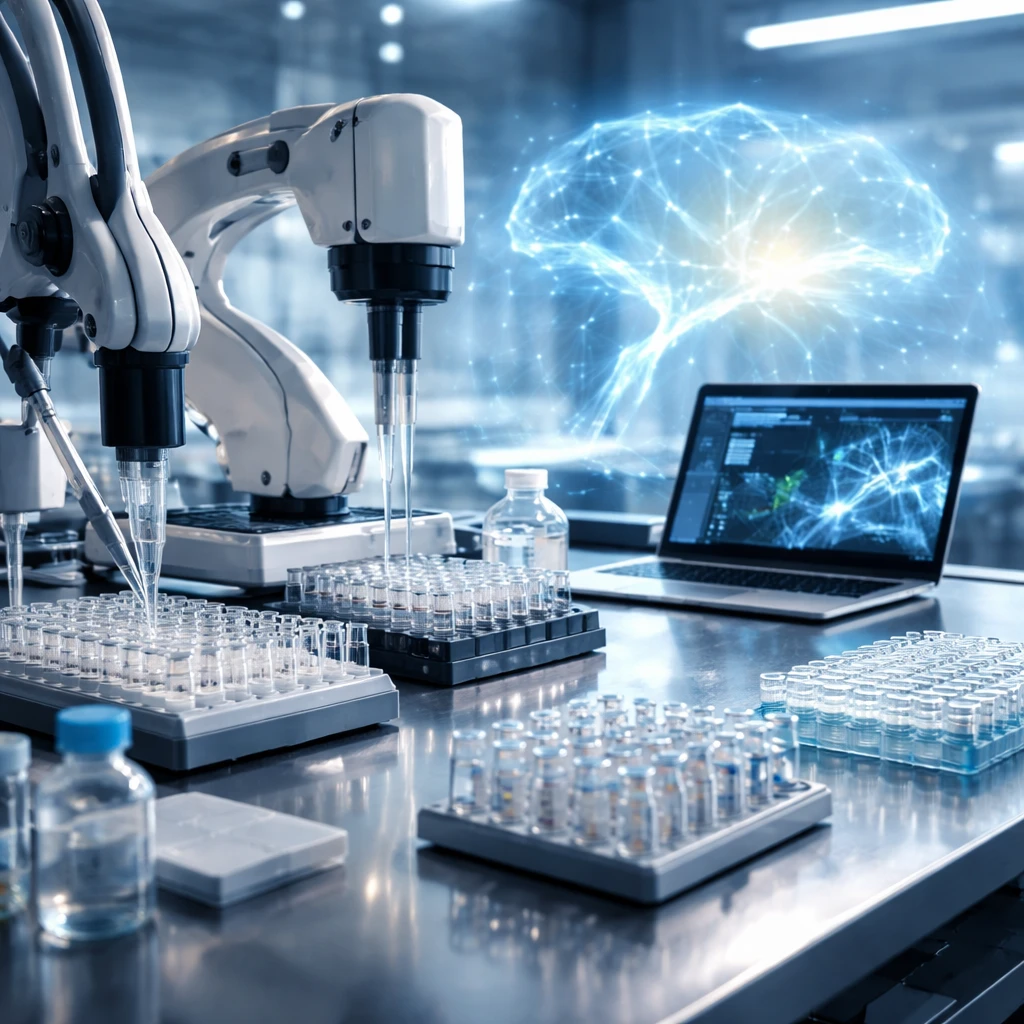
Ginkgo Bioworks (NYSE:DNA) shares climbed 6% Thursday afternoon after the company said its autonomous laboratory, powered by OpenAI's GPT-5, produced a 40% improvement in cell-free protein synthesis costs. The autonomous system ran more than 36,000 experiments across six iterative cycles, producing protein at $422 per gram versus a prior benchmark of $698 per gram. Ginkgo has begun selling the enhanced reaction mix and is releasing the Pydantic model used to validate experiments as open source.

Key Points

  • Ginkgo Bioworks reported a 40% cost improvement in cell-free protein synthesis, lowering reaction costs to $422 per gram from a $698 per gram benchmark.
  • The GPT-5-powered autonomous laboratory executed more than 36,000 experiments across six iterative cycles and produced nearly 150,000 experimental data points with limited human intervention.
  • Ginkgo has begun selling the improved reaction mix through its reagents store and is releasing the Pydantic validation model as open source, affecting biotech research, lab automation, and reagent supply markets.

Ginkgo Bioworks (NYSE:DNA) saw its stock rise about 6% on Thursday afternoon after the company reported that an autonomous laboratory, driven by OpenAI's GPT-5, delivered a 40% improvement over existing benchmarks in cell-free protein synthesis costs.

According to Ginkgo, the GPT-5-driven autonomous lab carried out in excess of 36,000 experiments across six iterative cycles. The system's work drove down reaction costs for protein production to $422 per gram, compared with the prior benchmark of $698 per gram, the company said. The autonomous platform was responsible for designing, executing, and analyzing the biological experiments with minimal human intervention.

Ginkgo emphasized the commercial implications of the result by noting that it has begun offering the improved reaction mix for sale through its reagents store. The company said the autonomous workflow generated nearly 150,000 experimental data points while human involvement was largely confined to reagent preparation and system oversight.

Reshma Shetty, co-founder of Ginkgo Bioworks and a co-author of the study, commented on the outcome. She said, "By pairing a frontier large language model with an autonomous lab, we found reaction compositions that are notably cheaper than prior state of the art. We expect more and more experiments to be run on autonomous labs where reagent and consumables costs dominate the cost of an experiment. Lower cost reagents for protein production enable more data generation and thus more scientific progress per dollar spent."

In addition to commercializing the improved reagent mix, Ginkgo announced it will make the Pydantic model used to validate experiments available as open source. The company described this step as a way to broaden access to the technology for the wider scientific community.

The company framed the finding as a demonstration of how artificial intelligence, when coupled with laboratory automation, can materially change the cost structure for laboratory experiments. The autonomous lab's output of nearly 150,000 data points supports Ginkgo's contention that reagent and consumables costs can be a decisive factor in scientific throughput and cost-efficiency.


Context and limitations

The announcement highlights a specific cost reduction achieved under the conditions described. The company has reported the start of commercial sales for the improved reaction mix and the open sourcing of a validation model, but broader, long-term commercial outcomes and adoption timelines were not detailed in the company's statement.

Risks

  • The announcement does not provide details on long-term commercial adoption or scalability beyond initial reagent sales, leaving future revenue paths and market penetration uncertain - this affects investors and the biotech tools sector.
  • While the autonomous lab reduced reaction costs under the described conditions, the article does not address whether the same cost improvements will hold across different proteins or production contexts - a potential uncertainty for biotech manufacturers and research labs.
  • The company's description notes limited human involvement in the experiments, but the broader implications for operational oversight, quality control, and regulatory acceptance were not detailed in the announcement - a consideration for life sciences and regulatory stakeholders.

More from Stock Markets

Lendlease posts first-half loss as revaluations, impairments weigh on results Feb 23, 2026 Australian shares retreat as IT, healthcare and A-REITs weigh on S&P/ASX 200 Feb 23, 2026 Asian Markets Muted as U.S. Tariff Moves Keep Investors Cautious Feb 22, 2026 Regis Healthcare Shares Jump After Solid First-Half Results Feb 22, 2026 Samsung Shares Surge to Record on Report It Could Be Nvidia's Exclusive HBM4 Supplier Feb 22, 2026