
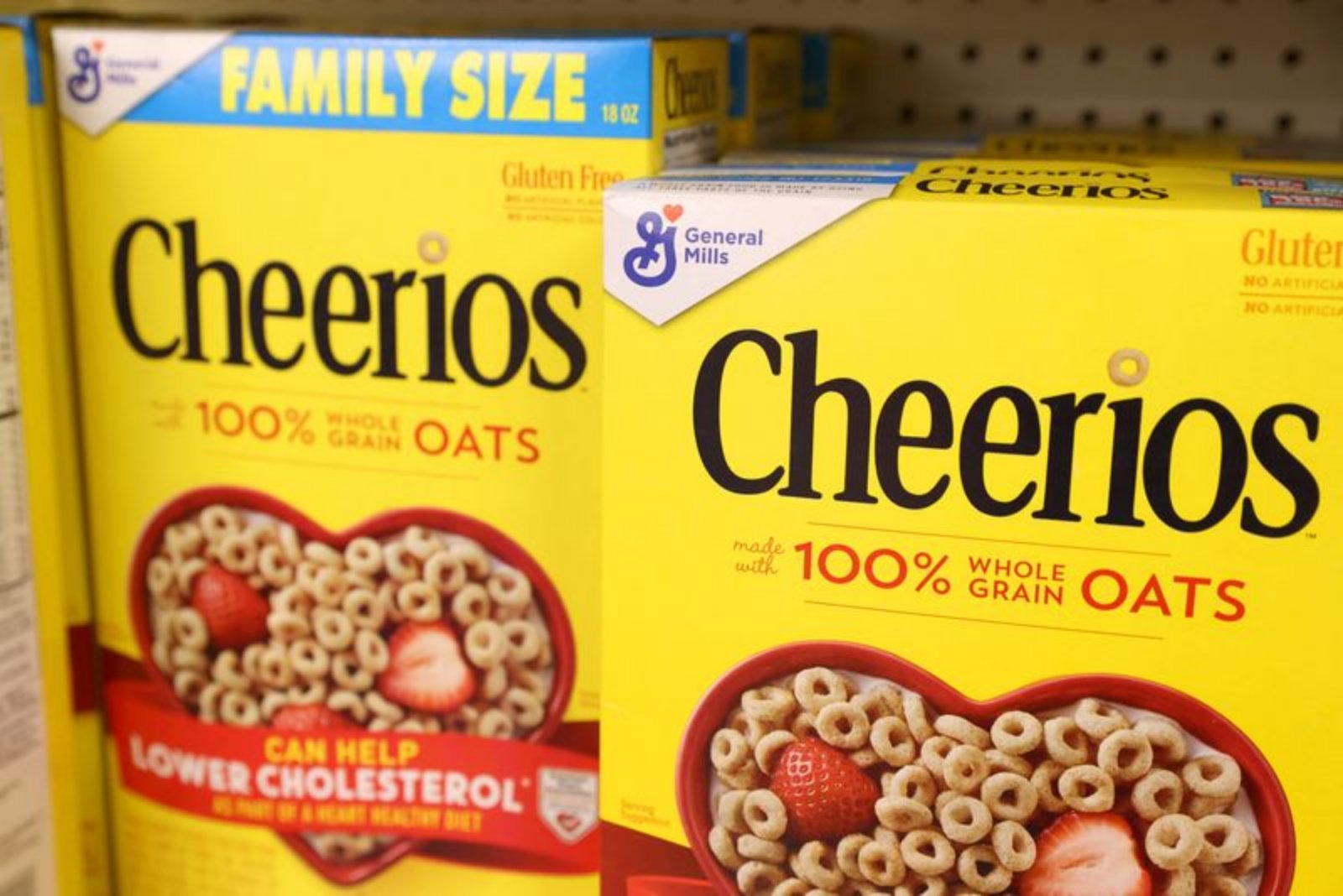
General Mills on Wednesday reiterated the full-year sales and profit targets it had reduced the previous month, as consumers under financial strain and intensified competition continue to blunt demand for the maker of Cheerios and other pantry staples and snacks.
The company reaffirmed its forecast that adjusted profit will decline between 16% and 20% for the year, and that organic sales will fall in the range of 1.5% to 2%. Those projections follow a formal cut to guidance last month.
For the third quarter, General Mills recorded sales of $4.44 billion. That result slightly exceeded analysts' expectations of $4.42 billion, based on data compiled by LSEG.
Management cited several pressures that are constraining demand. Rising costs of living have pushed more price-sensitive shoppers toward cheaper private-label and store-brand options, reducing sales for companies that previously relied on passing higher costs through to consumers. Broad inflationary pressure remains a headwind for consumer spending.
Added geopolitical uncertainty tied to the Iran war is also weighing on household spending decisions, the company said, contributing to softer sales trends for packaged-food manufacturers. Those companies are already confronting a longer-term change in consumer preferences toward healthier eating patterns. That shift has been accelerated, General Mills noted, by fast adoption of GLP-1 weight-loss drugs among the population, which is influencing demand for traditional packaged foods.
Together, these forces - cost-of-living pressures, stronger competition from private-label products, geopolitical uncertainty and a change in dietary preferences - are creating a more challenging environment for makers of packaged goods that have historically relied on price-led revenue strategies.
While the company beat the near-term revenue consensus by a narrow margin in the latest quarter, the reaffirmed guidance underscores management's view that broader consumer and market dynamics will continue to pressure sales and margins through the remainder of the fiscal year.
Summary
General Mills has held to its revised annual outlook following a guidance cut last month, projecting a mid-to-high teens drop in adjusted profit and a small decline in organic sales as consumers migrate to lower-cost store brands and dietary changes dampen demand for packaged foods. Third-quarter sales were $4.44 billion, slightly ahead of LSEG-based analyst estimates.