
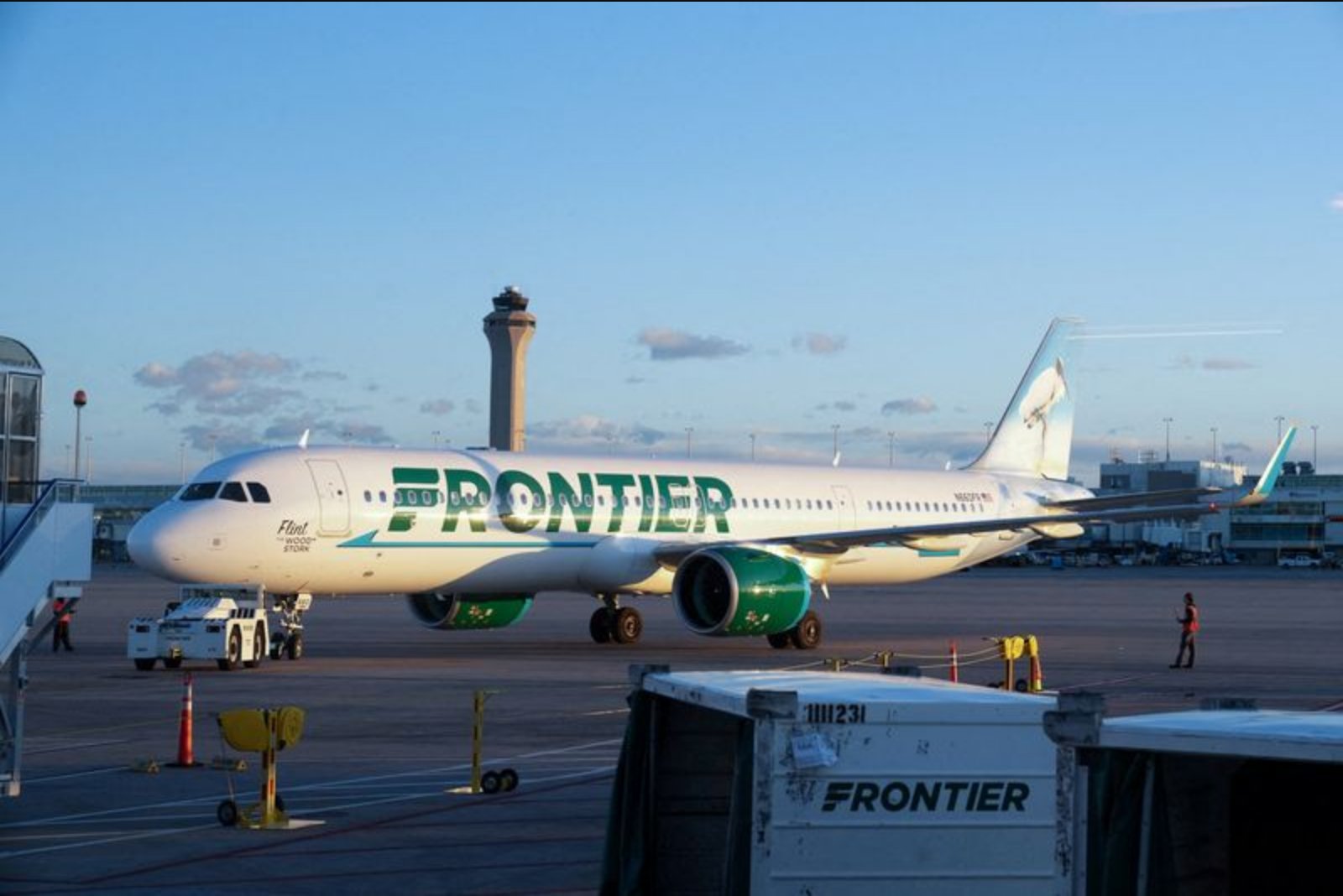
Frontier Group Holdings, the parent company of Frontier Airlines, is positioning itself to attract travelers who have pulled back on discretionary spending even as much of the airline industry chases higher-margin premium customers. James Dempsey, who became Frontier's chief executive in January after the unexpected exit of Barry Biffle, told reporters that the carrier expects a strategy focused on higher utilization of aircraft and lower fares to be viable heading into 2026.
Dempsey said the airline will not follow Spirit Airlines into bankruptcy protection, pushing back on media reports that raised the possibility of a similar filing at Frontier. "They are categorically untrue," he said of the published reports suggesting a bankruptcy filing was imminent. The company said earlier problems enabling some customers to book travel beyond April were the result of an extensive schedule overhaul ahead of the spring and summer seasons, not an impending restructuring led by creditors.
"We are very focused on the go-forward plan on Frontier and right-sizing our fleet," Dempsey added. "It puts us in a very strong position to bring the airline back to profitability." That go-forward plan centers on returning to a high-utilization operating model in which aircraft are used intensively to spread fixed costs over a greater number of revenue-producing flights, an approach that historically supported very low unit costs.
Investors have greeted the plan with skepticism. Frontier's stock declined 19% over the past five trading days and is down 44% over the last year, reflecting Wall Street doubts about whether the carrier can resurrect its former cost advantage in a materially changed operating environment. Analysts say the high-utilization playbook has been harder to execute since the pandemic because of elevated operating costs and renewed competitive pressure from legacy carriers expanding into discount markets.
"We offer value to customers at fares that enable people to travel who would not otherwise travel," Dempsey said. "We think that the model is phenomenally beneficial to consumers." But that consumer benefit must be balanced against deteriorating margins: Jamie Baker, a JP Morgan equity analyst, said in a research note that Frontier's "deeply negative margins are second only to Spirit's, and remain among the worst peacetime margins we’ve ever witnessed." Baker's commentary underscores investor concern that a softening in budget demand could deepen losses and intensify pressure from shareholders.
Operational and financial headwinds
Frontier reported mixed results in its most recent quarter. Excluding gains from sale-leaseback transactions, the airline's fourth-quarter profit declined by an estimated 9.6%, while costs per available seat mile excluding fuel increased about 7% year-on-year, according to Baker's analysis. A company spokesperson confirmed that lower aircraft utilization was a factor behind higher unit costs in 2025.
Data from aviation analytics firm Cirium show that Frontier expanded seat capacity by about 18% at the start of 2024, yet faced a tougher demand backdrop in 2025 and ultimately flew 3.5% fewer seats in 2025 compared with 2024. The combination of higher capacity plans and weaker demand contributed to the financial strain the carrier is attempting to repair.
Dempsey said he has seen an uptick in bookings over the last couple of months and pointed to two tactical moves intended to bolster demand: investment in the airline's loyalty program and service gaps created as Spirit exits overlapping markets. Management reported that revenue per available seat mile, or RASM, is up roughly 10% in the current quarter, which Dempsey framed as evidence of improved pricing discipline and clearer fare value propositions for customers. "It’s a testament to some of the changes that we’ve made around disciplined pricing and giving customers clarity and transparency around what they’re purchasing," he said.
The carrier is not abandoning all attempts to capture higher-spending passengers. Frontier plans to introduce first-class seating later this year and install Wi-Fi fleetwide before the end of 2027. "We’re very focused on having a diversified product in the cabin," Dempsey said, noting the shift since the pandemic in customer willingness to pay for premium features.
Management also plans to shrink the fleet to better match demand and is targeting approximately $200 million in annual cost savings by 2027 as it seeks to improve operational performance. On-time metrics highlight the work still to be done: Cirium ranked Frontier last among 10 North American airlines for on-time performance in 2025.
M&A talk and competitive dynamics
Industry consolidation has surfaced repeatedly in discussions about low-fare carriers. Frontier and Spirit Airlines have engaged in talks about a potential tie-up since 2022 but have not reached a deal. During Spirit's first Chapter 11 filing, Spirit rejected at least two proposals from Frontier in early 2025, including a $2.16 billion offer. Following Spirit's subsequent bankruptcy filing in August 2025, Frontier submitted another proposal that was later described as unviable.
Dempsey declined to say whether merger discussions between Frontier and Spirit remain active. "We look at opportunities as they arise, and we’ll be disciplined in how we assess those opportunities," he said. "If it’s favorable to Frontier, we would pursue it." Observers note that other consolidation moves are already taking shape in the sector: smaller carriers Sun Country and Allegiant announced plans to merge in January, a deal framed as a logical response to post-pandemic shifts in pricing power that have exposed vulnerabilities among low-fare operators.
Jeff Potter, Frontier’s CEO from 2002 to 2007, commented on the broader consolidation environment and suggested that a Frontier-Spirit combination may not deliver the same strategic logic as other recent deals. "Sun Country and Allegiant make business sense, and I’m not sure that same box is checked when you look at a Frontier-Spirit," he said. "You have two companies that for lack of better terms are finding their way through some financial challenges and I don’t think that improves if there were a combination now." The observation underscores the complexity of combining carriers that both face margin pressure and operational shortcomings.
Market context and investor considerations
For investors, the key variables to watch are whether Frontier can sustain the recent improvement in RASM, meaningfully reduce unit costs through fleet adjustments and other efficiencies, and convert gains in loyalty and market share into durable revenue growth. Failure to do so would likely maintain pressure on margins and could make the company a focus of further consolidation discussions.
"We offer value to customers at fares that enable people to travel who would not otherwise travel," Dempsey said, summarizing the commercial conviction behind the low-fare approach.
Separately, AI-driven investment tools continue to weigh airline names. One such tool evaluates Delta Air Lines' ticker DAL along more than a thousand other companies each month using more than 100 financial metrics to assess fundamentals, momentum and valuation. The AI has highlighted past winners including Super Micro Computer with a reported gain of 185% and AppLovin with a reported gain of 157%.
As Frontier pursues a course between budget affordability and selective premium offerings, the carrier's trajectory will hinge on execution across pricing, operations and fleet management, and on the evolution of consolidation dynamics within the low-cost segment.