
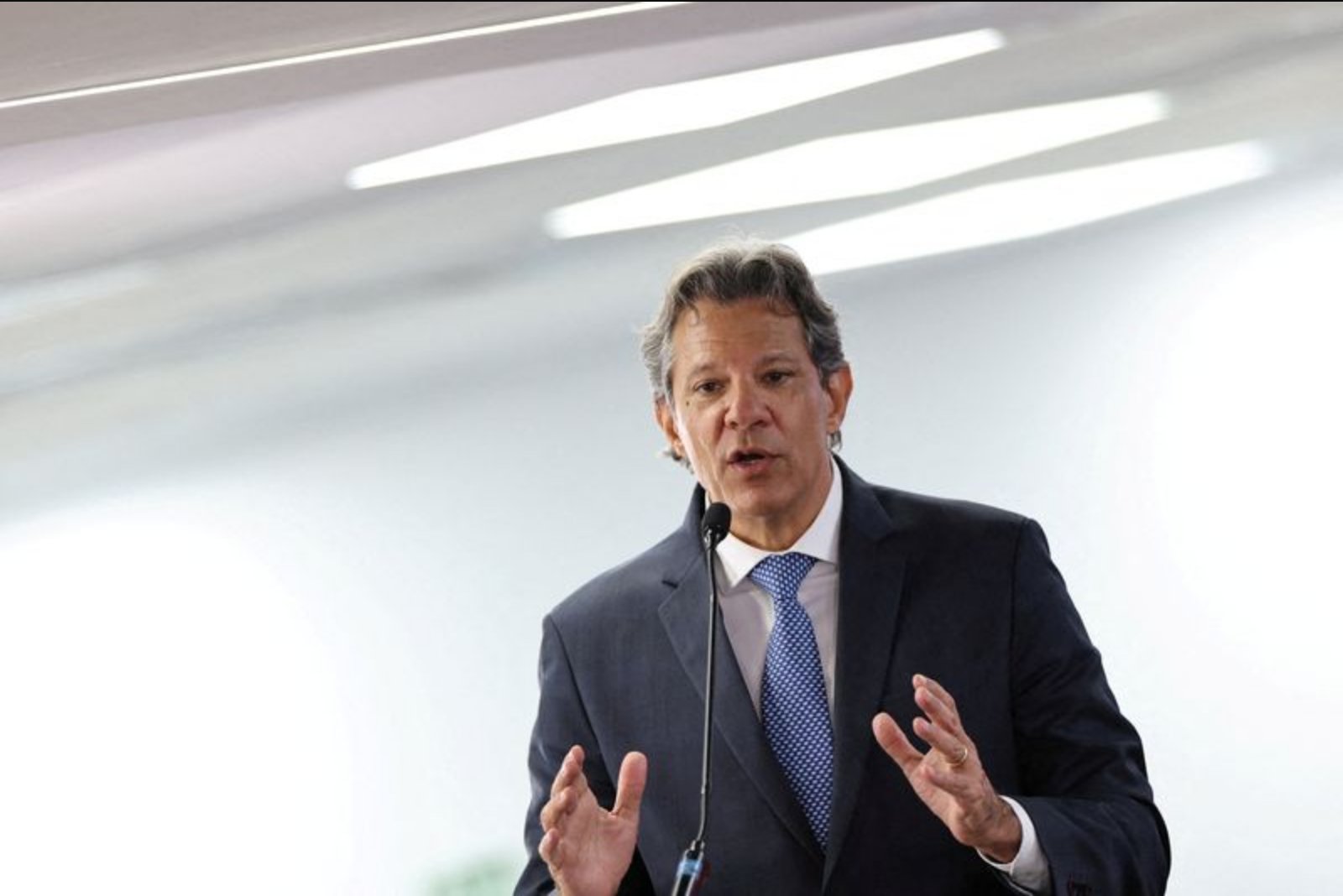
Fernando Haddad, who has been serving as Brazil's finance minister, formally declared on Thursday that he will seek the governorship of Sao Paulo, the country's most populous state. The announcement came during a Workers Party rally at a union headquarters in a working-class suburb where President Luiz Inacio Lula da Silva once worked as a metalworker and labour leader. Haddad made the declaration alongside President Lula, signalling a high-profile, coordinated launch.
Earlier the same day Haddad had told attendees at an event in Sao Paulo that he would step down from his ministerial role. President Lula said that deputy finance minister Dario Durigan would take over the finance portfolio, a transition that had been widely anticipated.
At the rally, Haddad framed his candidacy as a privilege, rejecting characterizations that he was making a personal sacrifice for Lula's presidential prospects. "It’s a great privilege," he said when announcing his bid. The Workers Party has long considered a Haddad run for governor as a strategic way to strengthen Lula's appeal in a state that is central to the president's reelection prospects, even if party strategists view the contest as difficult.
Haddad, 63, had earlier signalled in late 2025 that he would leave the ministry early this year, initially indicating he wanted to advise Lula on the October reelection campaign. Since that statement, however, the political outlook for the president has become more uncertain. Polls show Lula tied in a potential run-off with Senator Flavio Bolsonaro, the son of former right-wing President Jair Bolsonaro, whom Lula narrowly defeated in 2022.
At the Sao Bernardo do Campo rally, Lula praised Haddad's decision, saying "To my delight, Haddad has once again decided to make himself available to be a candidate." The president added that the present political context demands the "best people" leading states and cities.
In a recent interview with the leftist news website Opera Mundi, Haddad acknowledged that "the scenario has become more complicated," while indicating he would be a candidate without definitively confirming his intention to run specifically for governor of Sao Paulo.
Political hurdles and electoral history
Haddad's run is widely seen as an uphill battle. Surveys indicate incumbent Governor Tarcisio de Freitas, a prominent Bolsonaro ally, holds a clear lead in the state. A further electoral loss in Sao Paulo would add to Haddad's record of unsuccessful campaigns following earlier victories and defeats. Haddad won the Sao Paulo mayoral election in 2012 but lost his 2016 reelection bid in the first round. He replaced Lula as the Workers Party candidate in the 2018 presidential contest and was defeated that year; Lula had been barred from running at the time while jailed in a corruption case that was later annulled on procedural grounds. Haddad also lost his 2022 bid for Sao Paulo governor, though his candidacy that year was seen within the party as pivotal to helping Lula secure a majority of votes in the state capital during the presidential contest.
Policy record as finance minister
During his tenure as finance minister, Haddad led a significant overhaul of Brazil's consumption tax system, addressing complexities that had long been criticised as a drag on the economy. He also advanced a new fiscal framework intended to rebalance public accounts; the government later softened the budget targets set under that framework.
Haddad faced criticism over a rapid rise in Brazil's public debt, a trend the article attributes mainly to rising interest payments. Critics expressed concern that government spending may be increasing too quickly. In addition to tax reform measures, Haddad implemented changes to income tax that increased the burden on the wealthiest while exempting lower-income earners, eliminated certain regressive tax breaks and promoted several climate-related financing initiatives.
The minister also introduced higher taxes on corporate credit, foreign-exchange transactions and imports. Those moves reinforced critiques from opponents who argued the leftist government has turned to new revenue measures rather than pursuing more aggressive spending restraint.
Macro risks and election dynamics
The broader national political environment has been complicated by external factors that could exacerbate domestic economic pressures. The article notes an oil-price shock arising from the widening conflict in the Middle East, which threatens to stoke inflation and thereby complicate both economic management and the political calculus ahead of October's election. Against that backdrop, Haddad's campaign in Sao Paulo is expected to be particularly challenging.
As the campaign season advances, Haddad's transition from the finance ministry to an electoral role will likely draw attention to both his record on fiscal policy and the electoral mathematics in Sao Paulo. The state's political outcome is viewed by the Workers Party as potentially influential for Lula's national reelection prospects, even as the governor's race itself presents a difficult path for Haddad.