
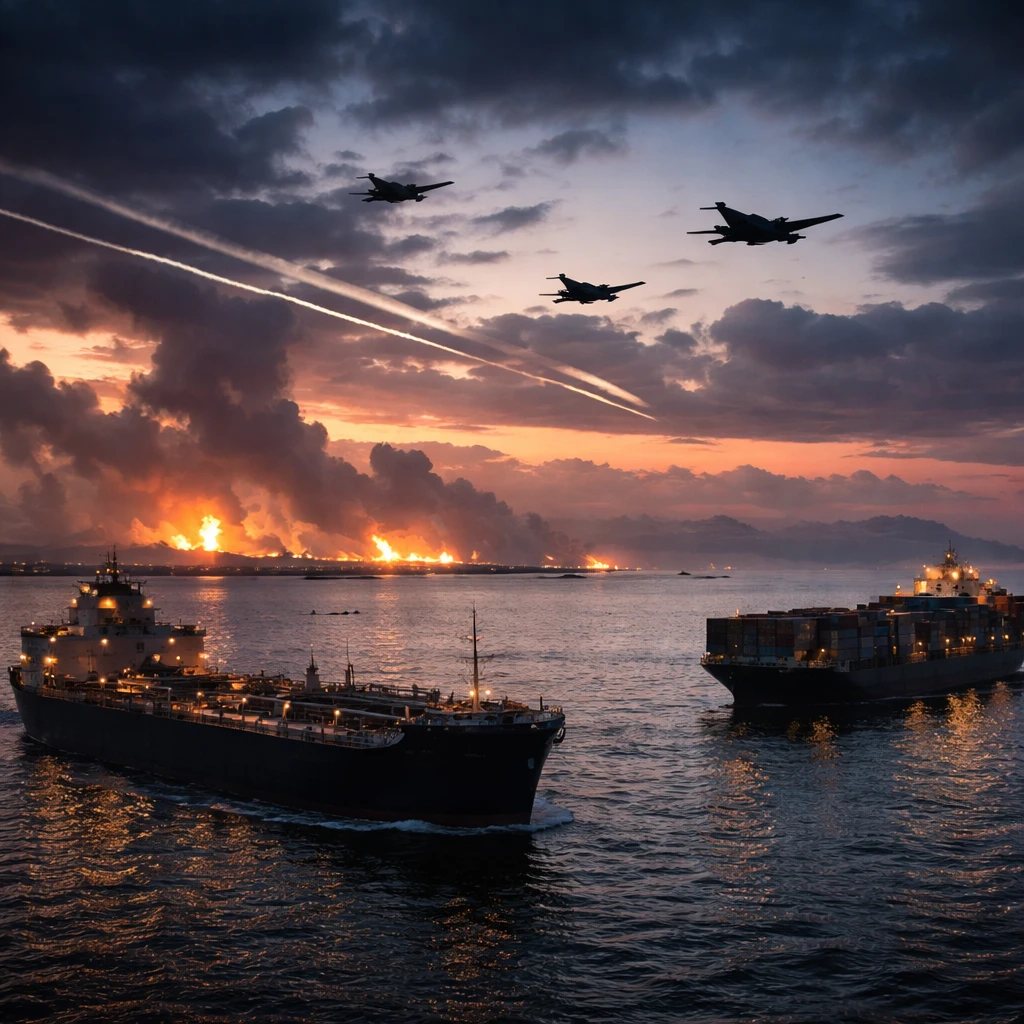
Israel carried out strikes against Hezbollah locations in Lebanon and targeted Iranian infrastructure in Tehran on Friday, as hostilities in the Middle East continued to intensify with little indication of a near-term halt.
According to reporting cited by the Wall Street Journal, the Israeli military said it is moving into the next phase of its operations against Iran after completing what it described as an initial "surprise strike phase."
Iran's Islamic Revolutionary Guard Corps mounted its own counterattacks, launching a barrage of drones and missiles that Iran's state news agency said were aimed at Tel Aviv. Authorities in Bahrain and Saudi Arabia also reported that they were among nations in the Gulf targeted by Iranian strikes.
The joint U.S.-Israeli campaign on Iran entered its seventh day, during which Iran's foreign minister warned the conflict could become a "quagmire" for parties that continue to press it. U.S. Defense Secretary Pete Hegseth said that the United States has no shortage of offensive and defensive weapons and signaled the U.S. could continue military operations for as long as it deemed necessary.
In parallel to the battlefield developments, there has been a pause in the process of selecting a successor to Ayatollah Ali Khamenei, who was killed in U.S. and Israeli air strikes, the New York Times reported. Mojtaba Khamenei, the Ayatollah's son, is widely viewed as the leading candidate for the post, a prospect U.S. President Donald Trump described as "unacceptable."
Market and economic ripple effects
Global energy markets reacted sharply as traders priced in the risk of supply disruptions through the Strait of Hormuz - the strategic waterway south of Iran through which an estimated one-fifth of the world's oil moves. U.S. crude futures have surged by nearly 21% since the joint U.S.-Israeli strikes on Iran began.
Average retail gasoline prices in the United States rose by 27 cents since the start of the assault, reaching $3.25 per gallon, Reuters reported, citing data from travel group AAA.
Major container carriers A.P. Moller-Maersk and Hapag-Lloyd suspended several shipping routes that transit the Middle East and link to Europe and East Asia, a disruption that further underscores potential bottlenecks in global trade flows.
Investors have responded to the spike in oil with concern that higher energy costs could feed through into broader inflation. That worry has raised the prospect that planned interest-rate reductions by the Federal Reserve could be delayed. U.S. bond yields have risen in response to the developments, placing downward pressure on some equity markets, though stocks generally exhibited resilience over the week.
Outside the United States, rising crude prices have weighed on Asian equities and currencies. South Korea, a country that imports substantial quantities of oil transported via the Strait of Hormuz, saw its KOSPI index finish Friday nearly unchanged for the session but down 10.56% over the past week. European benchmark indexes were also heading for their largest weekly declines since last April.
To address supply concerns, the U.S. announced a temporary permission allowing the sale of Russian oil to India for a 30-day period. Analysts at ING characterized that action as part of Washington's plan to try to cap oil prices. The U.S. Treasury Department is also expected to roll out measures intended to influence energy prices through financial-market mechanisms, Reuters reported.
Developing story
The situation remains fluid and subject to rapid change. Market participants, policymakers and regional leaders are monitoring military activity, energy flows and financial-market moves closely as events evolve.
Should you be buying MAERSKa right now? ProPicks AI evaluates MAERSKa alongside thousands of other companies every month using 100+ financial metrics.