
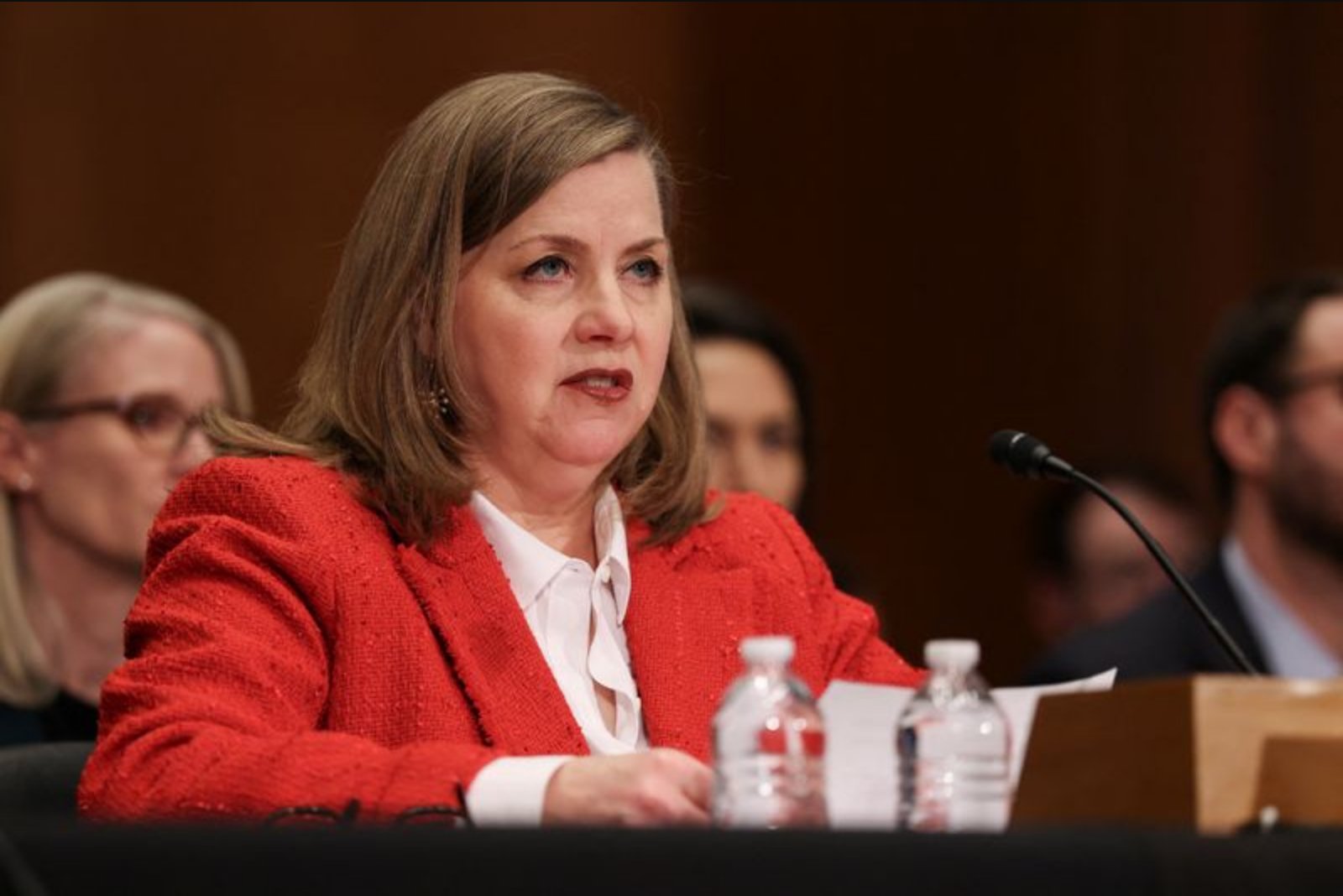
Federal Reserve Vice Chair for Supervision Michelle Bowman announced on Thursday that updated draft regulations governing large bank capital will slightly lower the amount of capital large banks must hold. Bowman made the remarks during a presentation at the Cato Institute in Washington, describing the revisions to the so-called Basel rules and the global systemically important bank - GSIB - surcharge as a "sensible recalibration" that, in aggregate, reduces capital requirements by a "small amount."
Bowman said the revisions remove overlapping standards and adjust calibrations so that capital requirements more closely reflect the actual risks banks face. She argued that a sustained upward drift in capital mandates has been misplaced and that overly high requirements can undermine the banking sector's ability to provide credit.
"When capital requirements become excessive, they impair the banking system’s fundamental function of providing credit to the real economy," Bowman said, according to prepared remarks.
Bowman, who was appointed to her supervisory role last year by Republican President Donald Trump, characterized the changes as a victory for Wall Street lenders who had opposed larger capital increases proposed in earlier drafts. She emphasized that the recalibration will eliminate duplicate requirements and better align capital buffers with measured exposures.
The announcements concern two interrelated sets of standards. The Basel rules set global frameworks for bank capital adequacy, while the GSIB surcharge establishes an additional buffer for the largest, systemically important banking institutions. Bowman said the combined effect of the revised drafts will be a modest net reduction in capital obligations for large banks.
The Vice Chair’s remarks focused on the trade-off between resilience and the banking sector’s core lending function, asserting that excessive capital can impede the flow of credit to the wider economy. Beyond that central claim, Bowman framed the revisions as correcting overlaps and re-tuning requirements rather than delivering large-scale deregulation.
Limitations in the public remarks mean the exact numerical change in requirements was not specified beyond the characterization of a "small amount." The comments also did not provide a timeline for finalizing the revised drafts.