
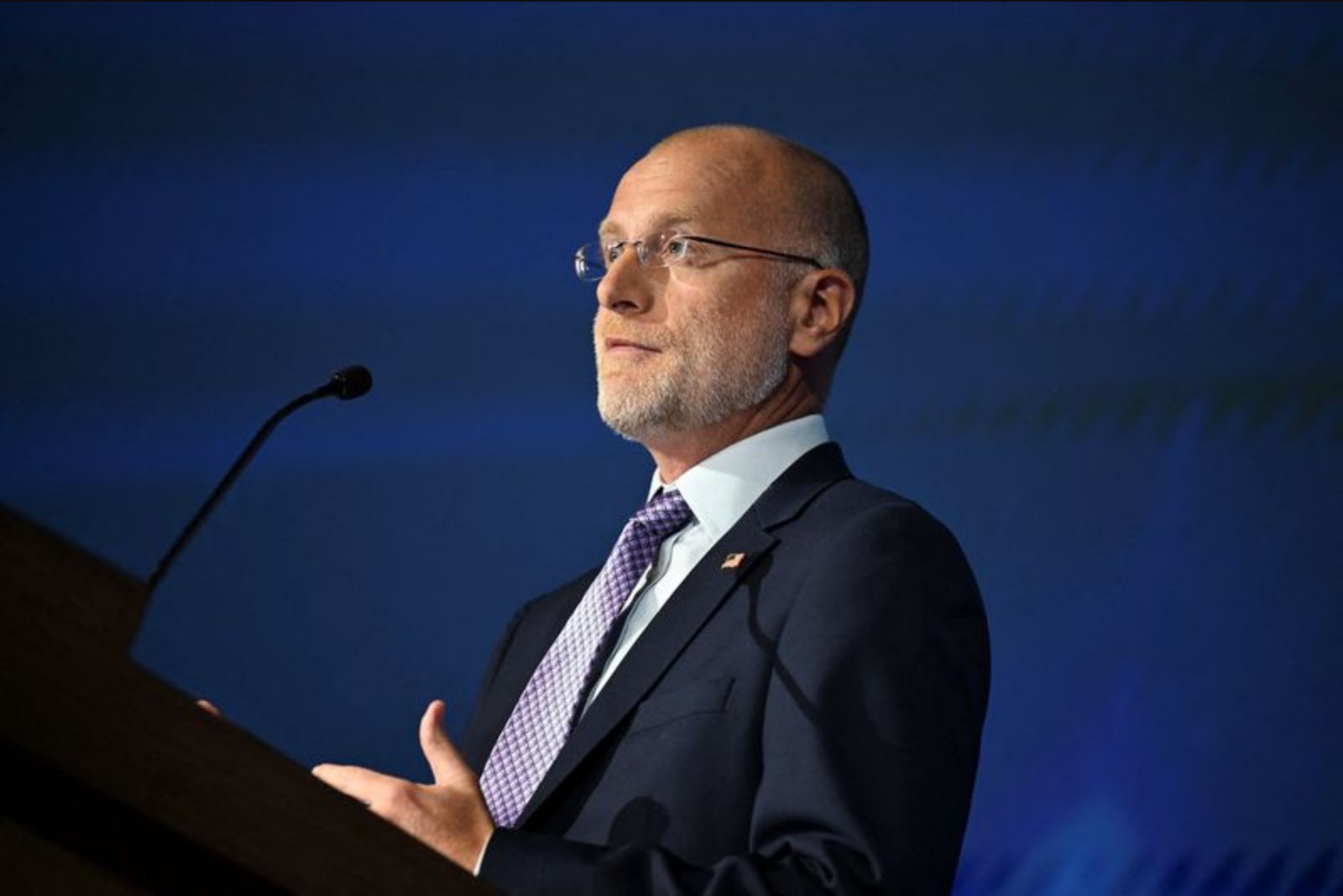
The Federal Communications Commission said on Wednesday it is weighing new limits on U.S. telecom companies' reliance on overseas call centers and is proposing a requirement that foreign-based customer service representatives be proficient in American Standard English.
FCC Chair Brendan Carr said the commission will vote this month on a package that includes a mandate for call takers at communications providers to demonstrate proficiency in American Standard English. The proposal also asks commissioners to decide whether to cap the volume of calls handled by overseas call centers and whether consumers should have the ability to request that their calls be transferred to a U.S.-based location. Another option under consideration is requiring providers to disclose the physical location of the call center handling the customer's call.
Carr pointed to recent agency action as context for the new proposal. Last week, the FCC approved Charter Communications' $34.5 billion acquisition of Cox Communications, and the agency said Charter will bring onshore all job functions currently performed offshore by Cox within 18 months.
Noting the prevalence of outsourcing, Carr said nearly 70% of U.S. businesses outsource at least one department, which can include customer service and call center operations. "As a result, too many Americans have struggled to resolve an issue with a representative due to cultural and language barriers," he said. Carr added that foreign customer service centers "also raise concerns about protecting consumers' personal information."
The FCC said it is seeking public comment on the scope of its legal authority to adopt such rules and on how any new requirements would apply to foreign call centers that are operated by communications providers regulated by the agency.
Carr also linked foreign call centers to other harms the agency is investigating, saying they have contributed to a major increase in robocalls and that, in some instances, those operations have used training and infrastructure from legitimate call centers to defraud Americans.
Industry reaction was limited in the initial hours after the announcement. Verizon said it was aware of the item and was reviewing it. AT&T and T-Mobile did not immediately provide comments.
Implications
- The FCC's actions could affect how communications providers manage customer service operations and outsource call handling.
- The measures under consideration touch on consumer privacy protections and efforts to curb robocalls and fraud.
- Telecom companies that currently use foreign call centers may need to revise training, disclosure practices, or routing protocols if rules are adopted.