
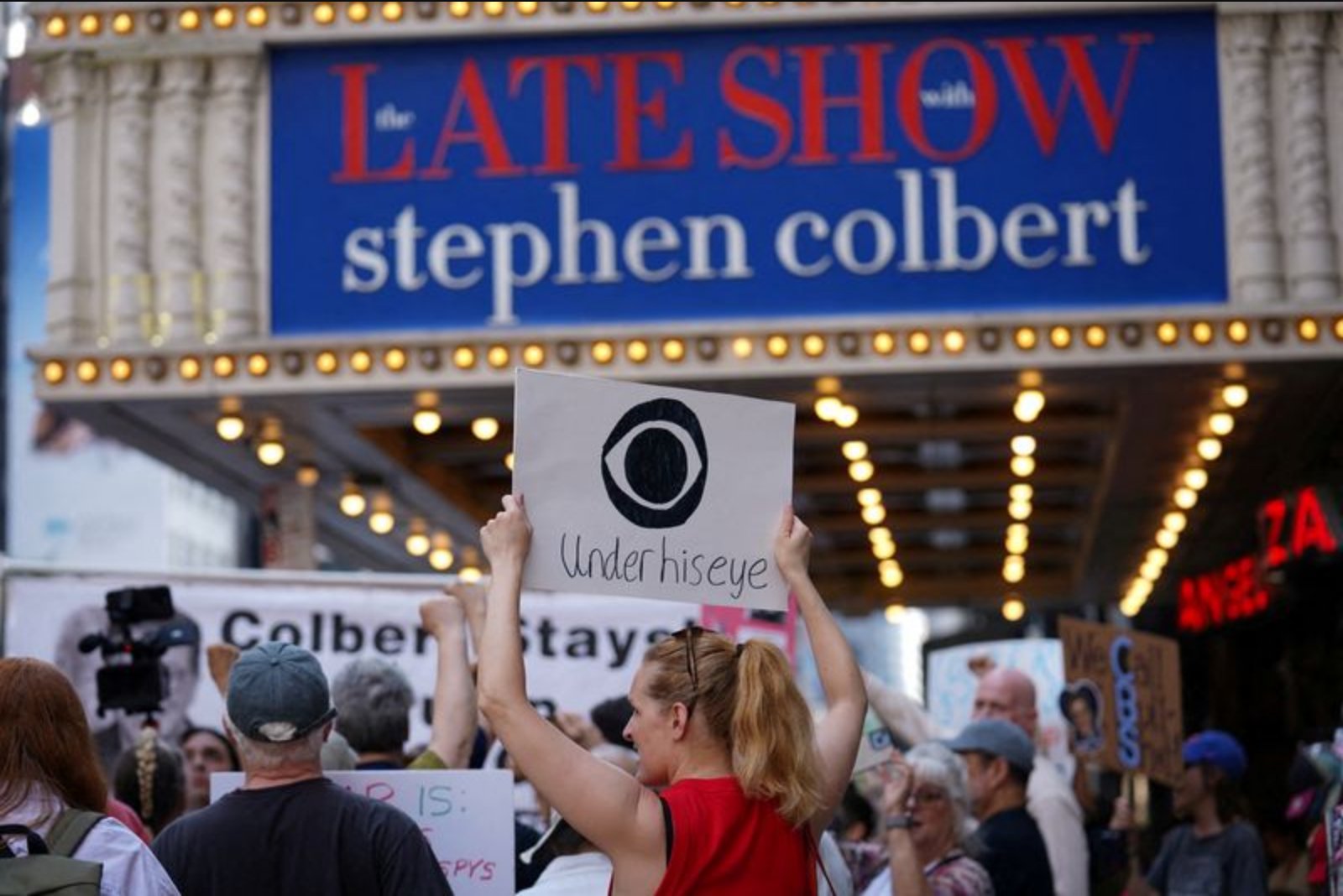
WASHINGTON, Feb 18 - Federal Communications Commission Chair Brendan Carr on Wednesday publicly denied that the government had prevented CBS late-night host Stephen Colbert from airing an interview with a political candidate, and he confirmed that the agency has launched an enforcement review into ABC’s daytime talk show The View.
Carr acknowledged that the FCC is examining whether The View complied with equal time provisions when it conducted interviews with political candidates. The probe takes place against the backdrop of recent agency guidance issued in January that states daytime and late-night talk programs are not exempt from equal time obligations for candidate interviews.
Colbert has said that CBS lawyers declined to allow him to broadcast an interview with Democratic Texas State Representative James Talarico, a candidate seeking his party’s nomination for the U.S. Senate, after the FCC issued the January guidance. Colbert made that claim on Monday, and the chair’s remarks on Wednesday directly addressed the broader set of questions raised by the interaction between network legal decisions and FCC policy clarifications.
The FCC chair’s confirmation of an enforcement inquiry into The View signals agency attention to how talk programs handle appearances by political contenders in light of the updated guidance. The enforcement review is focused on determining whether the program’s treatment of candidate interviews complied with equal time rules under the agency’s interpretation.
The circumstances outlined by Colbert - that network counsel blocked the interview after the agency’s guidance - were explicitly addressed by Carr when he denied government censorship of the CBS program. Carr did not provide additional detail in his denial beyond confirming the agency had not directed a network to withhold the interview.
The January guidance referenced by Carr and Colbert narrows the scope of programs that might claim an exemption from equal time rules, clarifying that daytime and late-night talk shows are included in the agency’s equal time considerations for candidate interviews. The guidance prompted the networks and program legal teams to reassess how they manage political interviews, which in turn is drawing regulatory scrutiny.
As the FCC proceeds with its enforcement review into The View, questions remain about how the agency will interpret and apply the equal time guidance in specific cases. The agency’s actions and the networks’ legal assessments will determine how candidate interviews are scheduled and aired on talk programs moving forward.