
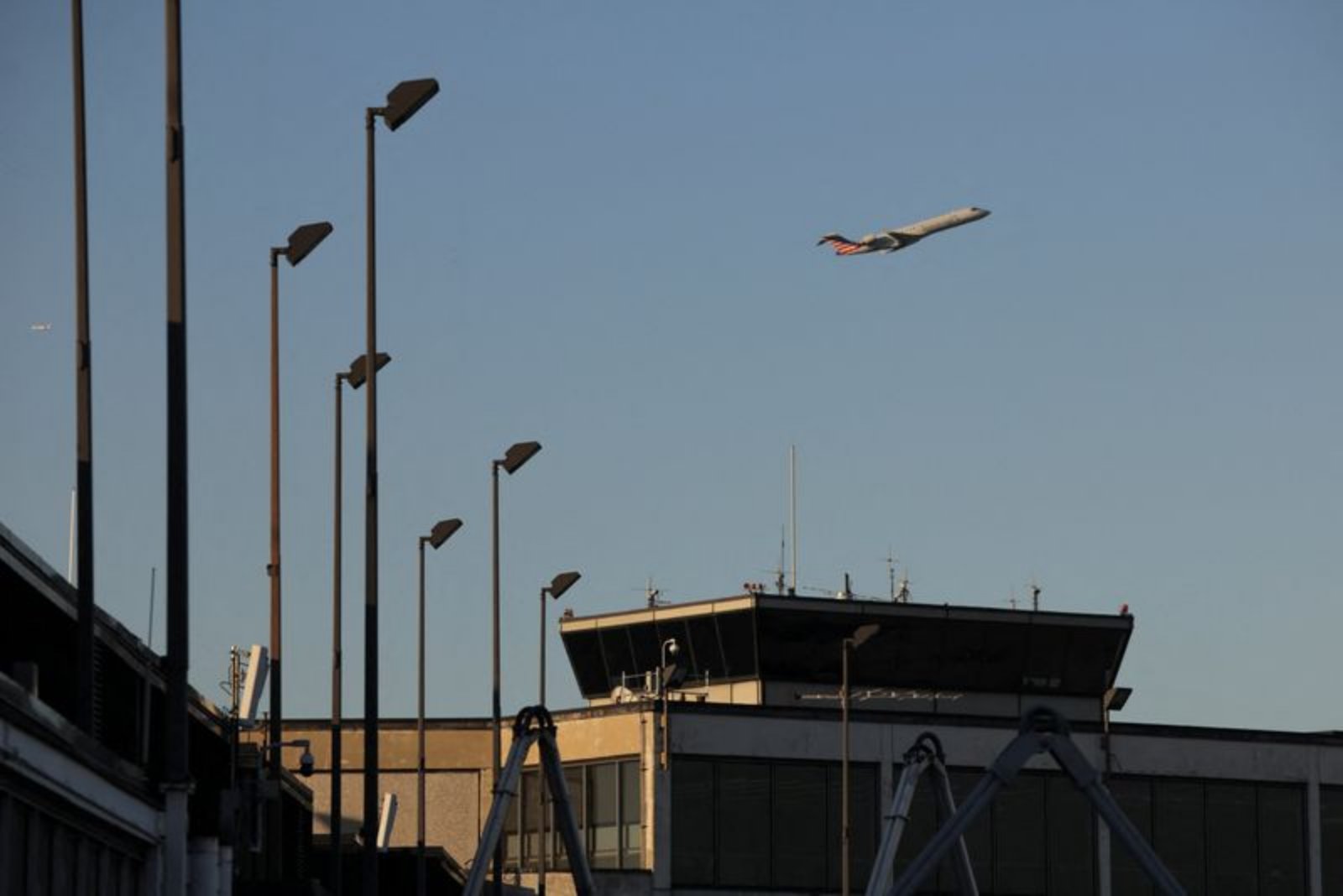
WASHINGTON, Feb 24 - Relatives of those killed in the deadliest U.S. aviation accident since 2001, together with lawmakers, appealed on Tuesday to members of the U.S. House of Representatives to approve major aviation safety legislation even as the Pentagon voiced last-minute concerns.
The bill, known as the ROTOR Act, won unanimous approval in the U.S. Senate in December. Under its provisions, aircraft operators would be required to outfit their fleets with the automatic dependent surveillance-broadcast system, commonly referred to as ADS-B, by the end of 2031.
In addition to a civilian mandate, the legislation would direct the military to employ ADS-B for routine training flights. The bill explicitly exempts sensitive military missions from that requirement, according to its terms.
The legislative push was intensified by the January 2025 disaster in which an American Airlines regional jet and an Army Black Hawk helicopter collided in congested airspace over the nation’s capital, an accident that resulted in 67 fatalities. That tragedy is cited as the proximate reason for congressional momentum behind the measure.
Supporters of the ROTOR Act asked House members to move forward despite concerns raised recently by the Pentagon. The nature of those concerns was not detailed in the public appeal, but their timing - coming shortly before the House consideration - was described as last-minute.
Backers say the bill sets a clear compliance deadline for civilian operators and clarifies military obligations for routine training flights while preserving exemptions for operations deemed sensitive. Opponents or hesitant parties have pointed to the Pentagon issues as factors warranting further review before final congressional action.
The House vote will determine whether the Senate-approved language is accepted and whether the ADS-B requirements and the specific carve-outs for military operations become law.
Context noted in the bill:
- The ROTOR Act passed the Senate unanimously in December.
- Civilian aircraft operators would be required to install ADS-B by the end of 2031.
- The military must use ADS-B on routine training flights but not on sensitive missions.
- The measure follows the January 2025 collision that killed 67.