
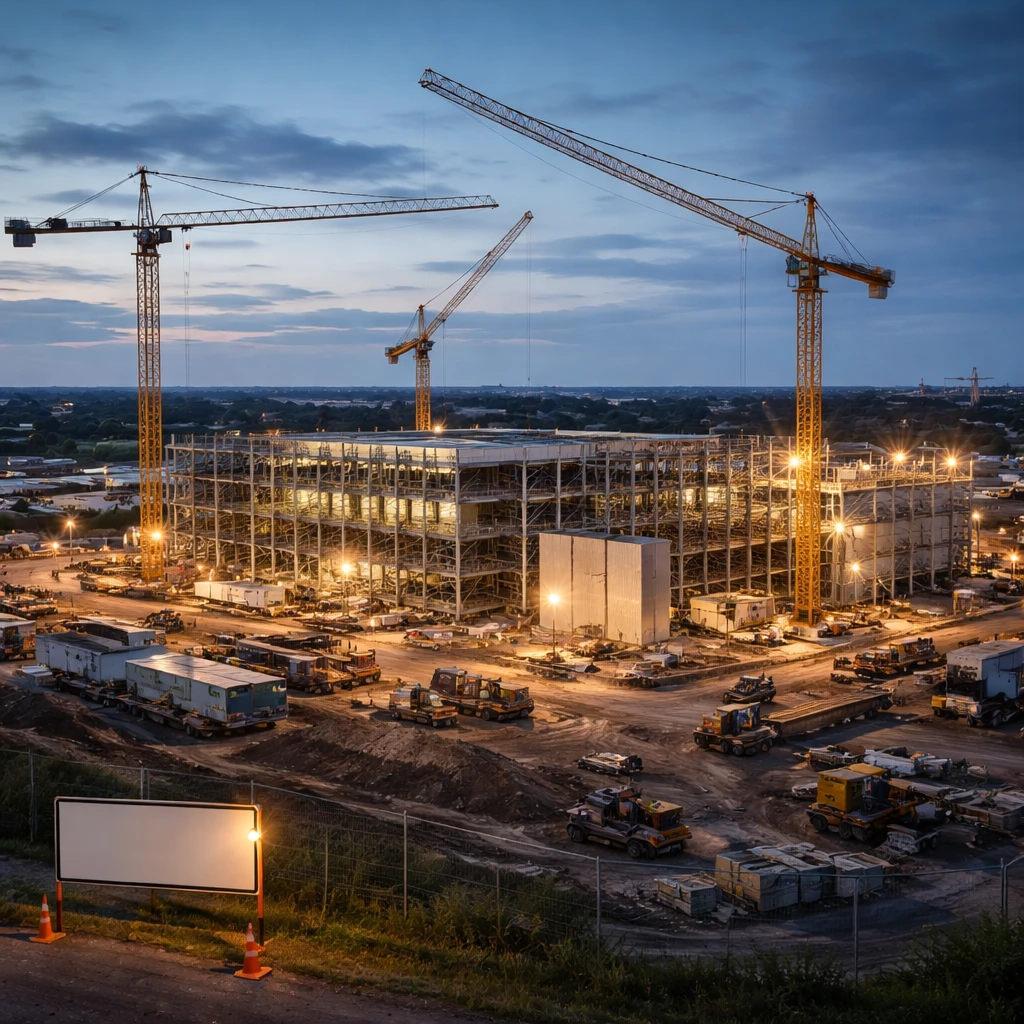
Blue Owl Capital’s effort to line up $4 billion in lending for a large-scale data center in Lancaster, Pennsylvania, has stalled, triggering an immediate market reaction for CoreWeave. CoreWeave shares tumbled more than 8% following reports that Blue Owl could not secure the full financing package needed to build the facility that would count CoreWeave as its anchor tenant.
According to market accounts, several specialty lenders that focus on AI infrastructure declined participation, citing concerns tied to CoreWeave’s credit profile. Those lenders turned down the transaction primarily because CoreWeave holds a B+ credit rating from S&P Global, a grade widely viewed as non-investment-grade.
A senior executive at a large specialty lender summed up the stance in blunt terms: "We saw it. We passed." The remark reflects growing caution among some institutional creditors about taking on large exposures to AI-related operators that do not carry investment-grade ratings.
CoreWeave has expanded quickly and counts strategic backing from Nvidia, but that support has not overcome the impediment posed by its B+ rating. For lenders focused on long-duration infrastructure exposure, the rating appears to have been a decisive factor.
Blue Owl has had success in the past deploying capital into AI and infrastructure projects when a clearly investment-grade counterparty was involved. The firm previously used the investment-grade standing of a different major tenant to help raise more than $27 billion in bonds. The Lancaster project, lacking that kind of tenant credit backing, found a narrower set of willing financing partners.
Blue Owl supplied a public reassurance, with a spokesman stating the project is "fully funded, on time, and on budget." Despite that assertion, the firm disclosed it has about $500 million in bridge financing that comes due in March 2026. If permanent lenders are not secured by that date, Blue Owl could be forced to deploy its own balance sheet to continue the construction program.
BMO Capital Markets analyst Brennan Hawken characterized the current difficulty in sourcing long-term debt at this stage as a "red flag" that should prompt closer scrutiny by investors.
The Lancaster setback is not an isolated difficulty. Banks have also faced challenges placing large blocks of data center debt elsewhere, including efforts to offload roughly $38 billion tied to an Oracle data center campus. Together, these occurrences highlight a potential disconnect between enthusiasm for AI-driven infrastructure growth and the credit market’s willingness to underwrite it.
- Rising leverage - Some AI infrastructure companies are taking on substantial, high-cost debt to finance rapid expansion.
- Lender fatigue - Institutional lenders are increasingly cautious about financing hyperscale projects that are not backed by investment-grade tenants.
- Alternative responses - Blue Owl may need to pursue credit support from strategic partners such as Nvidia or assemble financing from its private credit investors to bridge the gap.
With the March 2026 bridge loan maturity approaching, market participants will be watching to see whether Blue Owl can assemble permanent debt partners or otherwise reconfigure the capital stack for the Lancaster development. If it cannot, the firm may be compelled to absorb a multi-billion-dollar construction bill on its balance sheet until a long-term financing solution is found.
Is OWL a bargain right now? For investors seeking a valuation view, the article noted a proprietary Fair Value calculator that combines multiple industry valuation models to assess stocks including OWL. The tool was described as a way to test whether the current market price reflects an opportunity, though investors should weigh financing risk and credit dynamics described above.