
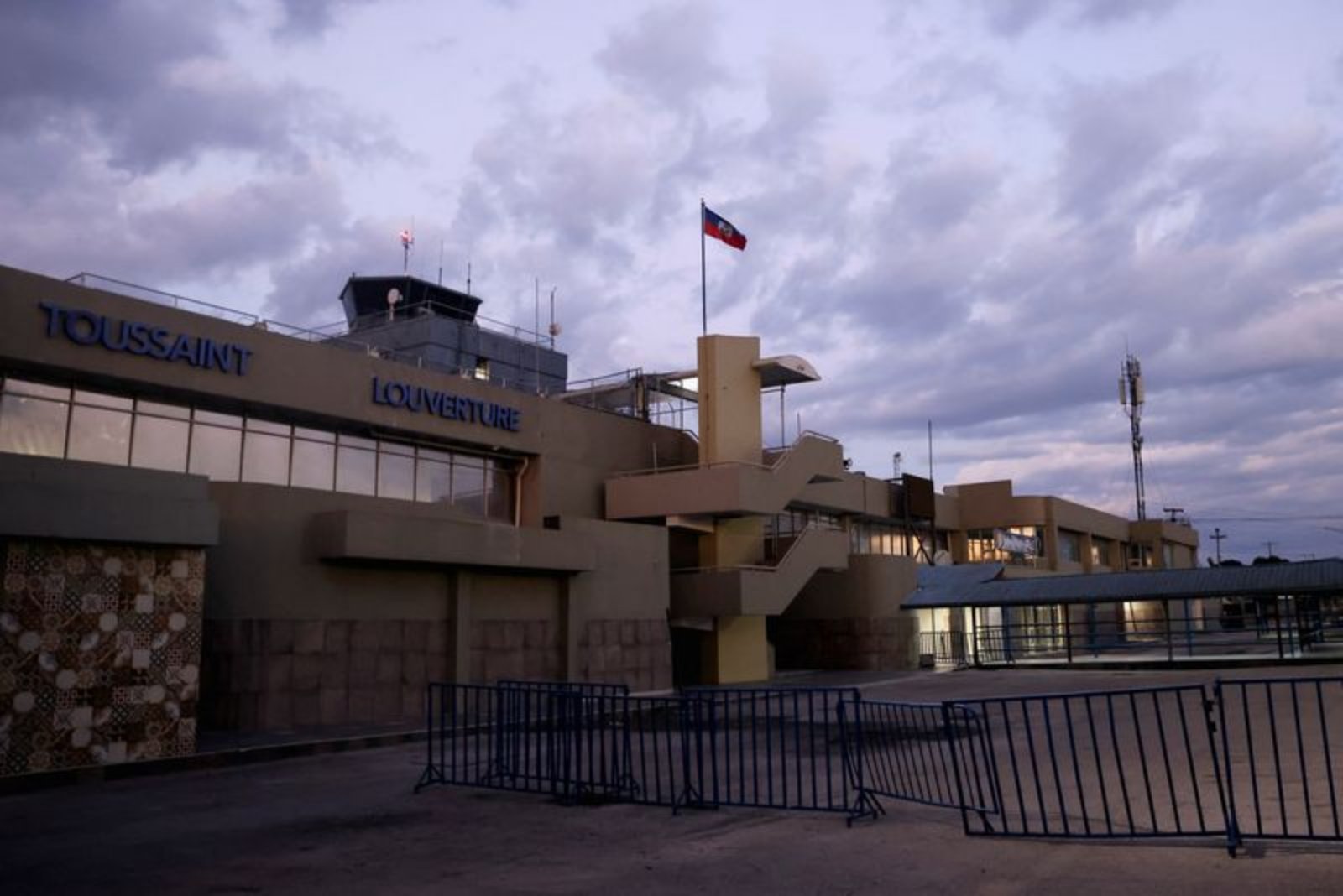
The U.S. Federal Aviation Administration announced on Thursday that it will keep in place its ban on U.S. flights landing in Port-au-Prince, Haiti, through September 3. The agency said the extension responds to persistent threats posed by armed groups to civil aviation in the capital and surrounding areas.
The FAA originally halted all flights to Haiti in November 2024 after three U.S. commercial jetliners were struck by gunfire. Following that suspension, the agency allowed flights to resume to six airports located in northern and regional parts of the country, but maintained a specific ban on landings at Port-au-Prince.
The ban had been scheduled to expire this coming Saturday, but the FAA said it was extending the restriction because security forces have continued to be unable to prevent attacks against aircraft operating in and around the Haitian capital. The FAA noted that U.S. planes may transit the Port-au-Prince area at altitudes above 10,000 feet (3,048 m), but that lower-altitude operations remain at risk.
According to the FAA, since September 2025 Haitian groups have employed small-arms fire to attack at least three aircraft in the area where U.S. civil aviation remains prohibited. The agency warned that an "expanded and shifted gang operating area raises the risk from small arms fire to civil aviation operations at lower altitudes."
The FAA also reiterated that it continues to permit flights to the following six airports in Haiti:
- Port-de-Paix
- Cap-Haitien
- Pignon
- Jeremie
- Antoine-Simon
- Jacmel
The agency's action comes amid an environment in which armed gangs control much of the Haitian capital, and in which the country is described as operating in a state of political limbo - with no sitting president, no elections scheduled, and a U.N.-backed expanded security force still pending. The FAA's extension leaves unchanged the limited set of airports open to flights and the altitude restriction for transits over Port-au-Prince.