
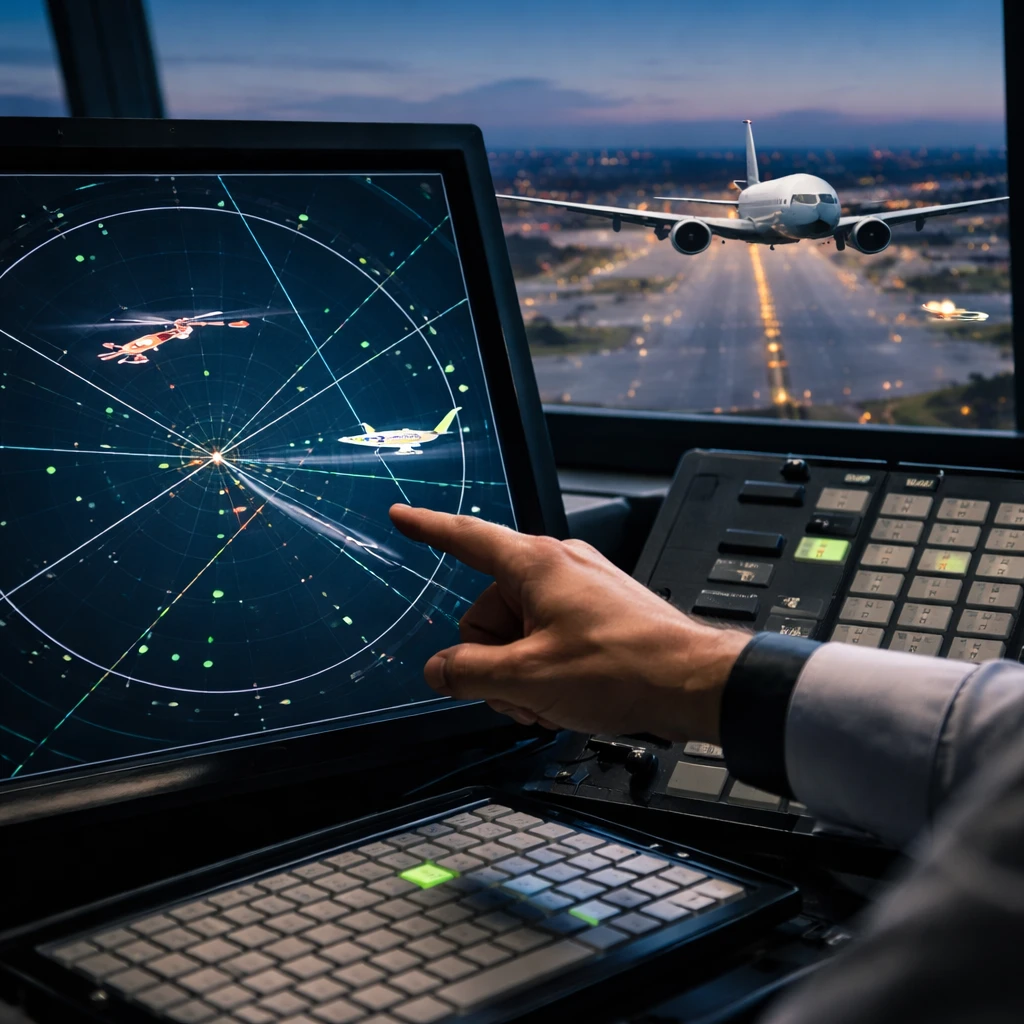
WASHINGTON - The Federal Aviation Administration on Wednesday said it will tighten rules governing helicopter operations near large airports by suspending the use of visual separation between airplanes and helicopters in specified airspace. The change requires air traffic controllers to rely on radar to maintain set lateral or vertical distances where helicopter flight paths cross airport arrival or departure routes.
The FAA framed the action as a direct response to a January 2025 mid-air collision between an American Airlines regional jet and an Army helicopter that resulted in 67 fatalities. Agency officials also cited two more recent incidents in announcing the new policy, including a reported near miss between an American Airlines flight and a police helicopter in the vicinity of the San Antonio airport.
Under the revised procedures, controllers will no longer depend on pilots visually separating their aircraft from other traffic in critical segments of airport airspace. "Where helicopters cross airport arrival or departure paths, air traffic controllers will use radar to keep the aircraft specific lateral or vertical distances apart," the FAA said in its statement announcing the suspension of visual separation.
FAA Administrator Bryan Bedford said a year-long review of helicopter operations and air traffic procedures identified systemic problems that contributed to recent safety events. "We identified an overreliance on pilot 'see and avoid' operations that contribute to safety events involving helicopters and airplanes," Bedford said.
The announcement follows earlier steps the FAA took after the 2025 collision to limit helicopter movements around certain airports. The agency previously restricted helicopter traffic at Reagan Washington National Airport and has implemented other limits at airports including Baltimore, Las Vegas and Washington Dulles.
Context and implications
The FAA's directive replaces visual separation practices with radar-based spacing in designated airport approach and departure corridors. The agency cited the January 2025 fatal collision and two subsequent incidents as the proximate reasons for the change, signaling a shift toward more controller-managed separation between helicopters and fixed-wing aircraft in congested airspace.
Operationally, the policy means air traffic control will explicitly assign and monitor lateral or vertical distances between helicopters and airliners when their paths intersect airport approach or departure lanes, rather than allowing pilots to rely primarily on visual detection.
Looking ahead
The FAA said the measure follows a comprehensive review; the agency's exact timeline for implementation in all affected airspace was not specified in the announcement. The move is intended to reduce the risk of mid-air conflicts by removing dependence on pilot visual separation where aircraft share critical airport approaches and departures.