
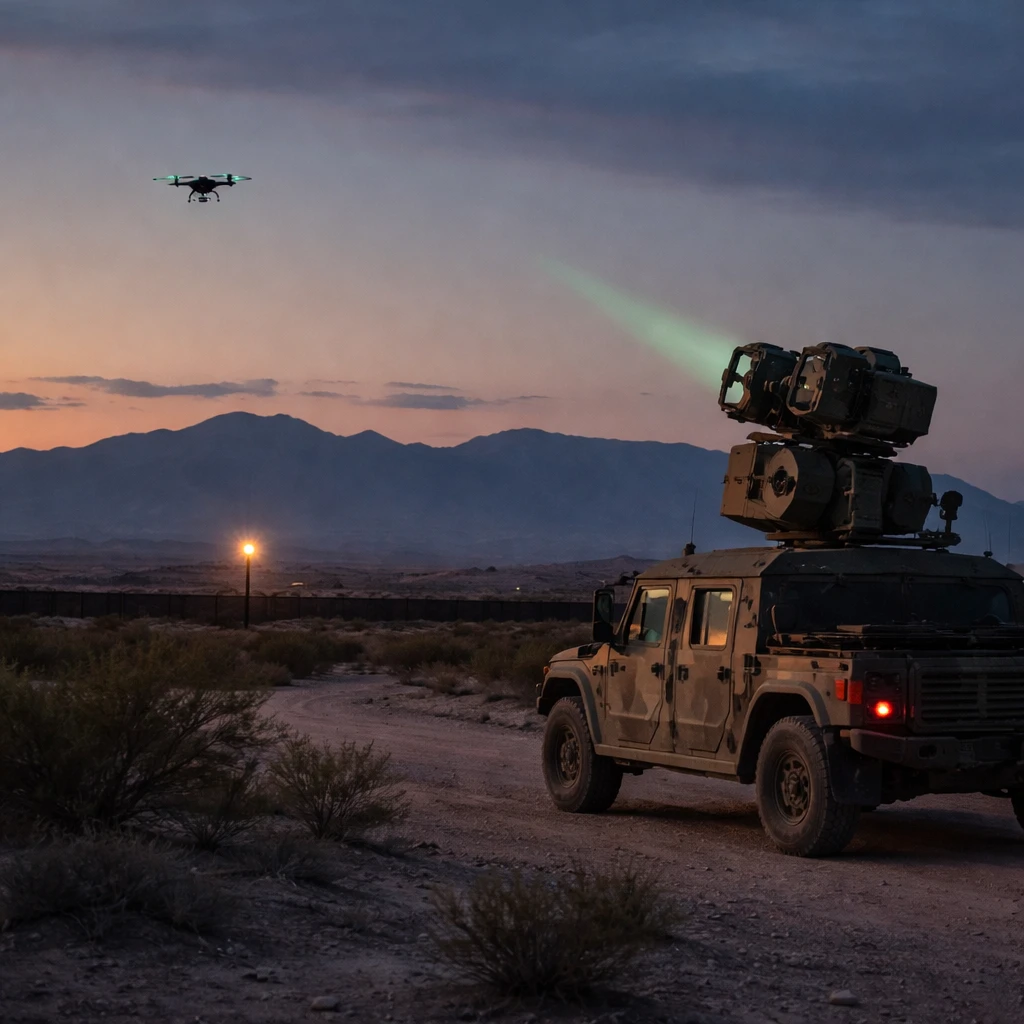
WASHINGTON, Feb 26 - The Federal Aviation Administration has ordered a temporary flight ban in an area surrounding Fort Hancock, Texas, after congressional aides informed news outlets that a military laser-based anti-drone system was believed to have inadvertently downed a U.S. government drone.
The FAA and the Department of Defense did not immediately provide comment. In its notice implementing the restrictions, the FAA cited "special security reasons" for the airspace limitation near the Mexican border.
The directive affects the airspace in the vicinity of Fort Hancock, a town near the Texas-Mexico border, and was announced on Thursday. The available information indicates the action followed reports from congressional aides that pointed to a military anti-drone capability that relies on laser technology as the potential cause of the drone loss.
Earlier in the month, the FAA ordered a halt to traffic at El Paso International Airport for a period it said could have extended to 10 days. That earlier order was reversed after roughly eight hours. Media reports at the time linked the El Paso closure to concerns over the operation of a laser-based anti-drone system.
Officials from the FAA and the Pentagon had not issued immediate public statements clarifying the circumstances behind the Fort Hancock airspace restriction or the reports of the drone being shot down. The FAA's reference to "special security reasons" is the only official explanation provided in the notice announcing the restricted airspace.
Details remain limited in public filings and statements. The sequence of events as reported by congressional aides and relayed to the public prompted the FAA to impose the temporary restriction on flights in the area while the situation remains unresolved.
Summary
The FAA restricted airspace around Fort Hancock, Texas, after congressional aides reported that a military laser-based anti-drone system may have accidentally shot down a U.S. government drone. The FAA cited "special security reasons." Earlier this month, the agency briefly halted operations at El Paso International Airport under circumstances that were connected in media reports to the same type of anti-drone system.
Key points
- FAA imposed flight restrictions near Fort Hancock, Texas following reports that a military laser-based anti-drone system may have downed a U.S. government drone.
- The FAA cited "special security reasons" in its notice; neither the FAA nor the Pentagon immediately commented.
- The episode follows an earlier, brief FAA order affecting El Paso airport this month that was linked in media accounts to concerns about the use of a laser-based anti-drone capability.
Risks and uncertainties
- Operational disruptions to commercial and government aviation in border regions due to unexplained security-related airspace restrictions - impacts aviation and logistics sectors.
- Unclear public details from the FAA and the Pentagon leave uncertainty about the safety and reliability of military anti-drone systems - relevant to defense procurement and homeland security planning.
- Potential for further temporary airport closures or airspace restrictions if similar incidents are suspected - affecting travel, cargo operations, and regional carriers.