
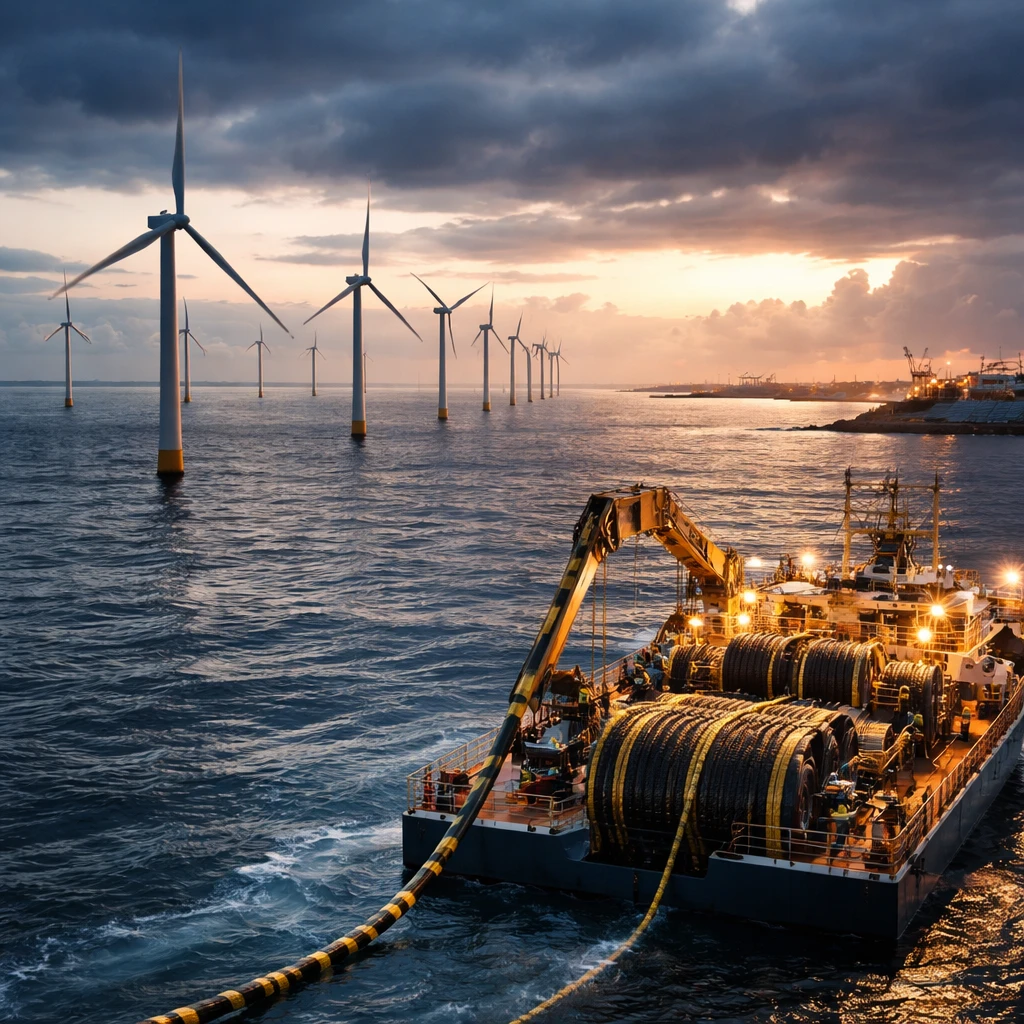
The Iran war has prompted a fresh focus on energy autonomy in Europe, and Jefferies says that several renewables equipment makers and utilities stand to gain from the shift.
In a note, Jefferies flagged manufacturers including Nordex, Vestas, SMA Solar and NKT as buy-rated beneficiaries, and listed utilities such as EDP Renováveis, Enel, SSE and Engie among companies positioned to profit from a faster transition to electrification and renewable generation.
Market backdrop and price impacts
The International Energy Agency characterized the conflict as producing the largest disruption to oil supply in global market history and coordinated an unprecedented 400 million barrel emergency stock release among member countries.
European benchmark gas prices averaged €45 per megawatt-hour in the first week of the conflict - about 50% higher than pre-war levels - a spike European Commission President Ursula von der Leyen said has added roughly €3 billion in fossil fuel import costs for citizens.
European Commission Executive Vice-President Teresa Ribera outlined a policy response, arguing that Europe should avoid exchanging one dependence for another and instead accelerate electrification, renewables and efficiency measures. She described the clean transition as Europe’s "shield against volatility."
Divergent national exposure and short-term market behavior
The conflict has highlighted stark differences across European power systems. Data compiled by Montel, Ember and ENTSO-E show that gas set Spain’s wholesale electricity price in only 15% of hours so far in 2026, versus 89% in Italy, 42% in the Netherlands and 40% in Germany. Spain’s wholesale electricity price averaged €62/MWh in the first half of 2025, roughly 32% below the EU average.
Despite the long-term case for electrification and renewables, markets have so far rewarded hydrocarbon-focused names. According to FactSet data cited by Jefferies, since the Feb. 27 market close Neste is up 36%, Verbio has gained 28% and Equinor has risen 24%, while Siemens Energy has fallen 10%, Subsea 7 is down 6% and Vestas has dropped 2%.
Jefferies’ stock-level views and valuation snapshots
Jefferies maintains a buy rating on Nordex with a target price of €50 compared with a €45.94 close, projecting at least €950 million in EBITDA in 2027 and an enterprise value to EBITDA multiple of 8.8x on those estimates.
Vestas is also rated buy by Jefferies with a target of DKK 200 against a DKK 157.60 close; the bank expects double-digit earnings growth and models Vestas at about 9x EV/EBIT on 2027 estimates. NKT carries a buy rating at a DKK 1,008 target versus a DKK 810 close and is forecast by Jefferies to deliver more than 30% EPS compound annual growth while trading at about 11x EV/EBITDA on 2027 estimates.
Progress in European renewables to date
Jefferies notes that the current shock to energy markets recalls the post-Ukraine disruption that accelerated renewables deployment. SolarPower Europe data cited in the note show annual EU solar installations rose from 17.2 GW in 2019 to 65 GW in 2025, with cumulative solar capacity reaching 406 GW by the end of 2025 - exceeding the REPowerEU interim target of 400 GW.
By comparison, wind capacity stood at 246 GW versus a target of 425 GW. Overall, renewables grew from roughly 30% of EU power in 2019 to nearly 50% in 2025, and reliance on Russian gas fell from 45% to 13% over the same period.
Policy and climate commentary
UN climate chief Simon Stiell described the war as an "abject lesson" on the risks of fossil fuels and called arguments to delay the energy transition "completely delusional."
Jefferies’ note suggests that accelerating deployment of wind, solar, grid infrastructure and efficiency measures is the policy response being pushed by European authorities and some industry participants, with a set of manufacturers and utilities identified as likely beneficiaries.
Bottom line
Jefferies sees a cohort of turbine makers, cable suppliers and renewable-focused utilities positioned to gain from a Europe-wide push for faster electrification and reduced fossil fuel dependence as a result of the Iran conflict. Near-term market reactions have been mixed, favouring some hydrocarbon names, but the note underscores an ongoing structural shift toward renewables capacity expansion.