
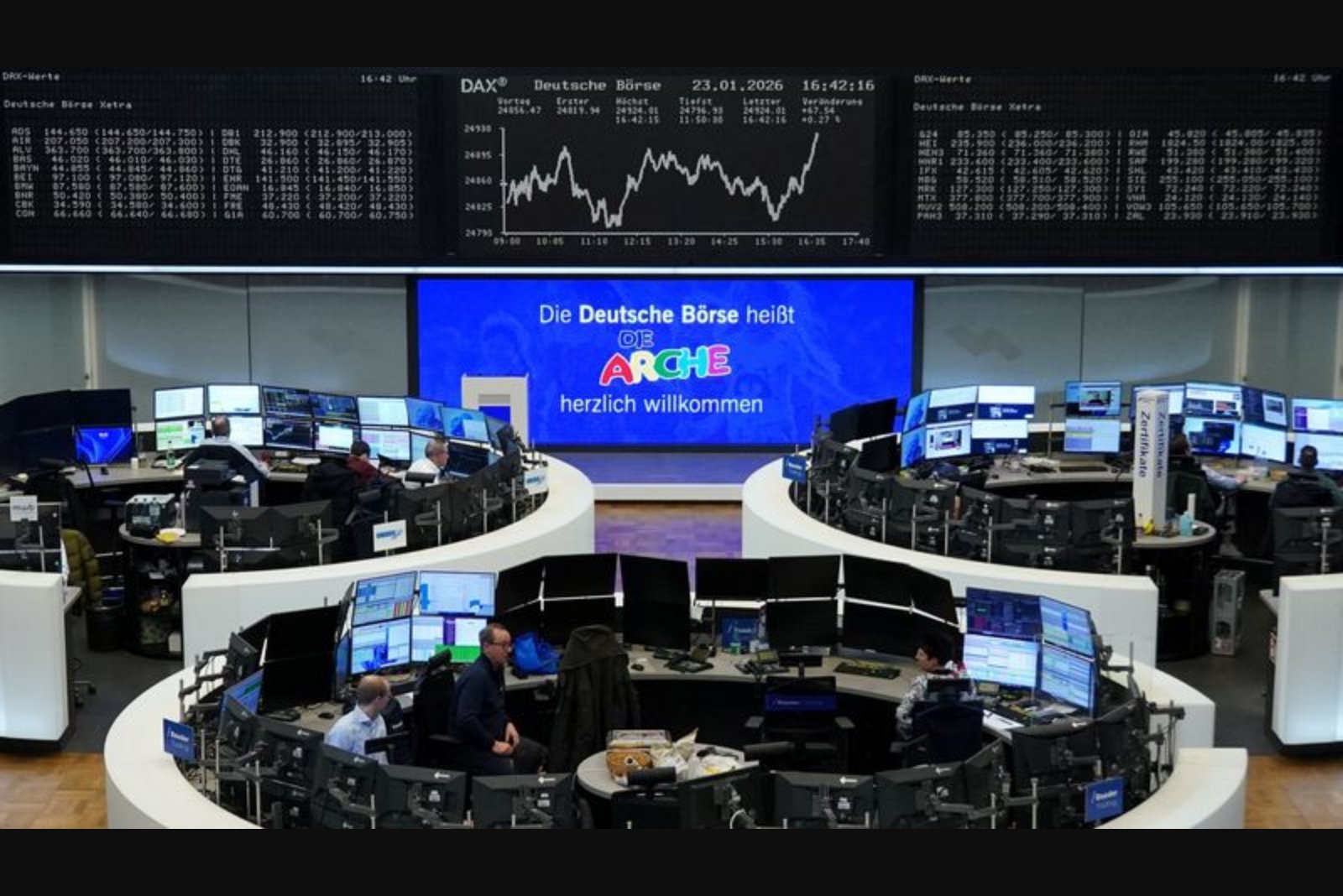
European markets turned cautious on Tuesday as traders reduced exposure in the face of heightened trade ambiguity and revived concerns over AI-driven disruption. By 0815 GMT the pan-European STOXX 600 index was down 0.2% at 630 points.
A resurgence of trade uncertainty set the tone for markets this week. U.S. President Donald Trump’s new blanket tariff rate was expected to take effect from Tuesday, a development that has generated questions about the status of trade deals negotiated last year. Concerns related to that move were compounded when the European Parliament opted to postpone for a second time a vote on the trade agreement reached between the U.S. and Europe last year.
Banks were among the weakest sectors, each sliding more than 1.6% and dragging broader indices lower. The sector’s losses followed a Wall Street selloff on Monday, which was driven in part by renewed nervousness that newer artificial intelligence models could disrupt traditional business activities.
Not all corporate news was negative. A number of companies posted results that exceeded expectations, providing some relief to investors. French vouchers and benefit cards provider Edenred (PA:EDEN) rose 1.4% after reporting 2025 core earnings above market expectations; the company cited rising sales and early benefits from a cost-cutting and efficiency programme. Automotive supplier Forvia (PA:FRVIA) climbed 2.2% after forecasting an improved operating margin of between 6% and 6.5% in 2026.
The story also included a reference to a Fair Value calculator that applies a mix of 17 industry valuation models to assess potential stock value and identify candidates with upside, noting the tool’s methodology without presenting additional performance claims.
Overall, the market reaction combined macro-level trade uncertainty and sector-specific concerns about AI with selective positive corporate updates, leaving European equities modestly lower amid continued ambiguity over trade arrangements and technology-driven competitive shifts.