
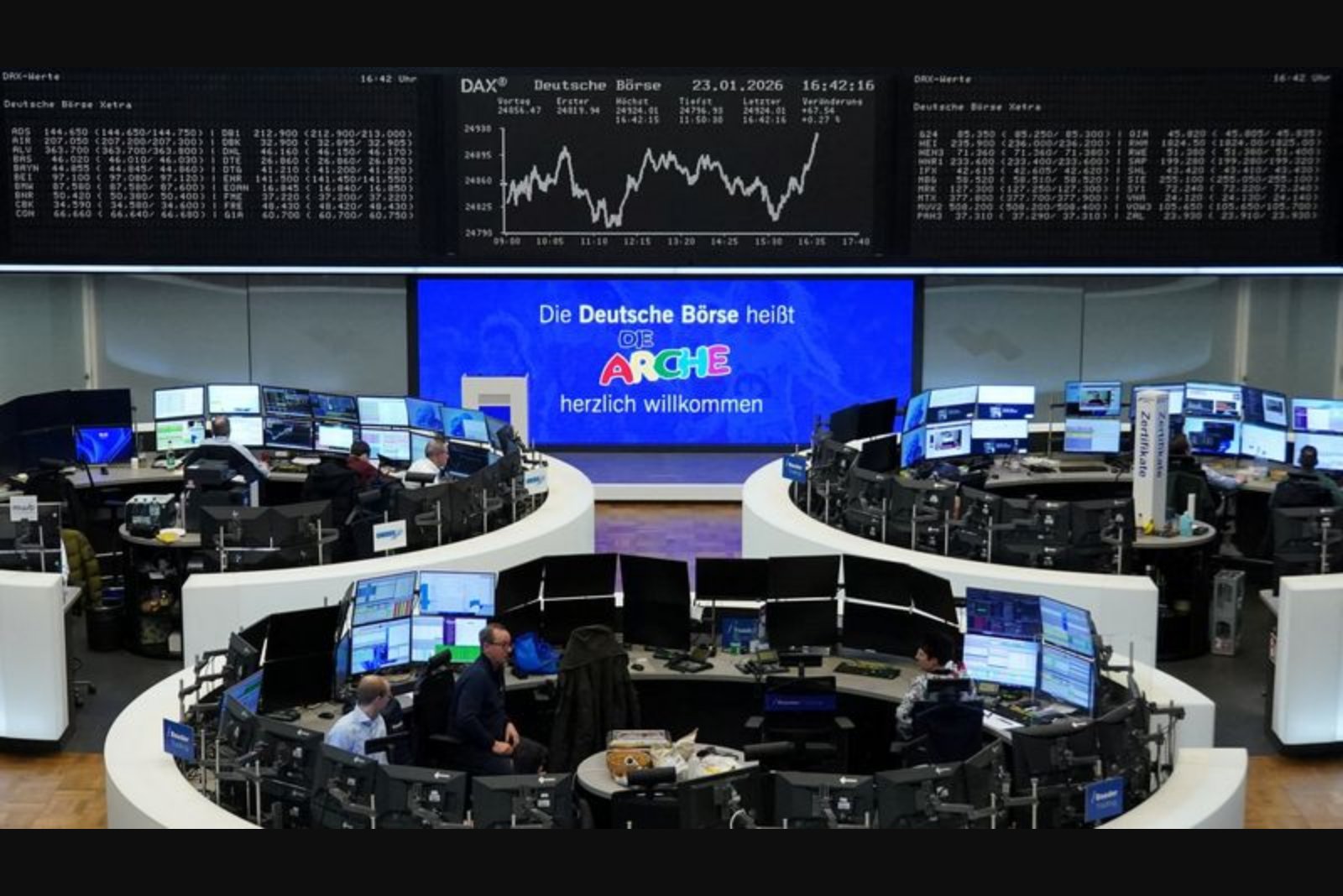
European equities reached a record level on Wednesday, supported by a rebound among financial stocks and easing investor concerns about near-term disruption from newer artificial intelligence models. The pan-European STOXX 600 index was trading 0.4% higher at 631.6 points by 0824 GMT, having earlier touched an intraday peak of 632.40 points.
Banking shares outperformed, with many rising in excess of 1% as sentiment across broader markets improved. The lift in risk appetite followed a flurry of activity from U.S.-based AI startup Anthropic, which partnered with several firms and rolled out new AI plug-ins. Market participants interpreted these moves as an indication that established companies are incorporating AI tools in a pragmatic, gradual fashion rather than being subject to immediate, sweeping disruption.
Financial institutions are commonly perceived as particularly exposed to rapid technological change. In this episode, visible signs that firms are integrating AI cautiously helped to alleviate worries about sudden margin pressure, bolstering demand for risk assets and supporting bank stocks.
The improved tone contrasted with volatility seen earlier in the week, when similar AI-related concerns had contributed to sharp moves in global markets and left European banks with notable declines on Tuesday.
Contributing to the positive momentum was HSBC, Europe’s largest lender, which raised a key earnings target after reporting an annual profit that beat expectations. That result came despite the bank recording a $4.9 billion one-off charge. The revised target and resilient profit helped underpin demand for banking stocks.
Outside of financials, performance was mixed across individual names. Onshore wind turbine maker Nordex rose sharply, jumping 11.6% after it reported better-than-expected core profit for 2025. By contrast, beverage maker Diageo fell 6.5% and exerted downward pressure on the index after trimming its annual sales and profit forecast for the second time in four months and cutting its dividend.
Market context and implications
- Equity indices benefitted from a combination of improved risk appetite and company-specific earnings developments.
- Financial stocks led gains as investor worries about sudden AI-driven disruption receded.
- Corporate earnings revisions and one-off charges continued to create divergence across sectors, with renewables and consumer staples showing contrasting moves.