
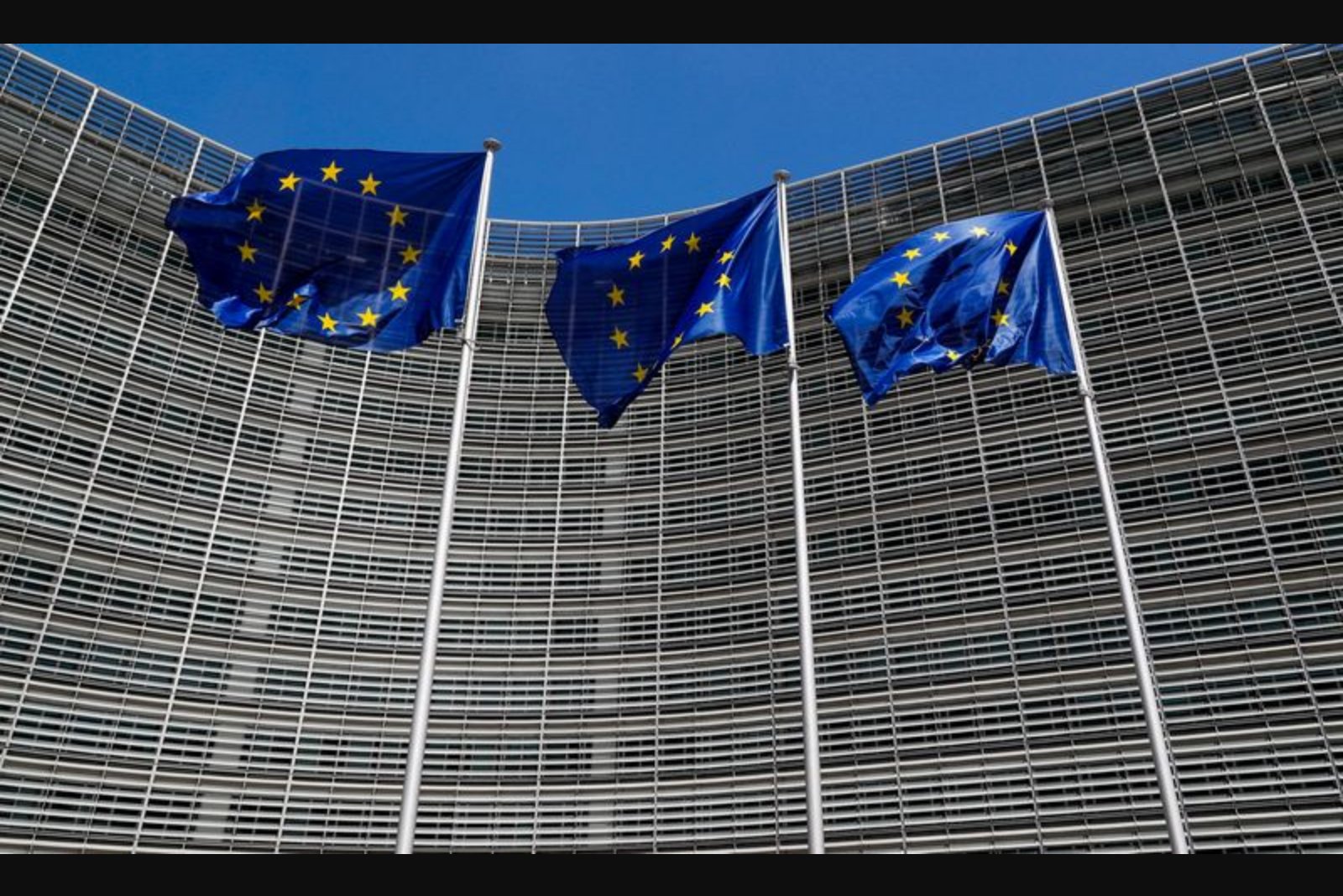
EU leaders are due to convene on Thursday at Alden Biesen castle in eastern Belgium for a closed brainstorming retreat aimed at identifying how the bloc can better compete on the global economic stage. The meeting, hosted by European Council President Antonio Costa, will focus on boosting growth, strengthening competitiveness in areas such as artificial intelligence, and responding to strategic pressure from the United States, China and Russia.
The setting is symbolic: the 16th-century castle will be used for intensive discussions about a region whose economic growth has lagged that of the United States over the last two decades, and where productivity and innovation in key technologies have not kept pace. Participants will confront a mix of trade frictions and geopolitical maneuvers, including the fallout from trade tensions with the U.S. and measures by China to curb exports of critical minerals that the 27-nation bloc needs.
European leaders have said they need to generate greater wealth in order to finance an accelerated energy transition and digital transformation, while also shoring up defence spending in the face of an assertive Russia. The retreat is designed as a working session to generate actionable ideas and to consider policy options that would make the EU more resilient economically and strategically.
Among those invited to share their perspectives are two former Italian prime ministers, Mario Draghi and Enrico Letta, whose recent reports on competitiveness and the single market have become central to the internal debate. Draghi, who has previously led the European Central Bank, authored a report offering hundreds of recommendations intended to reshape EU policy. That report has been referenced as a blueprint across Brussels, and it has prompted a wave of European Commission proposals on financing, defence and deregulation since September 2025.
Yet implementation has been slow. The European Policy Innovation Council think tank, which runs the Draghi Observatory and monitors uptake of the 383 recommendations in his report, finds that as of January only 15 percent have been implemented and a further 24 percent partially implemented. The think tank characterises progress as more incremental than transformational.
Enrico Letta has urged leaders to be bolder on single market integration. He points to forward movement on important items such as services and capital, and argues the EU must complete an energy union, a digital union and an EU-wide capital market capable of matching U.S. investment into newer companies and infrastructure. Letta plans to press leaders to set a firm deadline for completing the single market by 2028, calling that step essential to responding to pressure from the U.S., China and Russia.
Not everyone is confident the retreat will yield concrete change. Reinhilde Veugelers, a senior fellow at the Bruegel think tank, voiced scepticism about whether the session will produce more than a "nice declaration".
Member states broadly agree on the objective of a more competitive EU but diverge on the means to achieve it. French President Emmanuel Macron has renewed calls for greater common borrowing to finance large-scale investment and to challenge dollar dominance. France is also advocating a "Made in Europe" approach that would impose minimum European content requirements on goods purchased with public funds - a proposal that has raised concerns among automakers who source many components from outside the EU.
Germany has pushed back against increased common debt as the primary lever. Berlin emphasises productivity improvements and continued pursuit of trade agreements as preferable mechanisms for raising competitiveness. Germany also supports trade deals such as one with the South American bloc Mercosur - a stance that France opposes because of resistance from French farmers.
In parallel to the retreat, German Chancellor Friedrich Merz and several other EU leaders will meet in Antwerp on Wednesday with corporate chiefs for an industry summit designed to articulate private-sector demands. The Antwerp gathering is intended to inform the discussions at Alden Biesen by conveying the practical needs of European business.
Industry leaders have underscored that many of Europe's structural problems could be addressed internally. Christian Bruch, chief executive of Siemens Energy, told journalists the continent's challenges - from rigid regulation to labour rules - are solvable if member states pursue flexibility, reduce bureaucracy and adopt more adaptable labour frameworks.
The discussions come against a backdrop of escalating friction with key partners and competitors - including trade disputes with the United States that have included tariff threats, recent U.S. policy volatility under Donald Trump and Chinese limits on exports of minerals critical to European industry. Those external pressures are part of the calculus pushing EU leaders to seek a stronger industrial base and more integrated capital markets.
Currency traders will note the conversion used in reporting of economic figures: $1 = 0.8393 euros.
As the retreat unfolds, leaders will be weighing a range of policy tools - from regulatory reform and capital market deepening to coordinated borrowing and procurement rules - while managing deep divisions between member states over debt, industrial strategy and trade policy. Whether the castle meeting produces a binding set of commitments or a political statement remains an open question, as past proposals have only partially advanced into implementable changes.