
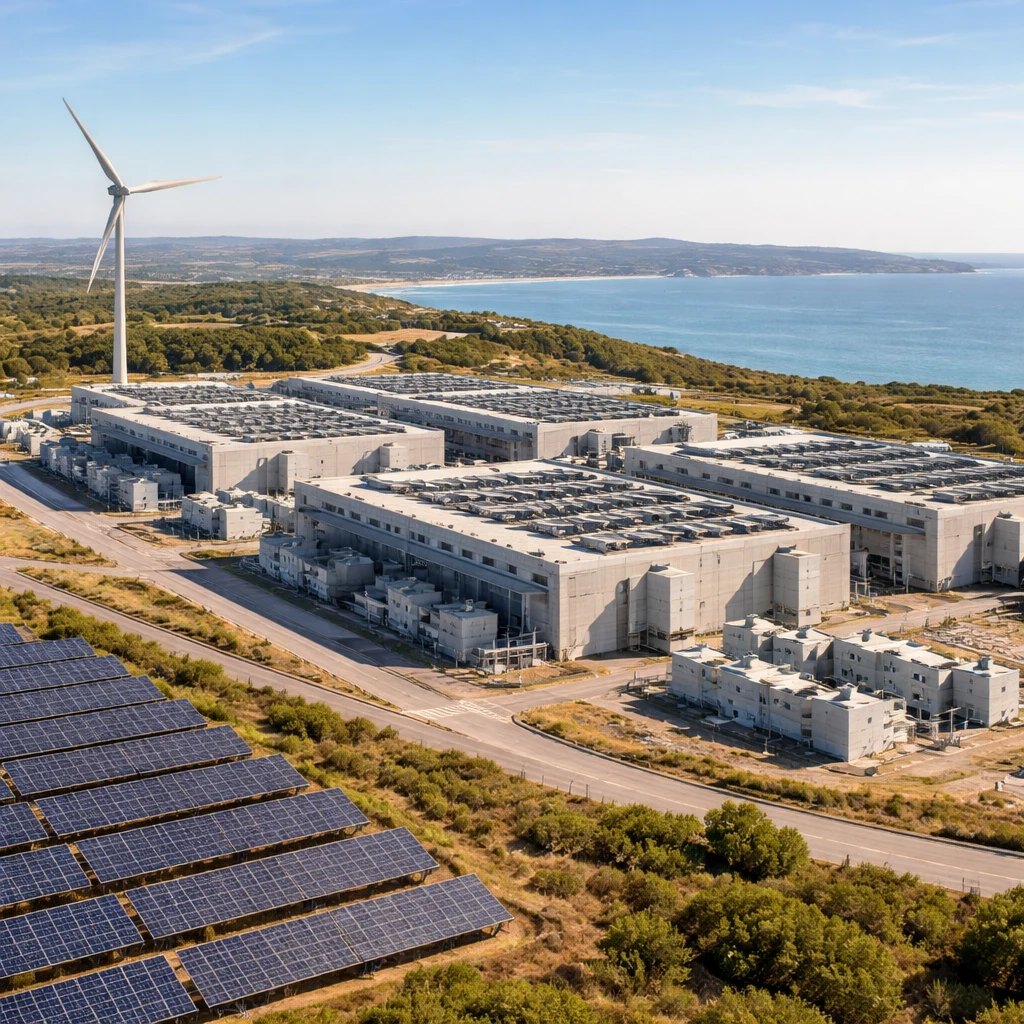
EDP, Portugal's largest utility, says it is preparing to serve a rapidly expanding roster of data centre developments in Iberia, attracted by electricity prices it expects to remain comparatively low versus much of Europe, CEO Miguel Stilwell de Andrade said on Thursday.
Speaking at an analysts' conference, Stilwell de Andrade pointed to an extensive pipeline of data centre capacity across Portugal and Spain - more than 18 gigawatts of projects either in development or already in the pipeline - and described the cluster as an important contributor to rising electricity demand in the region.
"EDP is obviously engaging with many of these projects," the CEO said, underlining the company's commercial interest in supplying power to that segment.
Stilwell de Andrade highlighted Iberia's relative cost advantage for these large electricity users, saying the region's "distinctive advantage" is - structurally affordable power prices. He said that affordability is a crucial factor for data centre developers when choosing locations.
Confirming EDP's active role in the market, the company on Wednesday signed a renewable power supply partnership for a major data centre development in Sines, 150 kilometres south of Lisbon. The contract covers a 1.2-GW site being developed by Start Campus, a consortium made up of Britain's Pioneer Point Partners and U.S. fund Davidson Kempner.
Stilwell de Andrade noted recent demand trends to illustrate the momentum behind the sector. Electricity consumption rose 3.6% in Portugal and 2.8% in Spain in 2025, outperforming most EU markets where average growth was around 0.4%, he said.
Looking ahead, EDP is forecasting average annual demand growth of roughly 2% across Iberia through 2030. The company attributes that growth to broader electrification trends - notably in transport and industry - in addition to the impact of data centres.
On the policy side, Stilwell de Andrade pointed to a set of structural elements that he believes will help keep prices relatively low. One of those is the scheduled full repayment of the electricity systems tariff debt by 2028, a legacy item the CEO said has weighed on consumer bills and which he expects will result in cost reductions in the tariff structure going forward.
Another stabilising factor, he said, is the regulatory framework setting out allowed pre-tax returns on electricity network investments: 6.7% in Portugal through 2029 and 6.58% in Spain through 2031. Stilwell de Andrade described these parameters as providing clarity and stability for EDP's forthcoming investment cycle.
As EDP broadens its commercial outreach to hyperscale and other data centre customers, the company is relying on a combination of demand growth, competitive power pricing and defined regulatory returns to underpin its strategy in Iberia.