
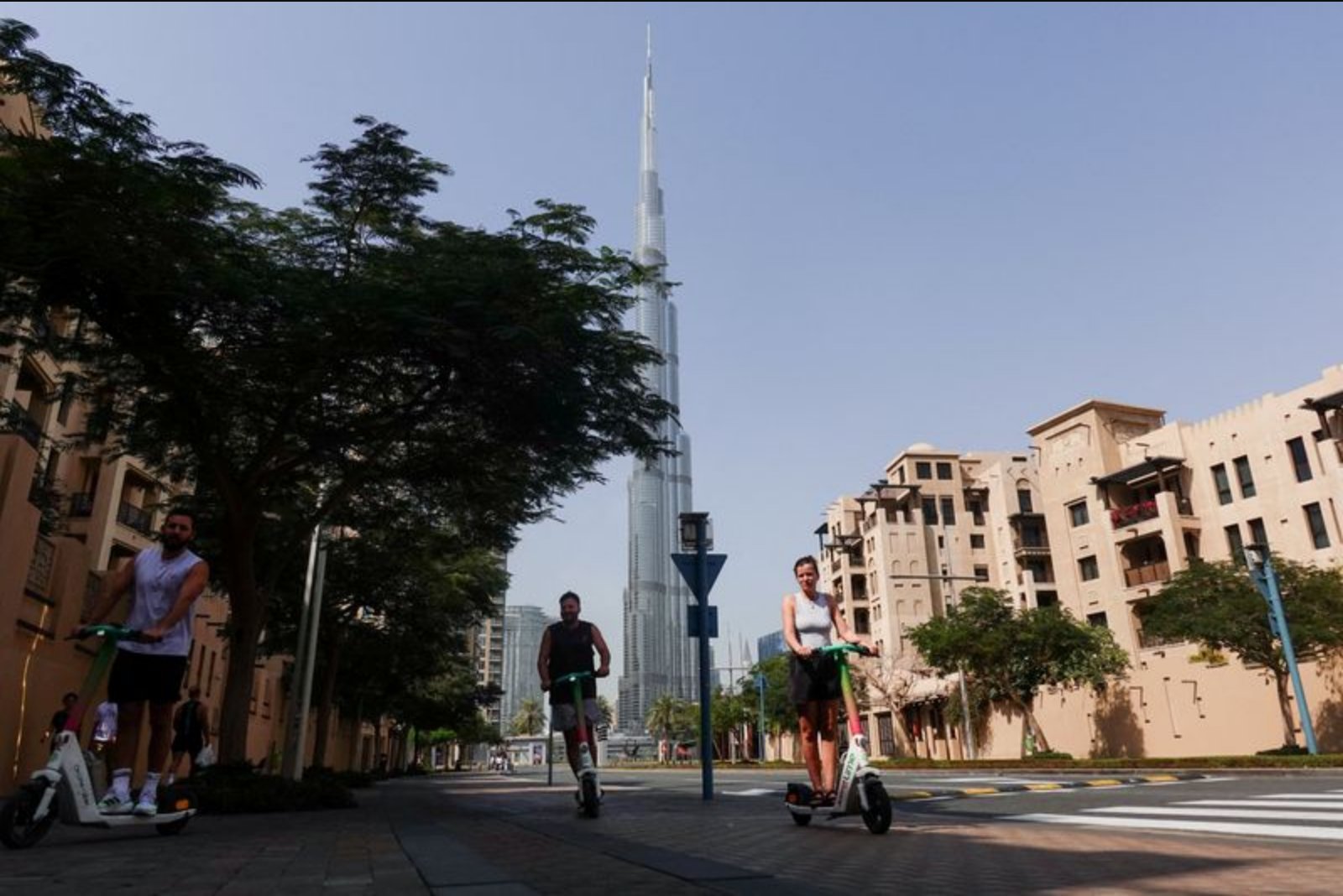
Dubai’s carefully cultivated reputation as an island of stability in a volatile region has come under immediate pressure after a series of strikes across the Gulf hit key pieces of the emirate’s economic infrastructure on Saturday. Targets included components of the aviation, hospitality and port networks that underpin Dubai’s role as a trading, tourism and finance hub. The UAE’s National Emergency, Crisis and Disasters Management Authority has said the situation remains under control, but the physical hits and the psychological effect on residents and investors have raised fresh questions about the durability of Dubai’s safe-haven status.
Damage, disruption and official response
The recent attacks impacted several high-profile sites. Dubai International Airport was struck, a berth at Jebel Ali Port caught fire and the Burj Al Arab sustained damage from interceptor fragments. The UAE Ministry of Defence reported three fatalities and 58 injuries. In response, UAE authorities moved rapidly to manage both the immediate physical damage and broader confidence concerns.
Beyond the direct damage, secondary effects were significant. Airspaces were largely closed, leaving tens of thousands stranded within the country. Tech outages tied to an impact on Amazon’s cloud computing facilities were reported to be affecting some banking operations, according to a person familiar with the matter. The combination of physical disruption and interruptions to financial and transport services prompted regulators to suspend trading on the Abu Dhabi and Dubai stock exchanges on March 2 and 3 - a step described by market participants as unprecedented.
Why Dubai’s branding matters
For about four decades Dubai built an identity as an attractive alternative to other regional capitals: a place that combined glitzy infrastructure, tax-free salaries and an ease of doing business with a distinct promise of security. Landmarks and policy moves punctuated that trajectory - the launch of Emirates airline in 1985, the opening of the Burj Al Arab in 1999 and early-2000s reforms that opened up property ownership to foreigners were among the pillars of what became known as Brand Dubai.
Dubai’s economy today is dominated by non-oil sectors, with oil accounting for less than 2% of GDP. Trade, tourism, high-end real estate and financial services replaced hydrocarbon revenue as the main engines of growth, supported by a regulatory framework that sought to mirror established global financial centres. Abu Dhabi, by contrast, holds the bulk of the UAE’s oil reserves - more than 90% - and remains more dependent on oil income.
Population and capital inflows that fueled growth
Part of Dubai’s ascent came as fortunes shifted elsewhere in the region. Waves of inward migration followed crises and political upheavals in other countries, bringing capital and expertise that fed demand for housing, services and finance. The UAE’s population expanded dramatically over recent decades - from roughly 1 million in 1980 to about 11 million in 2024. Last year the country was on track to attract an estimated 9,800 relocating millionaires, a record figure cited by Henley & Partners, and property markets benefited: Dubai developer Emaar Properties reached a record high on February 25, valuing the company at around 149 billion dirhams ($40.6 billion).
Dubai International Financial Centre (DIFC), established in 2004, was a central element in the push to import global finance. By the end of 2025, DIFC hosted more than 290 banks, 102 hedge funds, 500 wealth management firms and 1,289 family-related entities, according to figures cited by market participants, reflecting the depth of financial activity that had been built in the emirate.
How Saturday’s strikes changed perceptions
Despite the strategic choices that underpinned Dubai’s meteoric rise, certain vulnerabilities have long existed. The Strait of Hormuz - a critical artery for seaborne crude - runs nearby, and Iran sits across the water with both the motive and capability to affect Gulf commerce. The recent strikes illustrated that those geographic realities can translate rapidly into tangible disruptions to infrastructure and services in Dubai.
Observers say the psychological impact may outweigh the physical damage for now, yet that is precisely where Dubai’s model is most exposed. "It’s hard to overstate the peril for Dubai’s economic model," said Jim Krane, a fellow at Rice University’s Baker Institute. "The physical damage may be slight, and most of the pain thus far is psychological. But Dubai’s status as a safe-haven for expatriates and their businesses is in increasing doubt. The longer the war continues, the more intense the search will be for alternative locations. Dubai needs this war to wrap up now. International capital is highly mobile."
The practical consequences of changing perceptions played out immediately in some firms’ behavior. A UAE-based mid-sized investment firm told Reuters it had begun preemptive planning for layoffs and paused fundraising. One multi-asset portfolio manager, Nabil Milali at Edmond de Rothschild Asset Management, said he reduced exposure to equities globally in advance of the strikes to prepare for a potential attack on Iran and observed that many people were fearful: "It’s the first time they have to hide in underground places. Dubai airport, one of the biggest in the world, has to shut down for a few days." He added a probability estimate that geopolitical risk premia could remain elevated for an extended period.
Immediate market and business responses
The weekend’s events led to several immediate market and operational consequences. Stock exchanges in Abu Dhabi and Dubai were closed for trading on March 2 and March 3. Banking operations experienced disruption due to cloud outages. Travel routes were disrupted as airspace restrictions stranded travelers. These operational interruptions, even if temporary, have implications for liquidity, working-capital flows and the rhythm of business that international firms rely on.
Some sectors and businesses signaled shifting behavior. Demand for gold bars rose, according to a source in the jewelry industry. Private banks that had been expanding advisory services in the emirate were reported to be reassessing the scale and scope of their local footprints, considering whether to serve clients from Dubai or from other jurisdictions. Such responses, if sustained, would affect the real estate, wealth-management and professional-services industries that have been central to Dubai’s non-oil growth.
Evaluating resilience and the unknowns ahead
Not all observers expect a broad, structural departure of capital from the UAE. "Historically, markets like the UAE have demonstrated resilience during crises, including COVID, supported by strong policy response and governance," said Madhur Kakkar, founder and CEO of Elevate Financial Services. He suggested that a material reallocation of institutional capital away from the UAE or the wider Gulf appears unlikely unless tensions escalate materially or persist for a long period.
Yet there is no comprehensive data, yet, showing capital outflows. The market halt was described by participants as an unprecedented regulatory step. William Jackson, chief emerging markets economist at Capital Economics, said perceptions had shifted markedly: "It’s really quite a big change in perceptions. The Gulf economies have generally been seen as safe from Iranian retaliation. I think (that) has really changed over the weekend." He noted that the ultimate economic impact hinges critically on the duration of the conflict, underscoring the conditional nature of the outlook.
What this means for sectors and decision-makers
Operationally, the strikes and their aftermath touch several sectors simultaneously. Aviation and airports face immediate disruption from closures and safety concerns. Ports and logistics nodes, such as Jebel Ali, are vulnerable to fires and direct hits that slow cargo flows. Hospitality and real estate are sensitive to perceptions among expatriates and wealthy migrants who choose where to live and invest. Financial services - including banks, private wealth managers and market-makers - are exposed via operational dependencies on cloud infrastructure and by the location decisions of their clients and staff.
For policy-makers and corporate leaders, the priority is managing both the tangible recovery of infrastructure and the intangible challenge of confidence. Swift containment, transparent communication and restoration of services will be central to preventing transient shocks from morphing into longer-term shifts in capital and human mobility.
Currency note
The article uses the conversion rate of $1 = 3.6728 UAE dirham.