
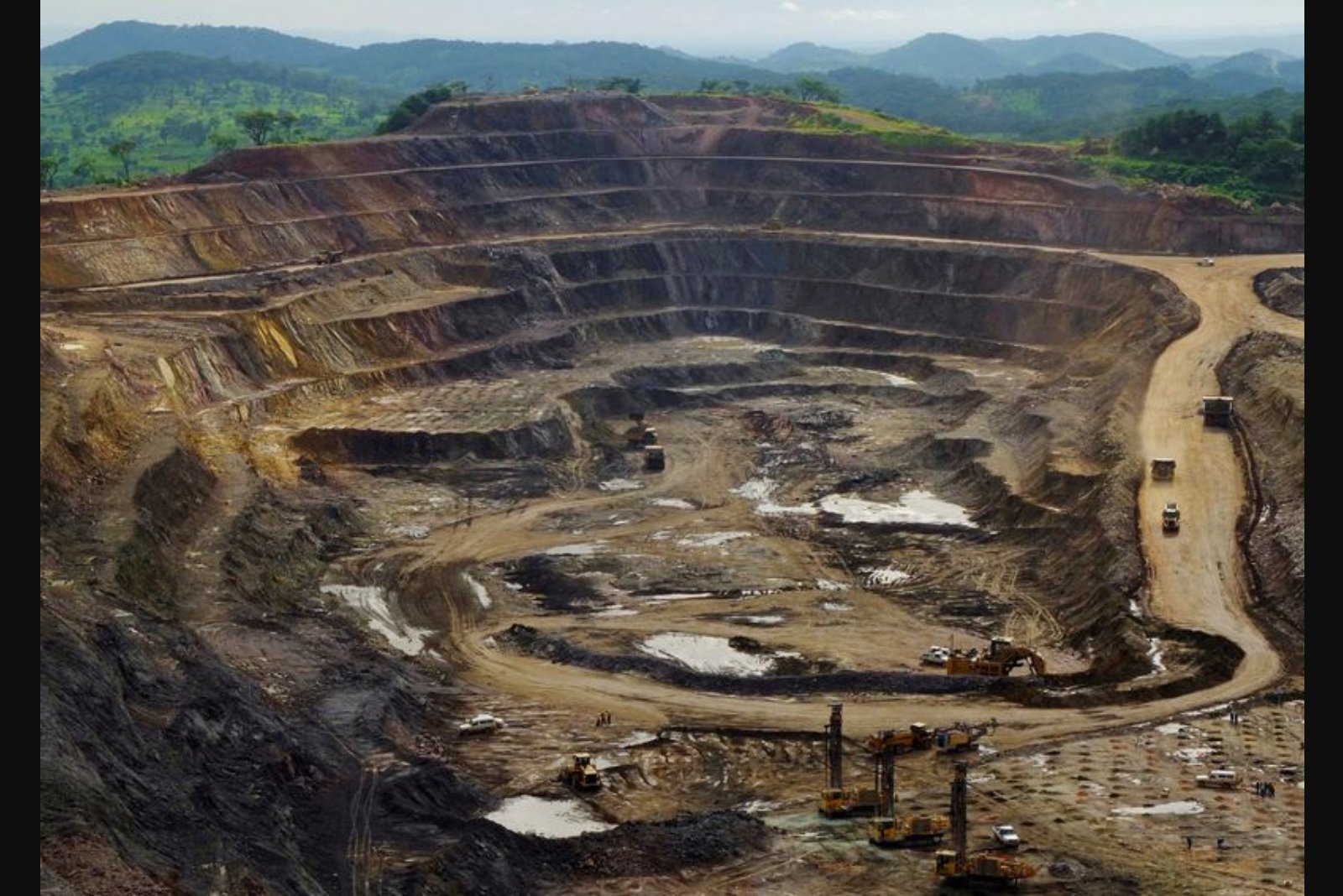
The Democratic Republic of Congo has placed the Rubaya coltan mine - one of the planet's richest tantalum deposits - on a priority list of assets it is offering to the United States under a strategic minerals cooperation framework, according to a DRC government document and confirmations from officials.
The document, seen by Reuters, and confirmations from a senior Congolese official and a U.S. diplomat indicate that Rubaya was included on a shortlist presented during a DRC-U.S. meeting in Washington on February 5. The two sources spoke on condition of anonymity because of the sensitivity surrounding the mine and the broader partnership. The bilateral strategic minerals partnership itself was agreed in December.
Rubaya, located in North Kivu province, is currently under the control of Rwandan-backed AFC/M23 rebels. Its inclusion on Kinshasa's strategic asset reserve (SAR) list is central to the government's effort to attract U.S. investment into eastern Congo's mineral sector despite ongoing conflict. Tantalum, produced from coltan ore at Rubaya, is a heat-resistant metal used in semiconductors, aerospace components, computers, mobile phones and gas turbines. Access to Rubaya could therefore supply materials Washington views as critical for advanced manufacturing and national procurement.
The government document states that reopening and scaling the Rubaya mine would require between $50 million and $150 million in investment, with Congolese authorities projecting rapid cost recovery owing to what the document describes as soaring global demand for tantalum. The document also highlights that Rubaya could offer a "fully traceable, conflict-free" supply of tantalum that would meet U.S. procurement rules, if brought under appropriate governance and oversight.
Scale and social conditions
Rubaya holds several thousand metric tons of coltan with tantalum concentrations reported at 20-40%. The mine currently accounts for approximately 15% of global coltan output, according to the government record. Extraction there is carried out manually by impoverished local workers who earn only a few dollars a day, the document notes.
Control of the mine and the surrounding hills rests with AFC/M23 rebels. A United Nations report released last year linked the rebels' occupation to organised smuggling routes into neighbouring Rwanda, and estimated that the group collects at least $800,000 per month from taxes on Rubaya coltan production and trade. Rwanda denies backing M23.
Political and security implications
The presence of M23 and its political affiliate, the Congo River Alliance (AFC), complicates the DRC's offer. Both groups are subject to U.S. sanctions and were excluded from a fragile peace agreement brokered in December by U.S. President Donald Trump between Congo and Rwanda, a deal that has so far failed to halt clashes. The rebel groups have been vocal critics of the minerals framework, describing it as "deeply flawed" and arguing that Kinshasa should not pursue new mineral partnerships while active fighting continues.
A senior AFC/M23 official, speaking on condition of anonymity, told Reuters that the group's objective "is not the mines but the liberation of our people." The official added that by presenting Rubaya to Washington without controlling the site, Kinshasa is seeking U.S. involvement to recover the area militarily for the Congolese government. He also said that a private party — not the Congolese state — currently holds the mining title, and that any dispute arising from future efforts to develop Rubaya would demonstrate that President Felix Tshisekedi "does not control all the mining sites." The official declined to provide further details on the ownership claim.
The Congolese government did not immediately respond to a request for comment on the documentation or the assertions regarding title and control.
U.S. engagement and wider asset list
The U.S. State Department confirmed that Congo formally presented the initial SAR list at the February 5 meeting but did not disclose the names of the assets in public comments. Under the framework agreement, U.S. companies will receive preferential access to assets on the SAR list. U.S. officials say the preference is intended to encourage transparent investment, support job creation and promote long-term stability in the DRC's mining regions.
The State Department also said that eligible private-sector firms have been invited to request the SAR list and to signal interest in qualifying projects, opening a pathway for commercial engagement under the security-focused framework.
Beyond Rubaya, the DRC government document identifies several other priority projects targeted at U.S. investors. These include the Manono lithium deposit in Tanganyika province; the Chemaf copper-cobalt complex located across Haut-Katanga and Lualaba provinces; the STL Germanium-Gallium expansion project in Lubumbashi; and a set of proposed cobalt refineries. The list further features hydro projects linked to state miner Gecamines, Congo's portion of the Lobito rail corridor intended to facilitate mineral exports, and significant gold prospects such as Kibali South and Moku Beverendi.
The document indicates that Congo and a number of U.S. or allied companies have already inked initial supply agreements under the minerals security pact, a component of Washington's effort to reduce China’s established dominance in the DRC's critical minerals sector. The DRC record does not identify which U.S. companies were approached, nor does it confirm whether formal negotiations on the SAR assets have commenced.
Implications for markets and supply chains
Bringing Rubaya and other assets into a bilateral framework with the U.S. aims to reshape supply chains for key raw materials used across technology, aerospace and energy sectors. However, persistent security concerns, disputed ownership claims and ongoing fighting in eastern Congo create substantial uncertainties about the timing and viability of any commercial development tied to the SAR list.