
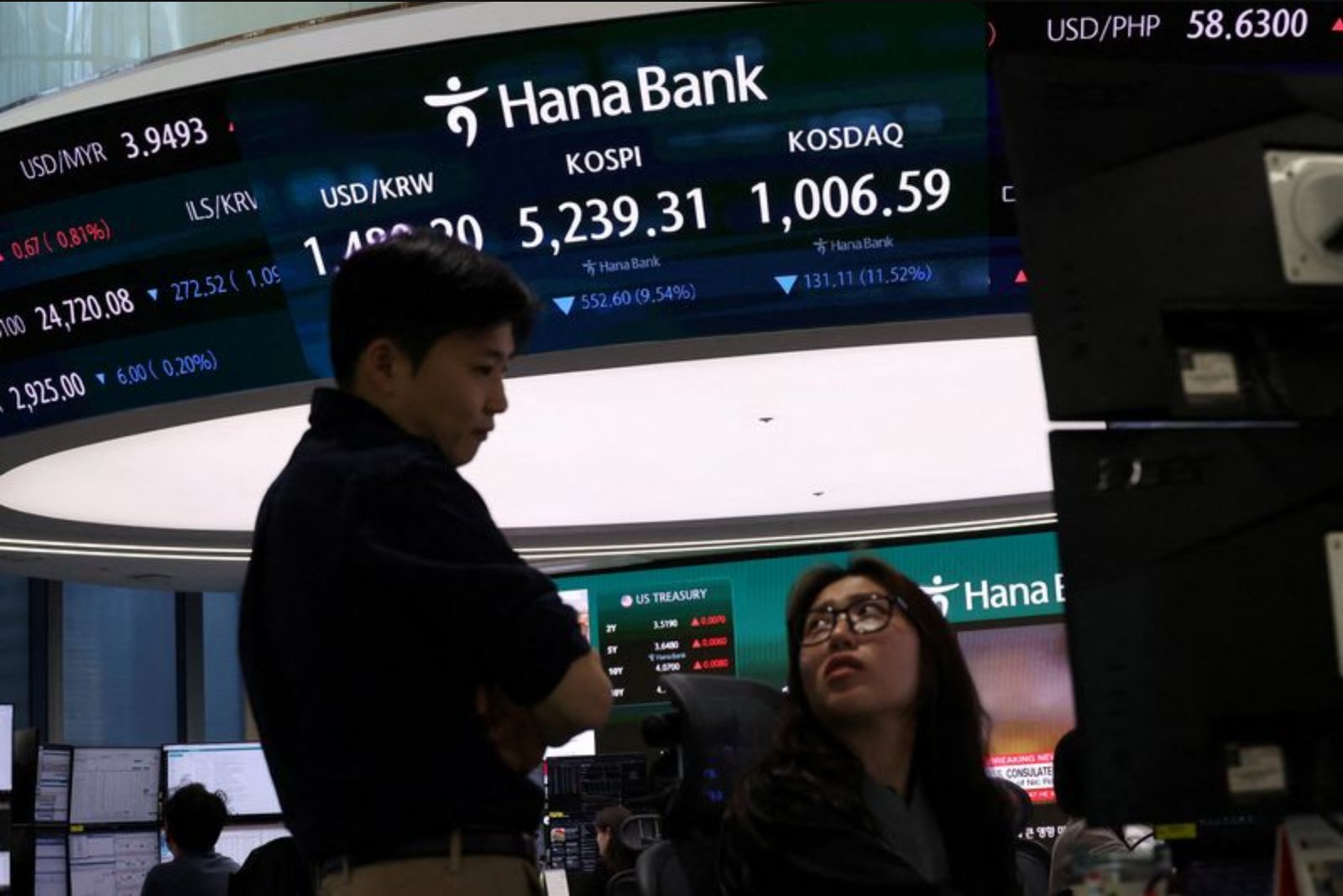
The wave of selling that swept through emerging market assets following U.S. and Israeli bombardment of Iran pushed currencies, equities and bonds toward their worst weekly declines in three years. The scale of the dislocation prompted major banks to cut exposure to the asset class. Still, a number of experienced investors argue that improved balance sheets, more credible monetary policy frameworks and alternative sources of capital mean these markets could recover and resume the earlier rally that had been underway this year.
The near-term reaction was stark. Emerging market currencies and stock indexes fell heavily, and bond prices dropped sharply as investors sought shelter. JPMorgan scaled back its overweight position in emerging market foreign exchange and local currency debt to marketweight, citing heightened uncertainty. Citi similarly reduced its foreign exchange exposure in emerging markets by half.
Even so, veteran managers say that unless the conflict expands significantly or energy costs remain elevated for an extended period, the underlying fundamentals that supported inflows earlier in the year can help markets rebound. Cathy Hepworth, who runs PGIM Fixed Income’s emerging market debt team, noted that substantial institutional and crossover capital has not yet signaled a wholesale exit. "I don’t think yet that we’ve seen ... let’s call it real money, or crossover money, saying 'I’m out'," she said, adding that some investors remain on the sidelines and may use corrections as an opportunity to increase exposure.
Emerging markets had been outperforming across asset classes in recent months. The rally gathered momentum after U.S. President Donald Trump began his second term in January 2025, with record debt issuance in January from countries including Saudi Arabia, Mexico, Turkey and Poland. Equities climbed and yield-seeking investors flowed into local-currency debt, even in frontier markets.
Market participants had already cautioned that the faster-moving capital - such as funds from hedge funds and other non-specialists - could depart quickly when volatility spiked. That scenario played out after the U.S.-Israeli bombing campaign in Iran: investors moved into dollar assets and gold, and short-term cash positions rose as market participants searched for safe havens.
"We’ve seen a big shock to markets...there is more to go, should oil prices rise further," said James Lord, Morgan Stanley’s global head of FX and emerging markets strategy, capturing the risk that further energy-driven inflation could deepen the sell-off.
Data tracked by market indexes showed a dramatic fall in market value: MSCI’s emerging market equities index lost more than a trillion dollars in market capitalisation from its peak late last week through Wednesday’s close. Korea’s KOSPI was one of the most extreme cases, plunging nearly 20% across Tuesday and Wednesday in what was described as its largest-ever two-day drop, a move blamed in part on panic selling in sectors tied to the AI and semiconductor rally that had propelled the index to become one of the top performers in emerging-market equities.
Capital Economics’ deputy chief markets economist Jonas Goltermann characterized that Korean episode as a sign the market machinery had overruled underlying fundamentals. Yet the KOSPI subsequently recovered almost 10% on Thursday and still remains up more than 30% for the year, illustrating the volatility that has gripped the asset class.
Several investors point to deeper, more durable improvements that could blunt the impact of this kind of shock. Years of fiscal and monetary strengthening in many emerging and frontier markets have left them with more robust balance sheets and central banks that have established credibility through cautious, measured easing cycles. Those policies have helped bring inflation under control and given policymakers tools to defend currencies when required.
Countries that historically posed repatriation challenges for foreign investors, such as Egypt and Nigeria, have implemented reforms to ease investor access to local assets. Portfolio manager Yvette Babb of William Blair argued that recent outflows have actually demonstrated these countries’ ability to absorb demand for foreign exchange and to show FX flexibility, features she said are useful in managing exogenous shocks.
Investors also highlight that parts of the emerging world may benefit directly from higher commodity prices. Templeton Global Investments’ Elias A. Elias observed that Latin American commodity exporters could see gains from a sustained rise in oil prices, and that cheaper relative valuations for emerging market equities - at roughly a 28% discount to developed-market stocks, with higher earnings growth expectations - continue to make the asset class attractive to some managers despite the current volatility.
Another structural shift altering the risk calculus is the changing geography of capital. The return of the U.S. president and evolving trade and sanctions dynamics has led some investors to reassess how they weigh geopolitical risk. At the same time, growing South-South investment flows - from Asia’s accumulating wealth pools and from well-funded Gulf sovereign wealth funds - are supplying an alternative source of capital for emerging economies, reducing their reliance on traditional Western investors. Lombard Odier’s Head of Asia Credit, Dhiraj Bajaj, pointed to this dynamic, saying that new funds originating in Asia are increasingly being deployed in other markets.
These flows may be less prone to rapid withdrawal in crisis scenarios, offering a partial buffer to abrupt capital flight. Countries that attracted large inflows earlier in the year are now, some investors argue, demonstrating the capacity to manage those inflows and to provide FX liquidity when needed.
Nevertheless, the single-biggest risk remains oil. A prolonged period with prices above $100 per barrel could reignite global inflation pressures, undermine growth and prevent some emerging-market central banks from resuming rate cuts. That outcome would complicate the macro backdrop for many developing economies and could curb the ability of policymakers to support growth through monetary easing.
For now, many market participants say they remain constructive on emerging market equities over the medium term, albeit with caution. Some are watching flows closely to see whether this week’s turbulence prompts deeper repositioning by institutional investors, or whether it proves to be a severe but short-lived interruption to a broader year-long rally.
What are the best investment opportunities in 2026? The original text referenced a data and analytics product that combines institutional-grade data with AI-powered insights to aid investment decisions, suggesting that such tools can improve idea generation even if they do not guarantee winners. That promotional passage reflected a vendor claim about data-driven research and an associated advisory tool.