
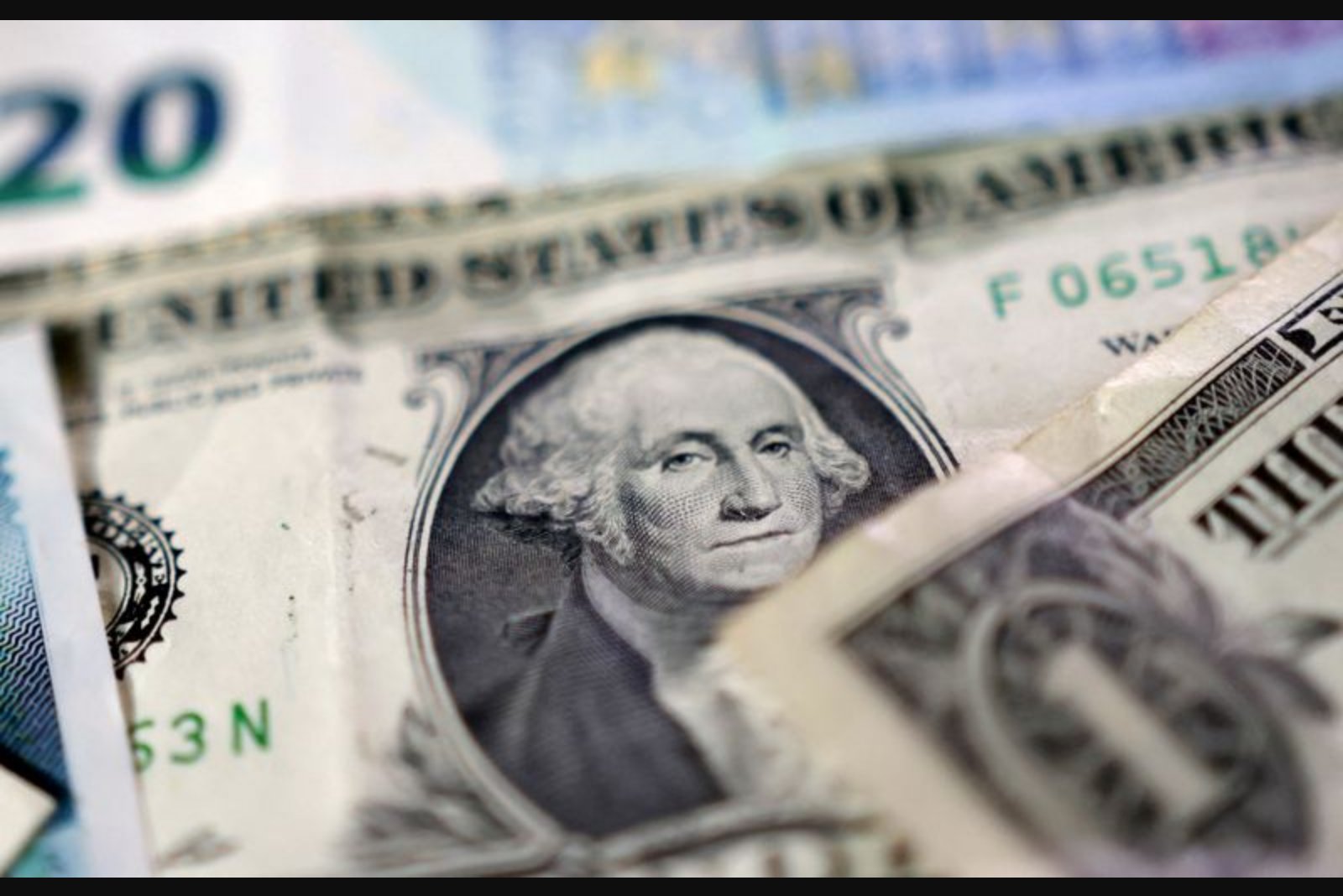
Global foreign exchange markets saw the U.S. dollar stage a pronounced rally after U.S. military action in Iran, a move that underlined the greenback's enduring position as a go-to safe-haven in times of international unrest. The dollar index climbed nearly 1% on the day, marking its largest single-day gain in seven months as investors sought the perceived security of U.S. assets amid renewed geopolitical tensions in the Middle East.
After a period in which the dollar's automatic appeal during bouts of market stress had been questioned, the recent flows back into the greenback have offered reassurance to those who view it as the global crisis currency. Skepticism about the dollar as an unquestioned refuge had grown following episodes last year when the currency did not attract the kind of defensive inflows it historically would during market turmoil, particularly during a tariff-driven selloff tied to policy moves by Washington.
Market strategists attributed Monday's resilient dollar performance to a classic risk-off reaction. "Today is, I would say, a classic risk-off day from a U.S. dollar perspective," said Eric Theoret, FX strategist at Scotiabank. He contrasted the recent pattern with the market response to what he called "Liberation Day," referring to the announcement of sweeping U.S. tariffs on April 2, 2025, which had triggered a sharp global market selloff and led to a pronounced break with earlier historical patterns for the dollar.
Analysts pointed to the depth and liquidity of U.S. markets as a structural advantage that helps sustain the dollar's safe-haven status. In times when large-scale de-risking is underway, investors need markets capable of absorbing sizable flows without causing dislocations. "If you’re looking to de-risk and de-risk in size, the U.S. Treasury market is really the only one that can handle those flows," Theoret said. The logic is straightforward: heavy demand for Treasuries during crises also drives demand for the currency in which those assets trade.
Don Calcagni, chief investment officer at Mercer Advisors, highlighted the scarcity of viable alternatives to the dollar during periods of heightened volatility. "So, I’m perhaps not surprised that we’re still seeing the dollar perform as a safe-haven asset," Calcagni said, noting that the limited set of large, deep sovereign bond markets constrains investors' ability to fully diversify away from dollar exposure when risk aversion spikes.
Where last year the dollar did not consistently attract safe-haven flows, analysts said that context mattered. When the source of market stress emanates from within the United States itself, investors have less incentive to seek refuge in U.S. assets. That dynamic was on display during the tariff-induced selloff, when some investors favored exposures outside the U.S. "Liberation Day forced the USD’s centrality to diminish ... investors started to favor the (rest of world)," said Benjamin Ford, a researcher at macro research and strategy firm Macro Hive.
Ford added that the recent oil shock had pushed global investors out of positions they had accumulated over the prior months and left them with net long dollar exposures heading into the latest bout of volatility. In contrast to episodes where domestic policy is the primary driver of market stress, analysts said international geopolitical events appear to reinforce the dollar's role as a haven. "While the dollar’s safe-haven appeal might have been dented when investors were concerned about a shock stemming from inside the U.S., when it’s an international geopolitical crisis, its safe-haven appeal seems intact," said John Velis, Americas macro strategist at BNY.
Not all strategists, however, conclude that Monday's activity ends the debate. "I think there will be some reassurance from today’s activity that the USD still has safe-haven characteristics," Jane Foley, head of FX strategy at Rabobank, said. "However, I think the debate is not over yet," she added, suggesting uncertainty remains about whether the dollar will always behave as it did this week across other types of shocks.
Beyond safe-haven flows, the dollar's recent support was also tied to the United States' evolving position in global energy markets. Market participants noted the U.S. current status as a net energy exporter, a factor that can insulate the domestic economy from the immediate impacts of oil price shocks that hit import-dependent countries harder. That characteristic may make dollar-denominated assets comparatively more attractive when energy markets are disrupted.
Still, some investors expect the dollar's effectiveness as a shelter to depend on the character of future crises. Aaron Hurd, senior portfolio manager, currency, at State Street Global Advisors, expressed skepticism that the dollar would be equally effective in all stress scenarios. "If it’s just a general kind of economic fear, I think the dollar will be far less effective," Hurd said, pointing to the potential for a closer correlation between the dollar and risk assets in shocks not tied to energy or liquidity concerns. He noted that the United States' large fiscal deficits, policy volatility, and the global economy's exposure to U.S. assets could elevate the dollar's correlation with broader risk sentiment during major shocks.
Looking to the near term, Macro Hive's Benjamin Ford said the dollar's trajectory will be closely linked to movements in the oil market. "If we continue in this oil up, risk appetite down world, then USD will continue to find a bid," Ford said. Conversely, he observed that if oil prices retreat, more traditional safe-havens such as the Swiss franc and the Japanese yen could regain prominence. Ford emphasized that moves in oil would determine whether the dollar remains the primary beneficiary of risk-off flows or if capital rotates back to other defensive currencies.
Monday's episode underscored the conditional nature of safe-haven behavior in currency markets. While the dollar reclaimed a central defensive role amid an international geopolitical shock, strategists continued to debate how the greenback might fare against different types of stress, whether domestic, global, energy-related, or liquidity-driven. For investors and risk managers, that suggests the need to consider the origin and mechanics of shocks when assessing sheltering strategies and the likely destinations of flight-to-quality capital.
Summary: The U.S. dollar rose sharply after U.S. strikes on Iran, regaining its traditional safe-haven role as investors sought U.S. Treasuries. Analysts attribute the move to the depth of U.S. markets and the dollar's status amid an international geopolitical crisis, while some strategists warn the currency's sheltering power may vary depending on the nature of future shocks.