
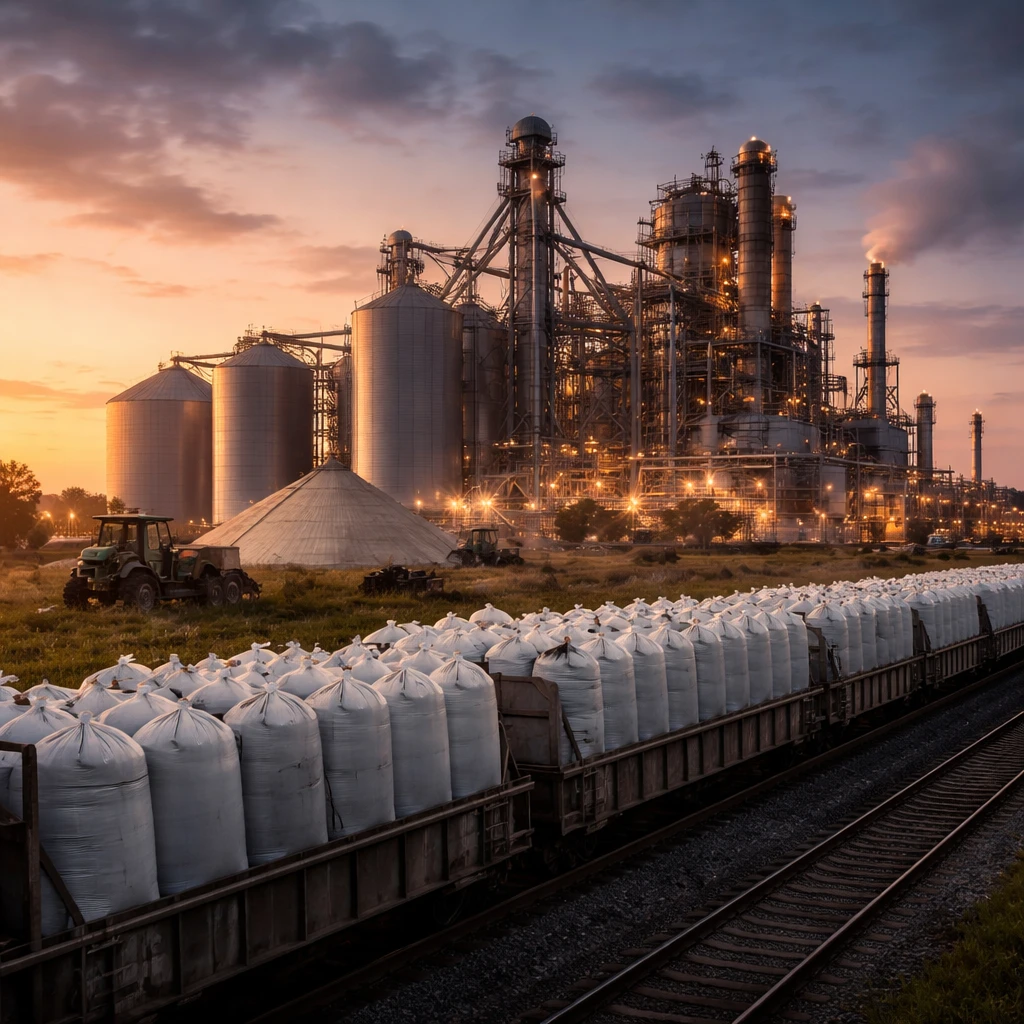
The U.S. Justice Department has launched an antitrust investigation into whether several of the country's largest commercial fertilizer producers conspired to raise prices, a move that coincided with a drop in the share prices of the industry's biggest public companies.
Shares slid in midweek trading after news of the probe surfaced. CF Industries fell 2.52% to $103.62, The Mosaic Company declined 2.65% to $26.07, and Nutrien dropped 2.02% to $72.92. The inquiry appears to target the sector's dominant players, including CF Industries Holdings Inc, Nutrien Ltd, The Mosaic Company, Koch Inc., and Norway's Yara International ASA, which collectively control most nitrogen-based fertilizer sold in the United States and hold leading positions in the potash and phosphate markets.
The investigation is being handled by the Justice Department antitrust division's Chicago office and is focused on the companies' pricing practices to determine whether there were civil or criminal antitrust violations. The probe is described as being in its early stages. Those with knowledge of the matter have characterized the inquiry as examining whether coordinated conduct contributed to higher prices charged to buyers.
Industry structure has evolved substantially over recent decades. Between 1984 and 2008 the number of U.S. nitrogen fertilizer producers fell from 46 to 13, a decline of 72% based on United States Department of Agriculture data. Today, four firms account for approximately 75% of the domestic nitrogen market, and two firms control nearly the entire U.S. potash market, according to research from the University of Waterloo.
Market concentration in the sector is notably high across fertilizer types. Research from Texas A&M AFPC shows the Herfindahl-Hirschman Index - a common measure of market concentration - at 2,382 for nitrogen, 4,553 for phosphate, and 3,455 for potash in the U.S. Regulators typically view HHI readings above 2,500 as indicative of high concentration.
Prices paid by U.S. farmers for fertilizer climbed sharply in 2021. USDA figures show overall fertilizer costs rose more than 60%, with nitrogen fertilizer prices up 95% and potash prices rising more than 70%. Those price increases were linked to substantially higher input costs for agricultural operations; estimates indicate the increases added about $128,000 in costs per farm for feed grain operations in 2022.
Historical analysis highlights the potential consumer harm from cartel behavior in this sector. Research from the American Antitrust Institute found that the median overcharge imposed by hard-core fertilizer cartel members was nearly 41%, a level above the roughly 30% median overcharge observed across all industries between 1702 and 2010.
What follows next: The DOJ inquiry remains in its early phase, and regulators are examining whether the pricing practices of major fertilizer producers amounted to civil or criminal antitrust violations. The situation continues to be fluid and will likely draw attention from market participants, agricultural buyers, and policymakers given the sector's high concentration and the scale of recent price moves.