
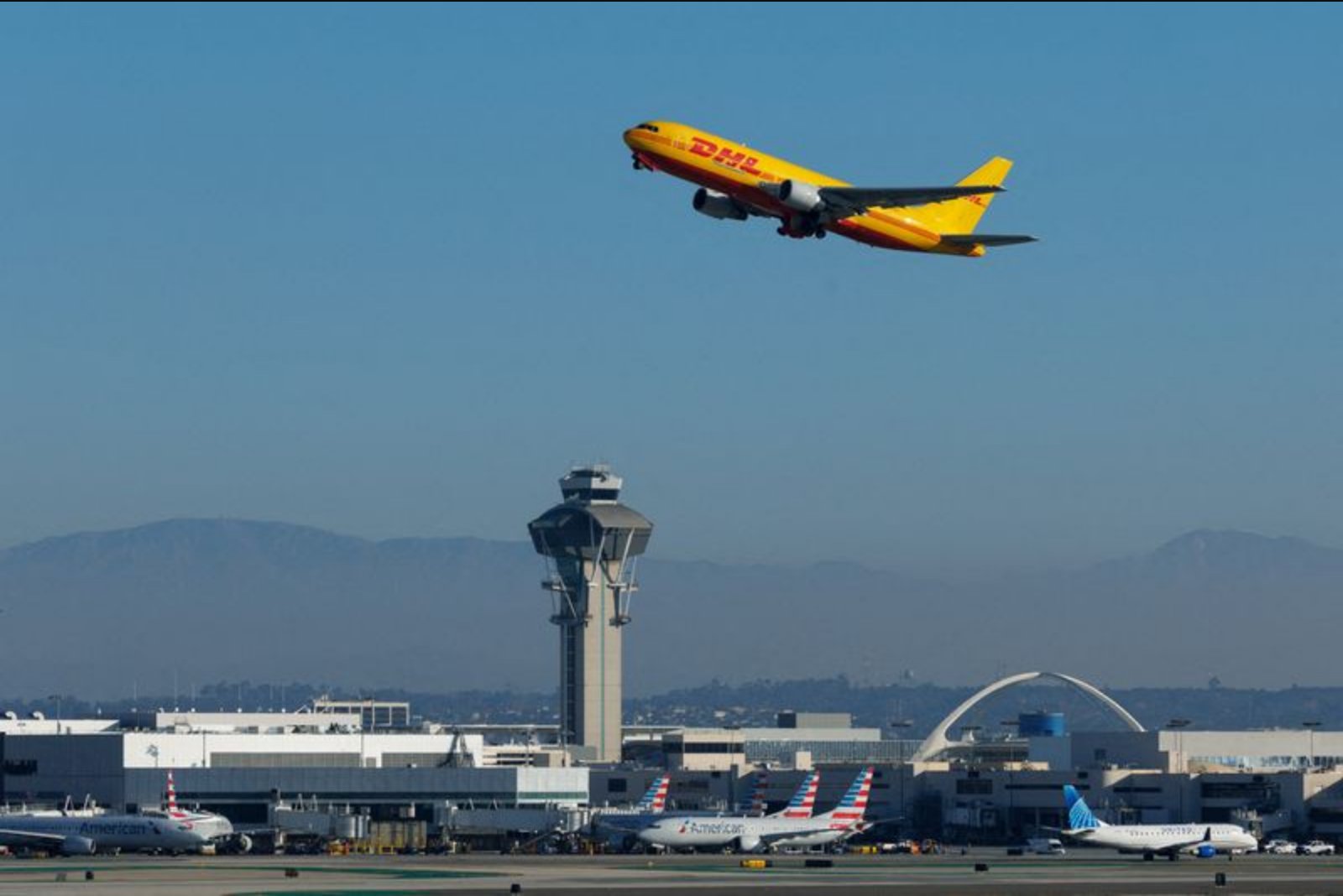
German logistics group DHL on Thursday maintained a forward-looking target for 2026 operating profit, signalling management's confidence in reaching earnings before interest and taxes above 6.2 billion euros despite a deteriorating geopolitical backdrop.
The company said its free cash flow excluding acquisitions should be roughly 3 billion euros. Management noted both targets are in line with the analysts' average forecasts contained in a company-provided consensus.
CEO Tobias Meyer emphasized that uncertainty and geopolitical volatility remain substantial. "There is still significant geopolitical volatility and uncertainty out there, as we have already seen in the first two months of the year," he said in a statement. Meyer added that the firm's outlook does not assume any improvement in the global economic environment.
Logistics networks are already feeling the effects of escalating conflict in parts of the world. The article states that Iran's closure of the Strait of Hormuz on Sunday forced major carriers including Maersk, Hapag-Lloyd and CMA CGM to reroute vessels around Africa, a change that increases transit times and operating costs. U.S. parcel carrier FedEx also announced a temporary suspension of services in five countries in the region.
Operational results for the most recent quarter reflected these headwinds. DHL reported a 1.3% decline in fourth-quarter operating profit to 1.83 billion euros, a result consistent with analysts' expectations. The company attributed part of the shortfall to its freight forwarding division, where earnings fell by 36%.
Meyer pointed to softer pricing and demand across freight segments, saying air and ocean freight are experiencing declining freight rates, while road freight is being hit by weak economic conditions in Europe, particularly in Germany.
The release also reproduced the exchange rate used for reference: $1 = 0.8591 euro.
This update leaves investors and market participants with a clearer sense of DHL's targets for 2026, and the management view that these objectives can be met without expecting an improvement in the global economic or geopolitical landscape.